

The Authority in Global Agricultural Chemistry & Bio-Resources
IMO Tightens Carbon Footprint Rules for Marine Aeration & Water Tech
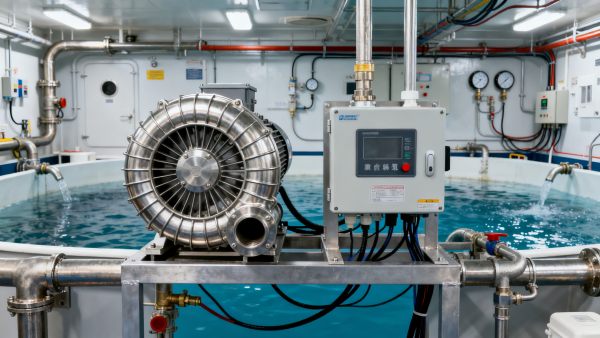
On 14 May 2026, the International Maritime Organization (IMO) issued MEPC.387(81), amending carbon footprint reporting requirements for marine aeration and water treatment equipment. The revision directly affects manufacturers, exporters, and supply chain actors serving commercial fishing vessels and Recirculating Aquaculture Systems (RAS), introducing mandatory life cycle assessment (LCA) disclosures aligned with ISO 14067:2024 — with specific emphasis on Scope 3.1 (Material Procurement) transparency. Compliance becomes effective 1 January 2027.
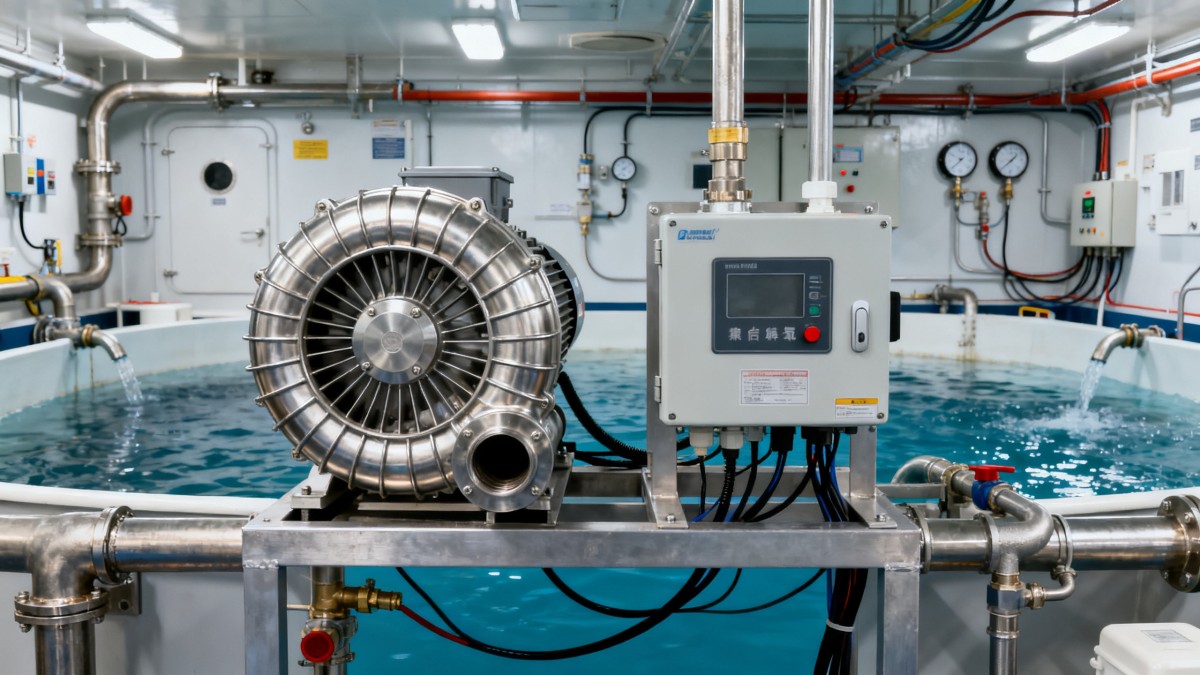
Event Overview
The IMO adopted MEPC.387(81) on 14 May 2026. It mandates that all shipboard aeration and water treatment equipment used in Commercial Fishing and RAS — including blowers, dissolved oxygen controllers, and ozone generators — must be accompanied by a verified, full-life-cycle carbon footprint declaration compliant with ISO 14067:2024. The declaration must explicitly identify data sources for ‘Scope 3.1 — Material Procurement’. Chinese exporters of such equipment are required to upgrade their LCA databases and obtain third-party verification statements prior to market access post-2027.
Industries Affected
Direct trading enterprises — Exporters of marine aeration and water tech equipment face immediate compliance risk: failure to submit verified carbon footprint declarations will restrict market access in IMO-contracting states, especially where flag state enforcement aligns with MEPC.387(81). Impact manifests in delayed customs clearance, rejected tenders, and loss of eligibility for green procurement frameworks in EU, Japan, and Norway.
Raw material procurement enterprises — Suppliers of specialty alloys (e.g., titanium for ozone electrodes), high-efficiency motor components, and polymer membranes must now provide granular, auditable upstream emission data (e.g., electricity mix, smelting emissions, transport logistics) to enable downstream Scope 3.1 attribution. Absence of traceable Tier 2–3 data may force equipment manufacturers to redesign sourcing strategies or seek alternative suppliers.
Manufacturing enterprises — OEMs and contract manufacturers must integrate LCA into product development workflows — from bill-of-materials (BOM) mapping to process energy accounting. This requires new internal capacity (e.g., LCA software licenses, trained personnel) and introduces design trade-offs: e.g., selecting lower-carbon but higher-cost materials may affect price competitiveness in mid-tier markets.
Supply chain service enterprises — Certification bodies, LCA consultants, and logistics providers offering carbon-integrated documentation services are seeing rising demand — particularly those accredited under ISO/IEC 17065 and familiar with marine equipment certification pathways (e.g., DNV, LR, CCS). However, current global capacity for ISO 14067:2024-aligned verification remains limited, creating bottlenecks and premium pricing.
Key Focus Areas and Response Measures
Upgrade LCA database infrastructure by Q3 2026
Chinese exporters must map raw material inputs across at least three tiers, assign primary emission factors (preferably site-specific), and validate data against ISO 14067:2024 Annex B. Generic industry averages will not satisfy the ‘Scope 3.1 data source’ requirement.
Secure third-party verification before December 2026
Given verification lead times and accreditation backlogs, enterprises should engage accredited verifiers no later than October 2026. Verification scope must explicitly cover Scope 3.1 attribution methodology and data provenance — not just final footprint totals.
Engage upstream suppliers early via standardized data request templates
Adopt the GHG Protocol Product Standard-compliant supplier questionnaire, co-branded with verification body logos where possible, to improve response rates and data quality from Tier 2–3 vendors.
Editorial Perspective / Industry Observation
Analysis shows this is not merely a reporting update but a structural shift toward embedded environmental accountability in marine equipment procurement. Observably, MEPC.387(81) sets a precedent for future IMO amendments targeting other auxiliary systems (e.g., HVAC, ballast water treatment). From an industry perspective, the explicit focus on Scope 3.1 — rather than aggregated Scope 3 — signals growing regulatory attention to material supply chain decarbonization, especially for high-impact inputs like rare-earth magnets and electrolytic copper. Current more critical concern lies less in technical feasibility and more in cross-border data interoperability: many Tier 2 suppliers lack digital LCA reporting capability, risking cascading noncompliance.
Conclusion
This amendment marks a maturation point in maritime climate governance — moving beyond vessel-level operational emissions to encompass embodied carbon in critical onboard systems. For the marine aquaculture and fisheries support sectors, it represents both a compliance threshold and a strategic inflection: firms that treat carbon footprinting as an integrated design parameter, rather than a compliance add-on, are better positioned to capture emerging green financing and preferential procurement opportunities.
Source Attribution
Official text: IMO MEPC.387(81), adopted 14 May 2026 (available via IMO Documents Portal).
Technical alignment reference: ISO 14067:2024 “Greenhouse gases — Carbon footprint of products — Requirements and guidelines for quantification”.
Areas under active monitoring: National implementation timelines by major flag states (e.g., Panama, Liberia, Marshall Islands); recognition status of regional LCA databases (e.g., China LCA Database v3.0, Ecoinvent 4.0) by IMO-recognized verification bodies.
Related Intelligence
- Aeration & Water TechHow Water Treatment Research Guides Technology Selection for Industrial Wastewater ProjectsWater treatment research guides smarter industrial wastewater technology selection. Learn how to assess variable streams, pilot risks, compare process trains, and reduce compliance costs.
- Aeration & Water TechSelecting Solids Filtration for Aquaculture: Flow Rates, Loading, and Fish WelfareSolids filtration aquaculture guide: compare flow rates, peak loading, capture performance, maintenance, and fish welfare to choose a reliable system.
- Aeration & Water TechWhat RO water treatment systems deliver consistent 98% salt rejection at 25°C with feed TDS over 3,000 ppm?RO water treatment systems that deliver proven 98% salt rejection at 25°C with >3,000 ppm TDS—engineered for API synthesis, aquaculture & grain processing.
The Morning Broadsheet
Daily chemical briefings, market shifts, and peer-reviewed summaries delivered to your terminal.
