

The Authority in Global Agricultural Chemistry & Bio-Resources
Vietnam Enacts New Pesticide MRL Standard QCVN 01-19:2026
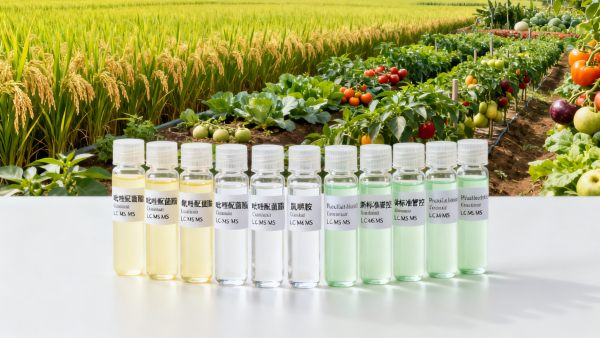
On May 15, 2026, Vietnam’s Ministry of Health and Ministry of Agriculture and Rural Development jointly issued the revised National Technical Regulation on Maximum Residue Limits (MRLs) for Pesticides in Food—QCVN 01-19:2026. Effective July 1, 2026, the standard introduces stricter analytical requirements and updated residue thresholds for agrochemicals exported to Vietnam, with immediate implications for global suppliers—particularly Chinese manufacturers and traders active in the Vietnamese agricultural input market.
Event Overview
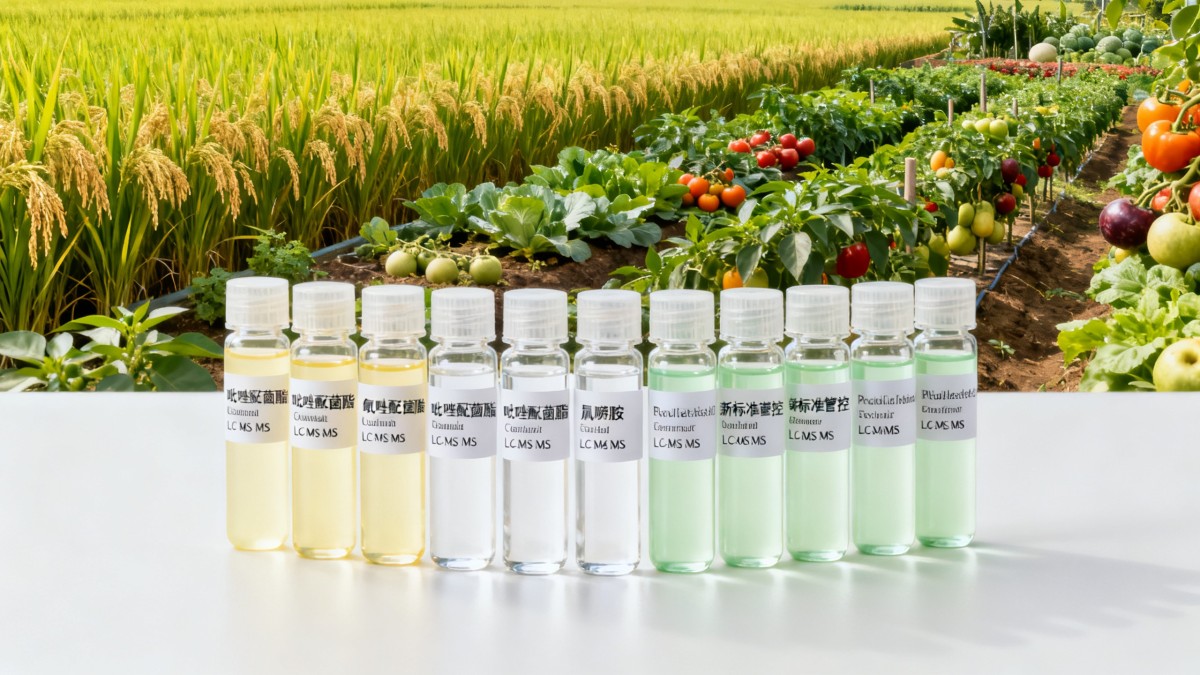
Vietnam’s Ministry of Health and Ministry of Agriculture and Rural Development jointly published QCVN 01-19:2026 on May 15, 2026. The regulation enters into force on July 1, 2026. It establishes new MRL values for 17 active ingredients—including pyraclostrobin and fluazinam—in rice, fruits, and vegetables. Crucially, it mandates replacement of the legacy gas chromatography–electron capture detection (GC-ECD) method with liquid chromatography–tandem mass spectrometry (LC-MS/MS) for official compliance testing. Products lacking validated LC-MS/MS methods will face suspension of import registration and clearance at Vietnamese ports.
Industries Affected
Direct Exporters & Trading Firms: Companies exporting formulated agrochemical products or technical-grade active ingredients to Vietnam must now revalidate their product dossiers using LC-MS/MS-based residue data. This affects registration timelines, customs release speed, and post-entry surveillance outcomes. Delays in method validation directly translate to shipment hold-ups and potential loss of shelf season alignment in Vietnamese crop cycles.
Raw Material Suppliers: Producers of active ingredients—especially those supplying pyraclostrobin, fluazinam, and other newly regulated substances—face upstream pressure to generate LC-MS/MS-compliant reference standards, certified reference materials, and batch-specific residue profiles. Failure to provide such documentation may restrict their eligibility as registered suppliers under Vietnamese import licensing schemes.
Formulation & Manufacturing Facilities: Domestic and overseas manufacturers producing end-use pesticides for the Vietnamese market must adapt quality control protocols to align with LC-MS/MS detection sensitivity and specificity. This includes updating internal SOPs, staff training, equipment calibration, and third-party lab engagement—raising operational costs and lead times for product relabeling or re-registration.
Supply Chain & Regulatory Support Providers: Laboratories offering MRL testing, regulatory consultancies managing Vietnamese pesticide registrations, and logistics firms handling phytosanitary documentation must upgrade technical capacity and service offerings. Those relying solely on GC-ECD infrastructure risk losing accreditation or client trust unless they demonstrate LC-MS/MS readiness by Q3 2026.
Key Focus Areas and Recommended Actions
Validate LC-MS/MS Methods Before July 2026
All exporters and registrants must complete full method validation—including accuracy, precision, LOD/LOQ, and matrix effects—for each active ingredient and crop combination covered under QCVN 01-19:2026. Validation reports must be submitted to Vietnam’s National Institute of Food Control or designated authorities prior to import application.
Review Existing Product Registrations
Registrants should audit current dossier status against the new MRL table. Products with previously approved MRLs not listed—or listed at higher thresholds—must be re-evaluated for compliance. Where no MRL is assigned for a given active ingredient/crop pair, use is effectively prohibited under the new regulation.
Engage Accredited Vietnamese Testing Labs Early
Given limited domestic LC-MS/MS capacity and anticipated demand surges, companies are advised to pre-book slots with Vietnam-accredited labs (e.g., VNLAB-certified facilities) and co-develop sample preparation protocols to avoid bottlenecks during peak registration windows.
Editorial Perspective / Industry Observation
Observably, this revision reflects Vietnam’s broader regulatory convergence with Codex Alimentarius and EU MRL frameworks—not merely as technical alignment but as a strategic signal toward food safety sovereignty and import quality gatekeeping. Analysis shows that the shift to LC-MS/MS is less about incremental stringency and more about eliminating analytical ambiguity: GC-ECD often underestimates multi-residue interference and fails to distinguish metabolites, whereas LC-MS/MS enables unambiguous quantification across complex matrices. From an industry perspective, the 2026 update is better understood as a structural recalibration than a one-off adjustment—setting precedent for future revisions covering additional actives, crops, and environmental matrices (e.g., soil, irrigation water).
Conclusion
The implementation of QCVN 01-19:2026 marks a decisive step in Vietnam’s transition from volume-driven agrochemical import policy to science-led, risk-informed oversight. For international stakeholders, responsiveness hinges not only on technical adaptation but also on deeper integration with local regulatory ecosystems. A rational conclusion is that competitiveness in Vietnam’s agrochemical market will increasingly depend on traceability infrastructure, analytical transparency, and proactive regulatory intelligence—not just product efficacy or pricing.
Source Attribution
Official text published by Vietnam’s Ministry of Health and Ministry of Agriculture and Rural Development (May 15, 2026); QCVN 01-19:2026 full annexes available via the National Technical Regulation Portal (https://tcvn.gov.vn). Note: Guidance documents on LC-MS/MS validation protocols and transitional arrangements remain pending—these are under active development and warrant close monitoring through June 2026.
Related Intelligence
- AgrochemicalsWhat Are the Main Risks of Non-Transparent Agricultural Supply Chains?what are the main risks of non transparent agri supply chains? Explore traceability, compliance, contamination, disruption, and cost risks—plus practical controls.
- AgrochemicalsGrain Production: Key Practices for Improving Yield While Protecting Soil HealthGrain production strategies to improve yield, protect soil health, manage nutrients, reduce compaction, and build resilient fields for lasting results.
- AgrochemicalsHow Do New FDA Rules Affect Agri-Chemical Sourcing Strategies?How do new FDA rules impact agri chemical sourcing strategies? Explore practical supplier screening, traceability, contaminant control, and risk-based compliance steps.
The Morning Broadsheet
Daily chemical briefings, market shifts, and peer-reviewed summaries delivered to your terminal.
