

The Authority in Global Agricultural Chemistry & Bio-Resources
Aquaculture Water Test Kits: Which Readings Matter Most Day to Day?
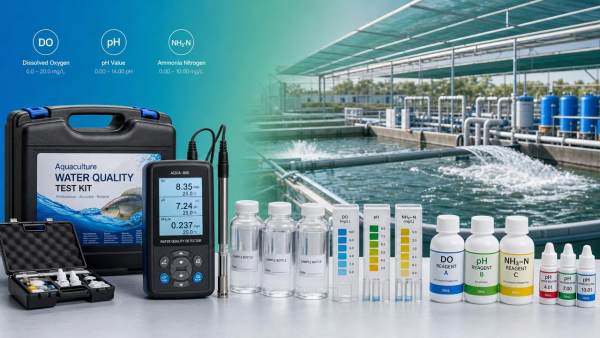
Why aquaculture water test kits matter every day
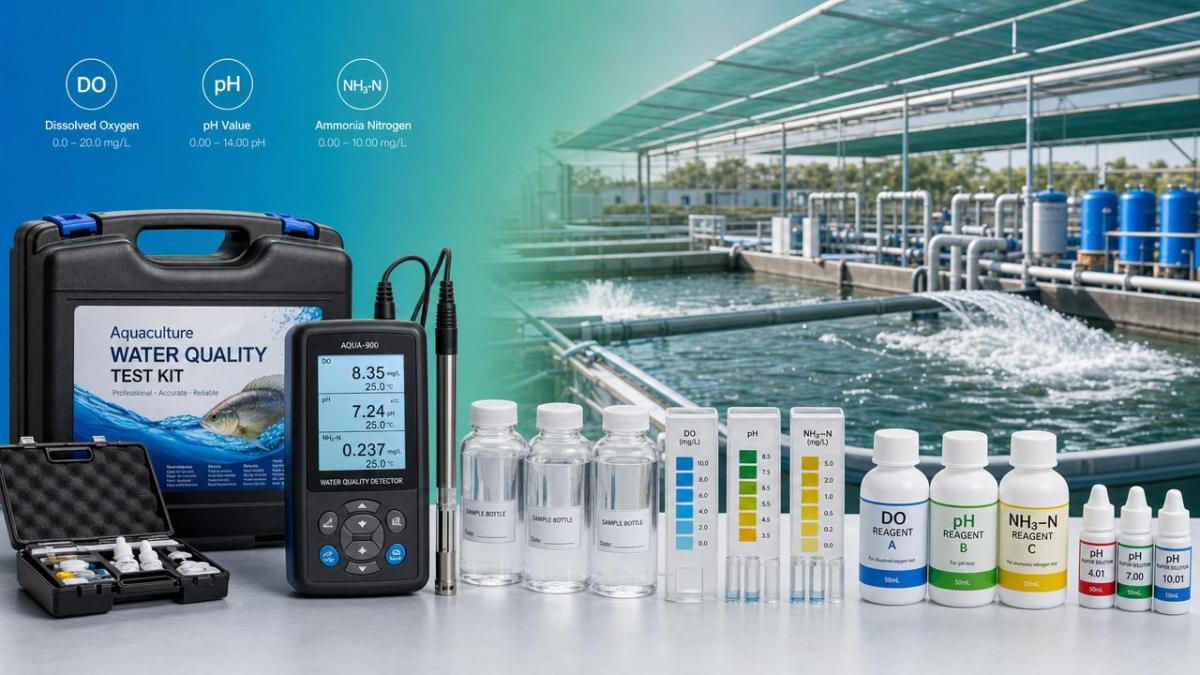
For quality control and safety teams in aquaculture, daily decisions depend on fast, reliable data. Aquaculture water test kits reveal the readings that most directly affect fish health, compliance, and production stability.
When oxygen drops or ammonia rises, stock can decline quickly. Day-to-day testing helps catch small shifts early, before they become disease events, feeding losses, or mortality spikes.
In integrated primary industries, water quality also affects feed conversion, treatment planning, recordkeeping, and audit readiness. That is why aquaculture water test kits remain central to routine operating control.
Why a checklist approach improves water testing
Not every reading carries the same urgency each day. A checklist keeps attention on the parameters most likely to change fast and cause immediate biological stress.
It also reduces inconsistency between shifts. Teams can test the same points, compare results correctly, and trigger action thresholds without relying on memory alone.
This matters in pond systems, recirculating aquaculture systems, hatcheries, and transport holding units. Different facilities vary, but core daily readings stay broadly similar.
The daily readings that matter most
The most useful aquaculture water test kits support a short list of priority measurements. These readings usually deserve daily attention, sometimes more than once per day.
- Dissolved oxygen should be checked first because rapid drops can suppress feeding, increase stress, and cause sudden mortality, especially before sunrise or during warm weather.
- Temperature must be tracked with every oxygen reading because it changes metabolism, oxygen demand, toxicity response, and the accuracy of other water quality interpretations.
- pH deserves daily review since swings can irritate gills, alter treatment performance, and increase the toxic fraction of ammonia in many aquaculture systems.
- Ammonia is a critical waste indicator. Even moderate buildup can damage stock over time, and higher unionized ammonia becomes an urgent risk under warm, alkaline conditions.
- Nitrite should remain on the daily watch list where biofiltration is immature or unstable, because elevated levels impair oxygen transport in fish blood.
- Alkalinity is often missed, yet it stabilizes pH and supports nitrification. Low alkalinity can create repeated control problems in systems using intensive feeding.
- Carbon dioxide becomes important in dense or recirculating systems, where hidden accumulation can reduce respiration efficiency even when dissolved oxygen appears acceptable.
- Salinity or conductivity should be reviewed when species sensitivity, water exchange variation, or mixing events can shift osmoregulatory stress and treatment performance.
How to rank these readings in practice
For immediate survival risk, dissolved oxygen usually comes first. For short-term stress and feeding decisions, temperature and pH follow closely.
For waste management and system stability, ammonia and nitrite are next. Alkalinity, carbon dioxide, and salinity often explain why repeated issues keep returning.
What good aquaculture water test kits should help you verify
Choosing aquaculture water test kits is not only about the number of parameters. The better question is whether the kit supports daily decisions with enough speed and reliability.
- Results should be easy to interpret under field conditions, with clear color changes or digital outputs that reduce uncertainty during early morning or low-light testing.
- Detection ranges should match real farm conditions. A kit that reads broadly but misses low-level toxicity thresholds may fail during the most important interventions.
- Test time must fit routine operations. If a method is too slow, teams may skip checks, delay aeration responses, or lose trend visibility during fast-changing events.
- Reagent stability matters in warm, humid environments. Expired or poorly stored supplies can distort readings and create false confidence in risky water conditions.
- Data logging compatibility adds value by supporting traceability, environmental records, and comparisons across ponds, tanks, shifts, seasons, and feed loading levels.
Daily testing priorities by operating scenario
Earthen ponds
In ponds, dissolved oxygen, temperature, pH, and ammonia are usually the first daily checks. Morning oxygen is especially important after cloudy weather or algae stress.
If heavy feeding is underway, add alkalinity and nitrite more consistently. These values help explain unstable pH and declining performance before visible distress appears.
Recirculating aquaculture systems
RAS facilities require tighter surveillance. Aquaculture water test kits should support frequent ammonia, nitrite, pH, alkalinity, carbon dioxide, and dissolved oxygen checks.
Biofilter performance can shift quickly after cleaning, disinfection, power interruption, or feed changes. Daily trend review is often as important as a single reading.
Hatcheries and nurseries
Young stock are less tolerant of rapid change. Temperature, dissolved oxygen, pH, and ammonia should be watched closely, with shorter intervals during high-density rearing.
Where live feeds or intensive cleaning are used, salinity and nitrite can also matter more than expected. Small deviations may affect survival and growth uniformity.
Transport and temporary holding
During transport, carbon dioxide, temperature, pH, and dissolved oxygen become tightly linked. Testing before loading and after arrival helps explain delayed stress responses.
Ammonia can rise during confined holding, especially with poor fasting control. Compact aquaculture water test kits are useful when transfer windows are narrow.
Commonly overlooked issues that create false readings or bad decisions
Sampling at the wrong time is a frequent mistake. One afternoon oxygen value may look safe while pre-dawn conditions were already dangerous.
Testing only one location can also mislead. Large ponds, raceways, and multi-tank systems often develop localized differences in oxygen, waste, or temperature.
Another common issue is ignoring parameter interaction. pH and temperature change ammonia toxicity, so ammonia numbers alone do not tell the full risk story.
Poor calibration and expired reagents remain basic but serious problems. Even high-quality aquaculture water test kits fail if maintenance routines are weak.
Finally, teams sometimes record results without action thresholds. Data has limited value unless readings trigger aeration, water exchange, feeding adjustment, or retesting.
A practical daily routine for stronger control
Start with a fixed schedule. Check dissolved oxygen and temperature early, then confirm pH and major waste indicators before feed decisions are finalized.
Use the same sampling depth and locations each day where possible. This improves trend value and makes comparisons more useful over time.
Retest after any major event. Rainfall, feed spikes, algal blooms, medication, grading, equipment failure, and stocking changes can all shift water quality quickly.
Keep a short escalation matrix beside your aquaculture water test kits. It should define who responds, what action starts, and when confirmation testing is required.
FAQ about aquaculture water test kits
Which reading is most important every day?
Dissolved oxygen is usually the most urgent daily reading because dangerous drops can develop fast and affect survival before other warning signs become visible.
Should ammonia be tested daily?
In intensive systems, yes. In lower-intensity systems, daily or near-daily testing is still valuable during warm periods, high feeding, or any sign of reduced biofilter stability.
Are digital kits always better?
Not always. Digital tools improve consistency, but manual aquaculture water test kits can still work well when reagents, storage, timing, and operator training are controlled.
Conclusion and next steps
The best daily program does not test everything equally. It focuses on the readings that change quickly, influence toxicity, and directly affect stock performance.
For most operations, aquaculture water test kits should prioritize dissolved oxygen, temperature, pH, ammonia, and nitrite, then support alkalinity, carbon dioxide, and salinity as needed.
Build a simple routine, define action thresholds, and review trends weekly. That approach improves biological stability, compliance confidence, and operational control across aquaculture systems.
Related Intelligence
- Aeration & Water TechSelecting Solids Filtration for Aquaculture: Flow Rates, Loading, and Fish WelfareSolids filtration aquaculture guide: compare flow rates, peak loading, capture performance, maintenance, and fish welfare to choose a reliable system.
- Aeration & Water TechWhat RO water treatment systems deliver consistent 98% salt rejection at 25°C with feed TDS over 3,000 ppm?RO water treatment systems that deliver proven 98% salt rejection at 25°C with >3,000 ppm TDS—engineered for API synthesis, aquaculture & grain processing.
- Aeration & Water TechCan pond aeration systems maintain dissolved oxygen above 5 mg/L during summer stratification in catfish ponds?Pond aeration systems can sustain >5 mg/L DO during summer stratification—when engineered for mixing *and* oxygen transfer. See field-proven data & design essentials.
The Morning Broadsheet
Daily chemical briefings, market shifts, and peer-reviewed summaries delivered to your terminal.
