

The Authority in Global Agricultural Chemistry & Bio-Resources
Commercial Fish Netting Failures Often Start With the Wrong Mesh Choice
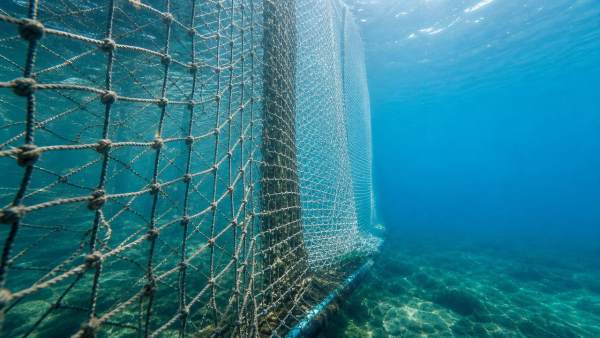
In commercial fishing and aquaculture, commercial fish netting failures rarely begin in rough seas—they often start with the wrong mesh choice. A mismatch in mesh size, material, or knot design can reduce catch efficiency, increase stock loss, and shorten net service life. Understanding these hidden risks helps operators make better purchasing and deployment decisions before minor errors turn into costly operational setbacks.
For vessel crews, farm technicians, and site operators, mesh selection is not a minor specification. It directly affects fish retention, water flow, fouling rates, handling safety, and replacement intervals. In many working environments, a net that appears acceptable on delivery can begin underperforming within 3 to 6 months if the mesh was not matched to species size, current speed, or lifting frequency.
This is why commercial fish netting should be evaluated as an operating asset rather than a consumable. Buyers and users who understand mesh geometry, twine behavior, and deployment conditions are better positioned to lower loss rates, stabilize output, and avoid unplanned maintenance shutdowns during peak production windows.
Why Mesh Choice Becomes the First Point of Failure
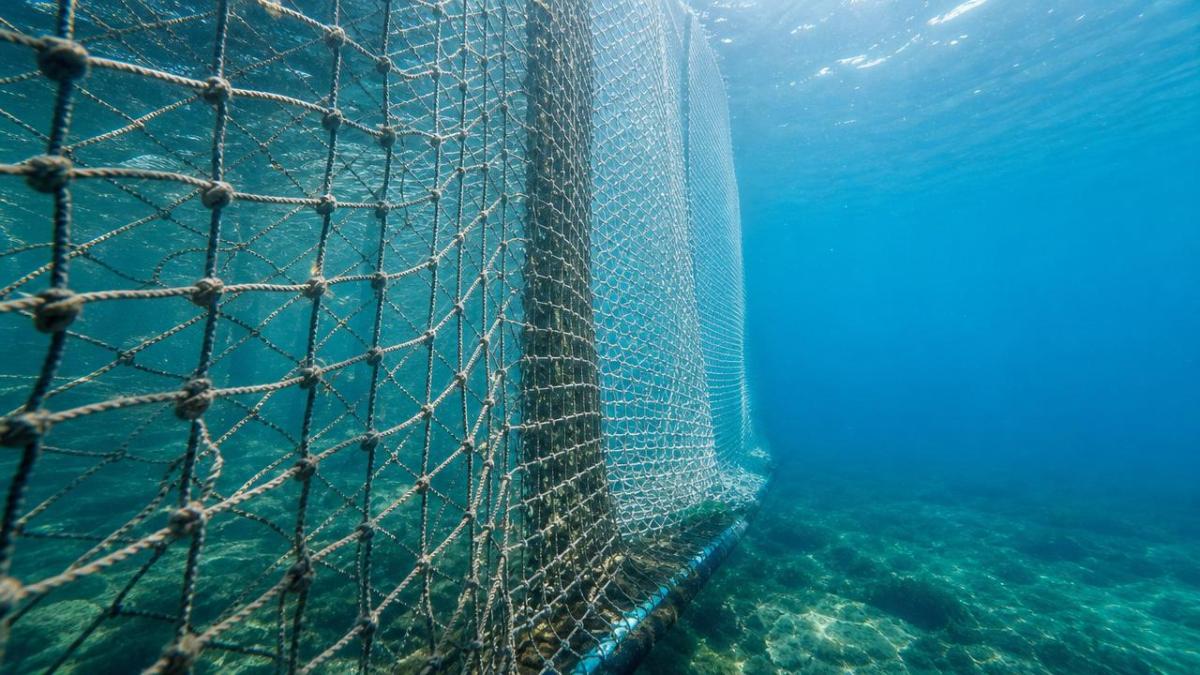
In both capture fisheries and aquaculture systems, the first failure in commercial fish netting is often functional before it is structural. A net may remain physically intact while still allowing undersized fish escape, increasing drag loads, or trapping debris at a rate that reduces oxygen exchange and handling speed.
Operators usually notice the symptoms in daily work: lower grading consistency, higher feed waste around cages, more frequent cleaning, or unexpected abrasion at contact points. These signs often appear long before visible tearing. In offshore or high-density systems, a 5% to 10% decline in effective water flow can already affect stock performance and maintenance scheduling.
Mesh size is more than a fish retention issue
Mesh size determines what stays in, what passes through, and how the net behaves under load. If the opening is too large, juvenile stock or target species can escape during crowding, grading, or rough weather. If the opening is too small, the system may suffer from increased drag, faster fouling, and heavier lifting loads during cleaning.
In cage farming, even a 2 mm to 5 mm difference in stretched mesh opening can change flow behavior materially. In trawl or seine operations, the wrong mesh range can reduce selectivity and increase sorting time on deck. For operators, that means more labor minutes per cycle and a higher chance of catch damage.
Material and knot design affect service life
Commercial fish netting is commonly produced in nylon, HDPE, polyester, or blended synthetic constructions. Each offers a different balance of abrasion resistance, water absorption, dimensional stability, and UV durability. A material that performs well in sheltered inland ponds may fail early in coastal sites with stronger salinity shifts, wave movement, and sunlight exposure.
Knot design also matters. Knotted netting may provide robust structural integrity in some working conditions, but it can create more friction points and localized stress. Knotless netting can reduce scale damage and improve handling in some species, yet it may require closer review of twine strength and edge finishing where repeated lifting occurs 2 to 4 times per week.
Common early warning signs at site level
- Irregular fish size retention after grading or transfer
- Cleaning intervals dropping from 14 days to 7 days due to faster fouling
- Increased chafing near rings, rollers, or mooring contact points
- Higher crew effort during hauling because of heavier water resistance
- Localized deformation that changes net shape under normal load
The table below outlines how the most common mesh-related errors show up in field operations and what they typically cost in time or performance.
The key takeaway is that mesh selection errors create compounding losses. One wrong specification can affect retention, cleaning, labor, and service life at the same time. That is why experienced operators review commercial fish netting performance by total operating impact rather than purchase price alone.
How Operators Should Evaluate Commercial Fish Netting Before Purchase
A practical procurement process begins with matching the net to real site conditions instead of catalog descriptions. In most operations, at least 4 variables should be reviewed together: species size range, water movement, handling frequency, and expected fouling pressure. Ignoring any one of these can lead to under-specifying or over-specifying the mesh.
Start with stock profile and operating stage
The correct mesh for juvenile containment is rarely the correct mesh for grow-out or harvest handling. Operators should define minimum and maximum body size, density level, and transfer frequency. A farm moving fish every 10 to 14 days may need a different twine and knot configuration than a site lifting only once per month.
Commercial fishing crews should also separate target retention goals from bycatch management. Mesh that improves hold rate for one species may increase sorting burden for another. In multi-species environments, the best option is often the one that balances capture efficiency with workflow speed and regulatory compliance.
Review environmental stress instead of only nominal strength
Breaking strength figures are useful, but they do not tell the full story. Salt exposure, UV intensity, suspended solids, predator pressure, and contact with metal hardware all influence how commercial fish netting performs after 90, 180, or 365 days in use. A net that tests well in dry specification sheets may lose efficiency quickly in abrasive or high-growth water.
Five checks before approving a net specification
- Confirm mesh opening in the loaded condition, not just flat measurement.
- Match twine diameter to abrasion points and lifting frequency.
- Assess knot or knotless design based on species sensitivity and handling style.
- Review expected fouling cycle and cleaning method, including pressure washing or drying.
- Request consistency in panel construction, seam reinforcement, and edge finishing.
The following comparison helps operators translate technical choices into practical purchasing decisions for commercial fish netting in different work settings.
This framework is especially useful for procurement teams working with operators on final approval. It shifts the conversation from generic “heavy-duty” claims to measurable job-site fit. In most cases, a better-specified net reduces maintenance interruptions more effectively than simply choosing the thickest available option.
Application-Specific Mesh Strategies for Fishing and Aquaculture
Not all commercial fish netting is exposed to the same mechanical or biological stress. Cage farming, pond harvesting, trawling, and live transfer each demand different mesh priorities. Operators who use a single specification across multiple stages often experience avoidable inefficiencies.
Aquaculture cages and grow-out systems
In cage systems, mesh must balance containment with water exchange. If the opening is too tight, fouling accumulates quickly and the cage becomes harder to clean. If too open, stock retention during early growth becomes unstable. Many sites therefore use staged mesh programs, shifting net configuration as fish move through 2 or 3 growth phases.
For operators, attention should also be given to anti-fouling strategy, net rotation cycle, and lifting frequency. A net cleaned weekly under high biofouling pressure requires different durability margins than one rotated every 30 to 45 days in colder, lower-growth waters.
Capture fishing and onboard handling
In active fishing operations, mesh influences catch selectivity, deck sorting speed, and product condition. Nets exposed to repeated winch loading and abrasion over rollers need stronger seam transitions and stable mesh geometry. If the mesh distorts under tension, crews may see inconsistent retention and higher repair rates after each trip cycle.
When catch quality affects sale value, surface friction is also critical. Rougher structures can increase scale loss or bruising in some species. In such cases, commercial fish netting should be selected not only for strength but also for handling outcome across 6 to 12 hour work periods.
Frequent mismatch scenarios
- Using juvenile containment mesh for later grow-out stages, causing unnecessary drag
- Selecting low-abrasion twine for high-contact deck gear environments
- Ignoring predator interaction where bite damage is a recurring monthly issue
- Using the same cleaning protocol despite seasonal fouling changes of 2x or more
The lesson across these scenarios is straightforward: commercial fish netting should follow the task, not just the inventory list. Matching the mesh to each operating phase often improves uptime more than increasing spare stock alone.
Maintenance, Inspection, and Lifecycle Control
Even a correctly selected net can fail early if inspection and maintenance routines are weak. Operators should treat commercial fish netting as a monitored asset with inspection points tied to lifting cycles, fouling level, and seasonal stress. A simple visual check is rarely enough once the net has been in service for several months.
Build an inspection routine around use frequency
For heavily used nets, quick checks may be needed every shift, with detailed inspections every 7 to 14 days. Lower-use installations may extend detailed reviews to 30 days, but only if fouling pressure and current loads are low. The key is to inspect seams, top lines, bottom contact zones, and areas around hardware connections where stress is concentrated.
Inspection records should also note mesh deformation, not just tears. A panel that has stretched 8% to 12% beyond its intended geometry may still look operational while already compromising containment and load distribution. Early intervention at this stage usually costs less than emergency panel replacement.
Manage cleaning and repair without creating new damage
Aggressive cleaning can shorten net life if nozzle pressure, drying conditions, or handling methods are not controlled. Repeated folding at the same points, dragging across rough surfaces, or storing damp netting for extended periods can accelerate wear. Operators should align cleaning tools with material type and service age.
Repair decisions should be based on damage location and load path. Small openings in low-stress areas may be patchable, but repeated damage near seams or attachment points often signals a specification problem rather than random wear. When the same zone fails 2 or 3 times, the root cause should be reviewed before the next replacement order.
Minimum lifecycle control checklist
- Log installation date and first deployment conditions.
- Track cleaning interval by site and season.
- Record every repair location and damage type.
- Review deformation, not only visible rupture.
- Compare actual service life against the expected replacement window.
With this level of control, buyers and operators can make better future purchasing decisions. Over time, the best commercial fish netting specification becomes the one supported by field records, not assumptions made at the first order stage.
Practical Buying Questions Before You Commit to a Mesh Specification
Before placing a new order, operators should convert experience into direct supplier questions. This reduces ambiguity and helps procurement teams compare offers on technical fit rather than headline price. A lower unit cost can become more expensive if service life drops from 18 months to 9 months under real working conditions.
Questions that improve purchasing accuracy
- What is the stated mesh opening under load and after wet conditioning?
- Which material is recommended for UV-heavy or high-salinity exposure?
- How is seam reinforcement configured for repeated lifting?
- What cleaning methods are suitable without accelerating fiber damage?
- What is the realistic replacement window in comparable environments?
What experienced operators prioritize
Experienced users usually rank fit-for-purpose above broad marketing claims. They look for stable mesh geometry, predictable handling, documented material suitability, and practical repairability. Those factors often have more impact on productivity than minor differences in quoted lead time or initial price.
When commercial fish netting is chosen with these priorities in mind, the result is better stock control, fewer emergency changes, and clearer planning for maintenance teams. That is especially important in regulated or export-oriented operations where loss events can affect both operating cost and compliance exposure.
Wrong mesh choice rarely fails all at once. It usually shows up as small operational penalties that build into larger losses across labor, stock security, cleaning frequency, and replacement cost. For operators in fishing and aquaculture, better results start with a more disciplined review of mesh size, twine material, knot structure, and actual site conditions.
AgriChem Chronicle supports industrial buyers and field teams with sector-focused insight that connects technical specifications to real operating outcomes. If you are evaluating commercial fish netting for a new installation, replacement cycle, or procurement upgrade, contact us to discuss your application, compare options, and get a more tailored solution pathway.
Related Intelligence
- Commercial FishingWhat Should You Check in a Fishery Equipment Maintenance Contract?What should I look for in a fishery equipment maintenance contract? Explore coverage, response times, costs, records, safety, and biosecurity essentials.
- Commercial FishingDo commercial fishing vessels with hybrid diesel-electric propulsion reduce fuel cost per kg landed by more than 12%?Commercial fishing vessels with hybrid diesel-electric propulsion *can* cut fuel cost per kg landed by >12%—but only under precise operational and infrastructure conditions. Discover the real ROI.
- Commercial FishingHow to Choose Oyster Processing Equipment for Capacity, Hygiene, and Labor EfficiencyOyster processing equipment guide: compare capacity, hygienic design, and labor efficiency to build a reliable, scalable line and make smarter buying decisions.
The Morning Broadsheet
Daily chemical briefings, market shifts, and peer-reviewed summaries delivered to your terminal.
