

The Authority in Global Agricultural Chemistry & Bio-Resources
How to Compare Nylon Fishing Nets Wholesale Without Missing Quality Risks
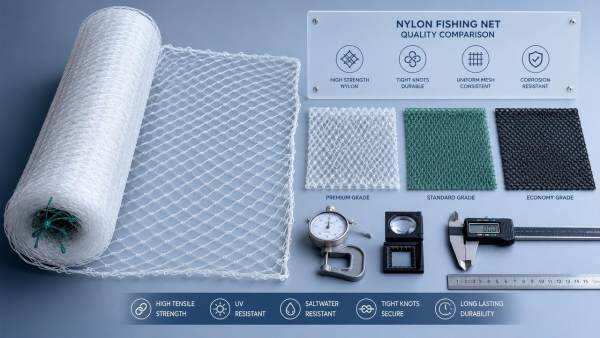
When evaluating nylon fishing nets wholesale, price alone can hide costly quality risks that affect durability, compliance, and long-term procurement performance.
For professional buyers, comparing suppliers requires a closer look at mesh consistency, knot strength, raw material grade, UV resistance, and production standards.
This guide explains how procurement teams can compare wholesale nylon nets more accurately, reduce supplier risk, and avoid decisions that create avoidable downstream losses.
What procurement buyers are really trying to compare
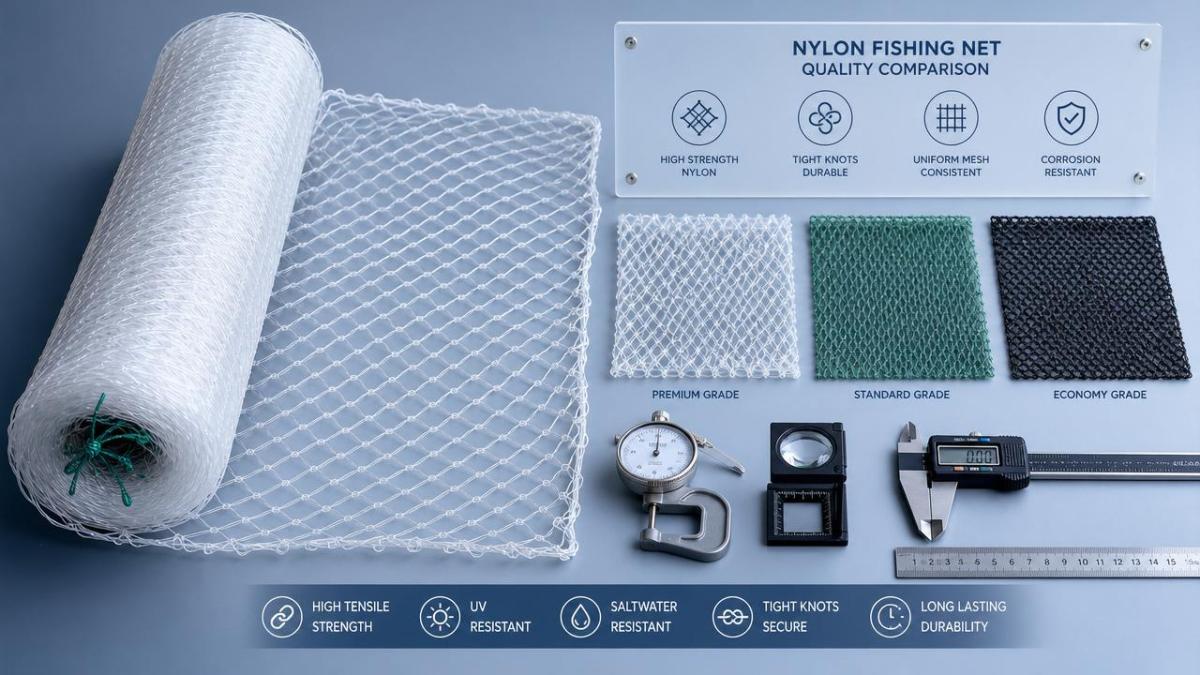
Most buyers searching for nylon fishing nets wholesale are not simply looking for the lowest quotation. They are trying to identify which offer is commercially safe.
In practice, the comparison is about total performance under operating conditions, not just unit price per kilogram, per piece, or per meter.
A cheap net that fails early, stretches unevenly, breaks at knots, or degrades in sunlight can create replacement costs far beyond the original savings.
For procurement personnel, the real question is straightforward: which supplier can deliver consistent net quality, verifiable specifications, and dependable after-sale accountability at scale?
That is why a reliable comparison method should combine technical review, manufacturing verification, compliance screening, and commercial risk analysis.
Why price comparisons alone create hidden quality exposure
Wholesale listings often appear similar on the surface. Mesh size, twine diameter, dimensions, and color may look comparable, while actual performance differs significantly.
The reason is that nylon fishing nets are influenced by factors not always visible in a quote sheet, especially resin grade, process control, heat setting, and knot quality.
Two suppliers may both offer “nylon multifilament netting,” yet one may use virgin material with stable tensile strength while another blends lower-grade or recycled inputs.
That difference can affect abrasion resistance, elongation, water absorption behavior, and service life in coastal, offshore, or aquaculture environments.
Buyers who compare only headline price often miss the operational cost of inconsistent batches, higher defect rates, more frequent replacement, and customer complaints downstream.
Start with the raw material: not all nylon is equal
The first technical checkpoint is the resin itself. Buyers should clarify whether the net is produced from nylon 6, nylon 6,6, or another specified polyamide formulation.
Each material profile influences strength retention, flexibility, moisture behavior, and price. A supplier should be able to state the exact base material clearly.
Just as important is whether the manufacturer uses virgin polymer, controlled blends, or recycled content. This point matters because hidden substitutions can reduce reliability.
For industrial procurement, recycled content is not automatically unacceptable, but it must be declared, technically justified, and matched to the intended fishing application.
Ask for material data sheets, supplier declarations, and batch-level traceability where possible. Vague claims such as “high-quality nylon” are not enough for commercial assurance.
Mesh consistency is one of the fastest ways to detect manufacturing quality
Uniform mesh opening is critical because it affects catch efficiency, water flow, handling behavior, and compliance with fishery regulations in some markets.
If mesh sizes vary too widely across the same net panel, users may face uneven stress concentration, unpredictable performance, and possible regulatory issues.
Procurement teams should request tolerance standards for mesh size and ask how the supplier measures consistency during production and final inspection.
Well-managed producers can usually provide inspection routines, sampling frequency, and dimensional tolerance ranges for stretched and unstretched conditions.
If possible, ask for physical samples from different production lots, not just one showroom sample. Lot-to-lot consistency is more important than a single ideal specimen.
Knot strength and twine construction deserve special scrutiny
In many fishing and aquaculture applications, failures begin at the knot. This is where stress concentration, friction, and poor process control often appear first.
A supplier offering nylon fishing nets wholesale should be able to explain knotting methods, tension control, and how knot slippage or weakness is minimized.
Buyers should also verify whether the twine is monofilament or multifilament, twisted or braided, because construction directly affects flexibility and break behavior.
Multifilament nets may offer handling advantages in some applications, while monofilament structures may be preferred in others for operational or catch-performance reasons.
The key point is not choosing a universally “best” format, but ensuring the construction fits the end use and is manufactured consistently.
Request tensile test data if available, but do not rely only on laboratory values. Field durability depends on knot retention, abrasion, and exposure conditions as well.
UV resistance and environmental durability are major cost drivers
Nylon nets used outdoors face sunlight, saltwater, mechanical wear, temperature shifts, and biological fouling. These conditions can rapidly expose weak formulations.
UV stabilization is especially important for buyers serving marine fisheries, fish farms, or coastal operations where netting remains exposed for long periods.
If UV additives are not properly incorporated, the net may become brittle, lose strength, or discolor faster than expected, reducing service life and raising replacement frequency.
Ask suppliers whether the product includes UV treatment, how they validate weather resistance, and whether any accelerated aging test data is available.
Also discuss the expected service environment. Nets used in offshore sunlight and salt spray require a different durability profile from short-cycle inland applications.
Good procurement decisions depend on matching product specification to actual operating exposure, not simply buying the strongest material on paper.
Production standards and factory discipline matter as much as product claims
Even when raw materials are acceptable, poor manufacturing discipline can undermine quality. This is why supplier evaluation should include process capability, not just product brochures.
Buyers should assess whether the factory has documented procedures for extrusion, twisting, knotting, stretching, heat setting, dyeing, and final inspection.
Look for evidence of batch identification, in-process quality checkpoints, nonconformance handling, and retention of inspection records.
A manufacturer serving export or industrial clients should also be able to explain packaging controls, moisture protection, labeling accuracy, and shipment traceability.
Certifications can help, but they should not replace direct questioning. A certificate alone does not prove that every batch meets the same operational standard.
When comparing suppliers, one of the strongest signals is whether technical and quality answers are specific, documented, and consistent across the sales and production teams.
Samples are useful, but sample strategy matters
Many buyers make the mistake of approving a net based on a single polished sample that does not represent normal production.
A better approach is to request samples tied to an actual production batch, with declared specifications and manufacturing date.
Where order value justifies it, buyers should compare multiple samples from different lots or request a pre-shipment sample from the confirmed batch.
During sample review, inspect mesh uniformity, knot neatness, odor, elasticity, finish quality, color consistency, and any visible signs of contamination or weak processing.
For critical commercial purchases, internal trials or customer field trials can reveal issues that no quotation sheet will disclose.
The goal is not to make sampling expensive, but to make it representative enough to reduce false confidence.
Questions buyers should ask every wholesale supplier before comparing quotes
Strong supplier comparison starts with disciplined questioning. Without standardized questions, procurement teams often compare incomplete or non-equivalent offers.
Ask each supplier to confirm raw material type, virgin or recycled content, mesh tolerance, twine diameter tolerance, knot type, UV treatment, and recommended application.
Request information on minimum order quantity, batch consistency controls, defect claim handling, lead time stability, and packaging specifications.
It is also wise to ask whether the supplier has experience shipping to your target market and meeting destination labeling or compliance expectations.
Commercial reliability matters too. Clarify payment terms, production capacity, peak-season constraints, and whether the quoted price is stable across repeat orders.
When all suppliers answer the same structured list, quote comparison becomes far more meaningful and much less vulnerable to hidden risk.
How to compare total procurement value, not just purchase cost
Professional buyers should evaluate total landed and operating cost instead of using ex-factory price as the primary decision metric.
A slightly higher-priced supplier may create better value if the nets last longer, produce fewer failures, reduce replacement frequency, and lower complaint management costs.
Include freight efficiency, packaging density, expected wastage, claim rate history, and quality inspection burden in the comparison model.
Also consider supplier responsiveness. When technical clarifications, replacement action, or urgent replenishment are needed, service quality becomes financially relevant.
For recurring procurement, consistency is often worth more than a one-time discount. Stable output reduces planning risk and protects downstream operating schedules.
This is especially true for institutional buyers who supply fleets, aquaculture operators, distributors, or multi-site commercial fishing businesses.
Common warning signs that a wholesale offer may carry quality risk
Several red flags appear repeatedly in low-visibility sourcing situations. One is unusually low pricing without a clear technical explanation.
Another is vague specification language, such as “best nylon,” “export quality,” or “strong enough for all fishing uses” without measurable detail.
Buyers should also be cautious when suppliers avoid discussing resin grade, cannot explain tolerance control, or provide test reports that do not match the quoted product.
Inconsistent communication between sales staff and factory staff is another risk indicator, especially when production questions receive delayed or generic responses.
Poor sample repeatability, missing labeling details, and resistance to pre-shipment inspection are also strong signs that quality assurance may be weak.
None of these points alone proves a supplier is unsuitable, but together they justify deeper review before committing to volume orders.
A practical framework for shortlisting nylon fishing net suppliers
To simplify decision-making, buyers can use a weighted scorecard. This helps convert technical and commercial observations into a repeatable procurement method.
For example, score suppliers across six areas: raw material transparency, construction quality, durability features, process control, commercial reliability, and total cost value.
Assign weights based on business priorities. A distributor focused on warranty claims may prioritize durability, while a fleet operator may emphasize service life under harsh exposure.
Use supporting evidence for each score, including specifications, samples, certificates, inspection reports, and response quality during technical discussions.
This framework reduces emotional or price-driven decisions and gives procurement teams a documented basis for supplier approval or rejection.
It also supports internal reporting when purchasing managers need to justify why one supplier was chosen over another with a higher or lower price.
Conclusion: compare wholesale nylon nets through risk, not price alone
Buying nylon fishing nets wholesale is ultimately a risk management decision as much as a sourcing exercise.
The safest comparison approach is to verify raw material quality, mesh consistency, knot strength, UV durability, process control, and supplier accountability before finalizing price decisions.
For procurement professionals, the most valuable supplier is rarely the one with the lowest initial offer. It is the one that delivers stable, application-fit quality with fewer surprises.
When buyers compare products using a structured technical and commercial framework, they protect margin, reduce field failures, and build a more dependable supply base.
That is the difference between purchasing a net and securing a reliable operational asset.
Related Intelligence
- Commercial FishingWhat Should You Check in a Fishery Equipment Maintenance Contract?What should I look for in a fishery equipment maintenance contract? Explore coverage, response times, costs, records, safety, and biosecurity essentials.
- Commercial FishingDo commercial fishing vessels with hybrid diesel-electric propulsion reduce fuel cost per kg landed by more than 12%?Commercial fishing vessels with hybrid diesel-electric propulsion *can* cut fuel cost per kg landed by >12%—but only under precise operational and infrastructure conditions. Discover the real ROI.
- Commercial FishingHow to Choose Oyster Processing Equipment for Capacity, Hygiene, and Labor EfficiencyOyster processing equipment guide: compare capacity, hygienic design, and labor efficiency to build a reliable, scalable line and make smarter buying decisions.
The Morning Broadsheet
Daily chemical briefings, market shifts, and peer-reviewed summaries delivered to your terminal.
