

The Authority in Global Agricultural Chemistry & Bio-Resources
China MIIT Approves 5 Milling Machinery Firms for Belt and Road Smart Farm Equipment Cloud Platform
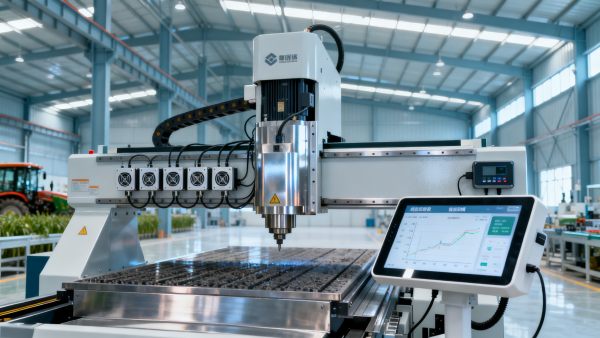
On May 10, 2026, China’s Ministry of Industry and Information Technology (MIIT) approved five milling machinery manufacturers to connect to the ‘Belt and Road’ Smart Farm Equipment Cloud Platform — a development with implications for international agricultural equipment trade, cross-border after-sales service providers, and localized digital solution integrators.
Event Overview
On May 10, 2026, MIIT published the third batch of enterprises authorized to access the ‘Belt and Road’ Smart Farm Equipment Cloud Platform. Five milling machinery manufacturers were included. The platform offers multilingual remote diagnostics, AI-driven spare parts demand forecasting, and customizable local-language operator interfaces. It is currently deployed across agricultural cooperatives in 12 countries, including Kazakhstan, Egypt, and Indonesia. Overseas customers can directly access real-time equipment operational data via the platform to verify production capacity and maintenance response performance.
Industries Affected
International Agricultural Equipment Exporters
These firms face new expectations for digital interoperability when entering Belt and Road partner markets. The platform’s requirement for standardized data output and remote diagnostics capability may influence tender eligibility or certification pathways in target countries.
After-Sales Service & Technical Support Providers
Providers operating in or supporting markets covered by the platform — particularly in Kazakhstan, Egypt, and Indonesia — may need to align their diagnostic tooling, technician training, and spare parts logistics with the platform’s AI prediction outputs and multilingual interface protocols.
Local Digital Integration Partners
In countries where the platform is active, local IT system integrators and agricultural digital service providers may be engaged to adapt the platform’s UI, integrate local farm management software, or support on-ground data connectivity — creating new partnership or localization service opportunities.
Component & Subsystem Suppliers to Milling Machinery OEMs
Suppliers whose components feed into the five newly approved manufacturers may see downstream demand shifts if those OEMs prioritize sensors, edge-computing modules, or communication hardware compatible with the platform’s remote monitoring architecture.
What Enterprises and Practitioners Should Monitor and Do Now
Track official updates on platform technical specifications and certification requirements
MIIT has not yet published public documentation on data format standards, API access rules, or cybersecurity compliance criteria for connected devices. Enterprises planning future integration should monitor MIIT’s official notices and platform operator announcements for formal technical guidelines.
Assess exposure to the 12 covered markets — especially Kazakhstan, Egypt, and Indonesia
These three countries are among the first confirmed deployment locations. Exporters, distributors, and service partners active there should review whether their current equipment telemetry capabilities, spare parts inventory models, or local language support meet the functional scope implied by the platform’s stated features.
Distinguish policy authorization from commercial readiness
The approval signifies regulatory eligibility, not automatic market adoption. There is no publicly confirmed information on platform usage rates, customer onboarding timelines, or commercial agreements between the five firms and overseas cooperatives. Enterprises should treat this as an early signal — not evidence of scaled deployment.
Prepare for localized interface and documentation alignment
Given the platform’s emphasis on localized operation interfaces and multilingual diagnostics, manufacturers and service partners should begin auditing existing user manuals, HMI translations, and technician training materials for consistency with common languages used in the 12 covered countries — notably Arabic, Russian, and Bahasa Indonesia.
Editorial Perspective / Industry Observation
Observably, this approval reflects a deliberate step toward institutionalizing data-enabled trust mechanisms in cross-border agricultural equipment trade — shifting part of buyer due diligence from physical audits to verifiable, real-time operational data. Analysis shows it is more a procedural milestone than an immediate commercial inflection point: the platform’s impact remains contingent on actual device connectivity rates, cooperative participation, and interoperability with existing local farm systems. From an industry perspective, the move signals growing emphasis on post-sale digital infrastructure as a component of export competitiveness — not just hardware performance.
Conclusion: This development does not signify an immediate shift in procurement behavior or service delivery standards, but rather marks the formalization of a framework through which such standards may evolve. It is better understood as an early-stage policy scaffolding for digital traceability and service transparency — one that warrants ongoing observation, not immediate operational overhaul.
Information Source: Official announcement issued by China’s Ministry of Industry and Information Technology (MIIT), dated May 10, 2026. Note: Platform technical specifications, rollout timelines beyond the 12 named countries, and commercial uptake metrics remain unconfirmed and are subject to further official disclosure.
Related Intelligence
- Milling MachineryAre Third-Party Auditors Necessary When Buying Grain Machinery?Is it necessary to hire third party auditors for grain machinery? Discover when independent inspections reduce risk, verify compliance, and protect your investment.
- Milling MachineryWhat Documentation Is Required to Import Grain Milling Equipment?What documentation do I need for importing grain milling equipment? Explore essential customs, technical, compliance, and shipping records for smooth clearance.
- Milling MachineryDo Agricultural Processing Operations Require Specific Environmental Permits?Does agricultural processing require specific environmental permits? Discover key air, wastewater, stormwater, waste, and chemical compliance requirements before expanding operations.
The Morning Broadsheet
Daily chemical briefings, market shifts, and peer-reviewed summaries delivered to your terminal.
