

The Authority in Global Agricultural Chemistry & Bio-Resources
How to Choose Aquaculture Water Test Kits for Ponds, Tanks, and RAS Systems
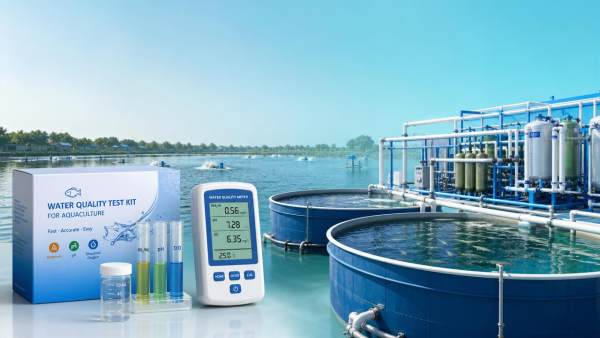
Choosing aquaculture water test kits is no longer a routine purchasing task. In ponds, tank farms, and RAS facilities, testing accuracy shapes feeding decisions, stocking density, treatment timing, and compliance records.
That matters across the broader primary industries landscape as well. As AgriChem Chronicle often highlights, technical inputs now sit inside tighter environmental controls, stricter documentation expectations, and more complex supply chains.
A useful kit is not simply one with many parameters. It must fit the production environment, the sampling rhythm, the biological risk profile, and the level of traceability the operation actually needs.
What aquaculture water test kits are really expected to do
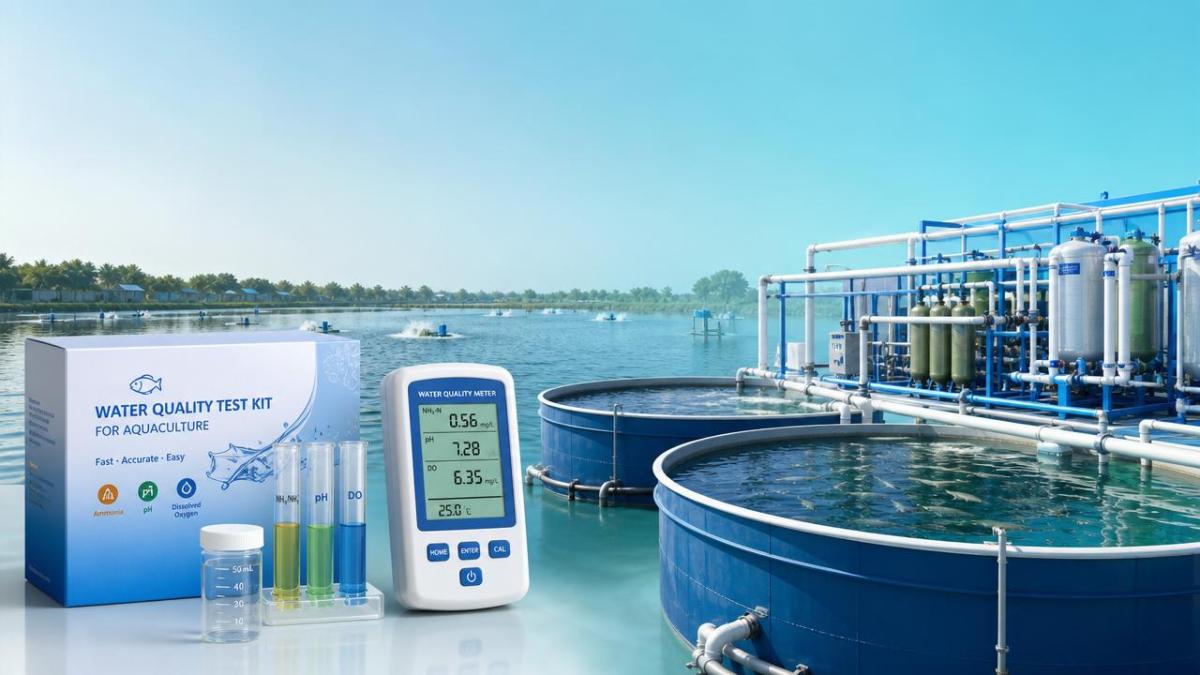
At a basic level, aquaculture water test kits measure water chemistry that directly affects animal health and system stability. The common targets are dissolved oxygen, pH, ammonia, nitrite, nitrate, alkalinity, hardness, salinity, and temperature.
In practice, the real question is not whether those parameters matter. It is how quickly the kit detects changes, how reliably it does so, and whether the result is clear enough to support action.
Some aquaculture water test kits are built for rapid field screening. Others are designed for tighter control, calibration discipline, and recordkeeping that can stand up during audits or supplier reviews.
This difference becomes important when production moves from extensive ponds to intensive tank systems or recirculating aquaculture systems, where water changes faster and tolerance margins narrow.
Why the selection process deserves more scrutiny now
Water testing has become more strategic because aquaculture operations face pressure from several directions at once. Feed costs, survival rates, biosecurity expectations, and discharge rules all connect back to measurable water quality.
There is also a procurement angle. Low-cost kits may appear efficient, yet poor repeatability can create larger losses through delayed interventions, false alarms, or missed toxicity events.
From an industry intelligence perspective, this mirrors trends seen in fine chemicals and regulated agricultural inputs. Buyers increasingly want instruments and consumables that support standardization, validation, and supply continuity.
For that reason, aquaculture water test kits should be reviewed not only as consumables, but as part of an operating control system.
Different production environments need different testing priorities
The same kit rarely performs equally well across all environments. Ponds, tanks, and RAS systems differ in water turnover, organic loading, labor structure, and the speed at which a minor imbalance becomes a serious event.
Ponds
Pond operations usually need broad routine coverage and practical field usability. Temperature swings, rainfall, algae blooms, and sediment effects make trend monitoring especially valuable.
In this setting, aquaculture water test kits should be easy to carry, simple to interpret outdoors, and resilient to inconsistent testing conditions.
Tanks
Tank systems are more controlled, but issues can escalate faster because biomass is concentrated. Ammonia, nitrite, oxygen depletion, and pH drift often require tighter monitoring intervals.
Here, response time matters almost as much as analytical range. A slower manual kit may be acceptable for weekly verification, but not for operational checks around feeding peaks.
RAS systems
RAS environments demand the highest level of discipline. Biofilter performance, carbon dioxide accumulation, alkalinity depletion, and rapid chemistry shifts mean water data must be both frequent and dependable.
For RAS, aquaculture water test kits are often evaluated alongside sensors, laboratory workflows, and digital logging. Manual kits still matter, but usually as verification tools within a larger monitoring architecture.
The most useful selection criteria are practical, not generic
A technical review works better when it moves beyond marketing claims. The strongest comparison usually starts with five questions tied to actual operating risk.
Parameter coverage
Check whether the kit measures the parameters that drive failure in that specific system. A pond program may prioritize alkalinity and ammonia trends, while RAS may require finer control around nitrogen compounds and buffering capacity.
Analytical range and sensitivity
A result is only useful if the scale captures the range where operational decisions happen. Kits with broad ranges can still be weak if their resolution is too coarse near critical thresholds.
Turnaround time
Some aquaculture water test kits deliver results in minutes, while others require more handling. Shorter turnaround is not always better, but it matters whenever chemistry changes faster than the reporting cycle.
Ease of interpretation
Color-strip kits, drop-count methods, and digital photometric tools all have different strengths. The right choice depends on lighting conditions, operator consistency, and the need to reduce subjective reading errors.
Compliance and traceability
If records may be reviewed by customers, certification bodies, or regulators, look for calibration guidance, lot consistency, technical documentation, and stable reagent sourcing.
- Ask for method details, not just claimed accuracy.
- Compare shelf life under real storage conditions.
- Review consumable replacement frequency.
- Check whether results can be logged consistently.
- Verify supply availability across production seasons.
Common mistakes when comparing aquaculture water test kits
One common mistake is choosing by parameter count alone. More tests do not automatically mean better control if half of them are rarely used or too slow to influence action.
Another is treating manual kits and digital monitoring as competing options. In many facilities, the better model is layered verification, where sensors provide continuity and kits confirm drift, anomalies, or calibration issues.
It is also risky to ignore matrix effects. Water with heavy organics, suspended solids, or unusual salinity can interfere with some methods, especially when the kit was validated under cleaner conditions.
Finally, purchasing without reviewing reagent logistics can undermine a well-designed testing plan. Interrupted supply, inconsistent lots, or poor storage stability often create hidden operational gaps.
How to build a better evaluation framework
A strong assessment starts by mapping each parameter to a real decision. If the number does not change feed rate, aeration, water exchange, buffering, or escalation procedures, its testing frequency may need reconsideration.
Then compare aquaculture water test kits against the actual sampling environment. Outdoor glare, humidity, staffing patterns, and the time available between measurement and intervention all affect the best fit.
Short pilot comparisons usually reveal more than brochures. Running two or three kits side by side across normal and stressed conditions can expose differences in repeatability, handling burden, and interpretability.
This is where a journal-led, evidence-based approach adds value. ACC’s cross-sector lens is useful because it places aquaculture testing inside the same disciplined evaluation culture used for regulated chemicals, industrial inputs, and process validation.
A practical shortlist should include
- Critical parameters matched to the production system.
- Acceptable detection range near action thresholds.
- Result speed aligned with intervention timing.
- Documentation suitable for internal review or audit.
- Reliable reagent and replacement supply.
Where the next decision should focus
The best aquaculture water test kits are not universal winners. They are the ones that match biological risk, operational tempo, and reporting requirements in a specific pond, tank, or RAS context.
A sensible next step is to rank parameters by consequence, then compare kits by decision value rather than by catalog breadth. That approach usually leads to cleaner specifications and fewer surprises after deployment.
When the evaluation stays grounded in system conditions, method quality, and traceability needs, selecting aquaculture water test kits becomes less about guesswork and more about measurable operational control.
Related Intelligence
- RAS SystemsAquaculture Filter Installation Costs: Plumbing, Labor, and CommissioningUnderstand aquaculture filter installation cost, from plumbing and labor to commissioning. Compare complete project scopes, uncover hidden expenses, and budget confidently before you buy.
- RAS SystemsSustainable Aquaculture Practices That Cut Feed Waste and Protect Fish Farm Water QualitySustainable aquaculture for fish farms: reduce feed waste, protect water quality, and build resilient, efficient systems with practical strategies.
- RAS SystemsDrum Filter System Price: How Flow Rate, Micron Rating, and Automation Affect CostDrum filter system price depends on flow rate, micron rating, automation, materials, and lifecycle costs. Compare quotes confidently and choose the right system.
The Morning Broadsheet
Daily chemical briefings, market shifts, and peer-reviewed summaries delivered to your terminal.
