

The Authority in Global Agricultural Chemistry & Bio-Resources
EU Tightens RAS Import Approval From Sept. 1, 2026
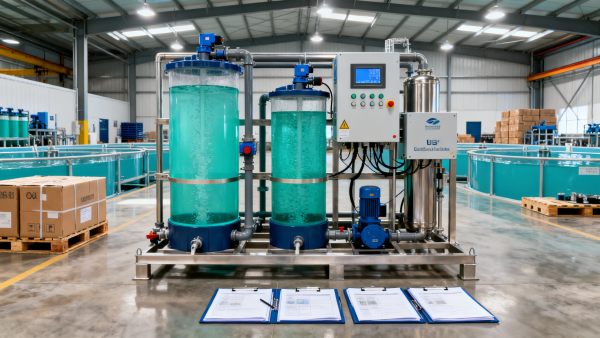
On July 15, 2026, the European Commission issued Regulation (EU) 2026/1183, introducing a pre-approval requirement for recirculating aquaculture system (RAS) equipment exported to the EU for commercial aquaculture use. For manufacturers, exporters, buyers, and supply chain partners involved in integrated RAS systems, this is worth close attention because market access will now depend on whether the equipment has completed EU-CEP pre-assessment and obtained a technical compliance declaration before shipment.
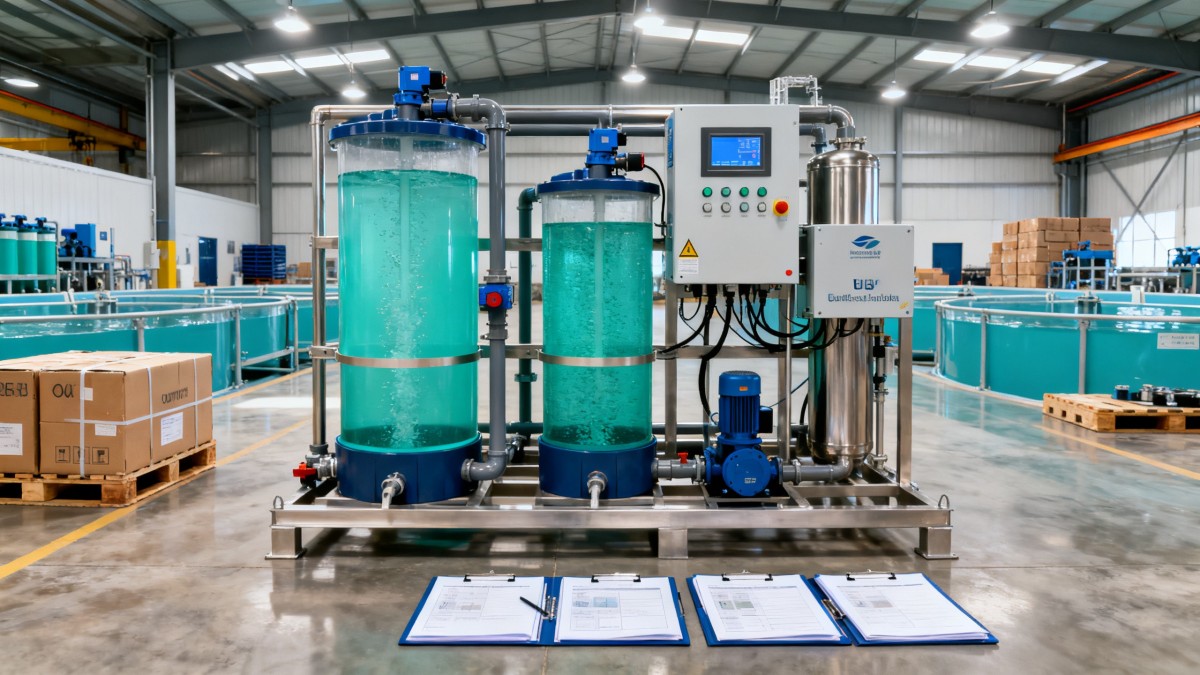
What the new rule formally requires
The confirmed change is that complete RAS equipment intended for commercial aquaculture must pass the EU Common Evaluation Procedure (EU-CEP) before being exported to the European Union. According to the information provided, the rule applies to integrated systems that include biological filtration, dissolved oxygen control, and water quality monitoring modules. The regulation was released by the European Commission on July 15, 2026, and mandatory enforcement will begin on September 1, 2026.
The summary provided also makes clear that products without the required pre-approval certificate will be refused at the port of entry. This turns pre-shipment compliance from a documentation issue into a direct market-access condition.
Where the pressure is likely to appear first
Export-facing RAS manufacturers
From an industry perspective, manufacturers that ship integrated RAS equipment to the EU are the most directly affected. Their exposure is tied to export eligibility, because the new requirement applies before products enter the EU market. The main operational pressure is likely to center on product qualification, technical documentation readiness, and shipment scheduling.
Trading companies and EU-bound project suppliers
Companies acting as export traders or project intermediaries may also face immediate disruption risk. Analysis shows that their role often sits between manufacturer compliance status and customer delivery expectations, so any mismatch between certification readiness and shipment timing could affect contract execution, customs clearance, and client communication.
Procurement teams and overseas buyers
For buyers sourcing complete RAS systems for commercial aquaculture, the issue is no longer limited to equipment performance or price. What deserves closer attention is whether the selected system falls within the covered scope and whether the supplier can present the required technical compliance declaration before delivery. This could affect procurement timelines and supplier screening.
Logistics and compliance service providers
Supply chain service providers involved in export documentation, customs preparation, and delivery coordination may need to pay closer attention to compliance status before shipment. Observably, the risk point described in the provided information is port rejection, which means document verification and timing control may become more sensitive in EU-bound transactions.
What companies should review now
Check whether the exported product is an in-scope complete system
Companies should first focus on product scope. The information provided points specifically to complete systems containing biological filtration, dissolved oxygen control, and water quality monitoring modules. In practical terms, businesses need to determine whether their EU-bound offering fits this definition before making delivery commitments.
Reassess lead times against the September 1 enforcement date
Analysis shows that the rule matters not only because it exists, but because enforcement has a defined start date. For firms with ongoing quotations, pending orders, or scheduled deliveries to the EU, lead time assumptions may need to be reviewed in light of the pre-assessment requirement and the stated consequence of port refusal for non-certified products.
Prepare technical and compliance communication earlier in the sales cycle
What deserves closer attention is the point at which compliance information is shared with customers and partners. Where EU-bound business is involved, supplier qualification discussions, technical declarations, and shipment planning may need to move earlier in the process to reduce disputes over delivery timing or acceptance conditions.
Continue tracking any official clarifications
Although the core requirement is clear in the provided summary, companies should distinguish between the confirmed rule and any later implementation details that may follow. Observably, the immediate confirmed fact is the pre-approval obligation and enforcement date; additional official wording or procedural clarification would remain a matter for continued monitoring rather than assumption.
Why this looks like more than a short-term compliance note
Analysis shows that this development is more appropriately understood as an operational market-access signal rather than a minor paperwork update. The regulation connects technical review directly to entry into the EU market, and the stated consequence of refusal at the port raises the commercial importance of pre-shipment compliance.
At the same time, it is still more appropriate to understand the broader industry effect as something that needs continued observation rather than a fully defined long-term outcome. The provided information confirms the rule, the covered system features, the enforcement date, and the port-rejection consequence, but it does not establish wider market results beyond those points.
How the industry should read this development now
At this stage, the most rational reading is that the EU has moved compliance review for certain commercial aquaculture RAS equipment further upstream, making pre-export qualification a practical requirement for doing business in that market. For affected companies, the immediate issue is not abstract policy direction but whether product scope, documentation, and delivery planning are aligned with the September 1, 2026 enforcement threshold.
In that sense, this is both a near-term operational change and a longer-term signal that technical access conditions for EU-bound aquaculture equipment deserve closer management attention. The full commercial impact still requires observation, but the compliance trigger itself is already clear.
Basis of this article and follow-up verification
This article is based on the user-provided news title, event date, and event summary concerning Regulation (EU) 2026/1183 issued on July 15, 2026. For this type of industry update, relevant source categories typically include official regulatory notices, company statements, industry association releases, authoritative media coverage, and standards-related documents. A specific official source link was not provided in the input, so further verification of the original regulatory text and any subsequent implementation clarification remains necessary. Continued attention should focus on any official clarification of procedural details, scope interpretation, and execution requirements tied to EU-CEP pre-assessment.
Related Intelligence
- RAS SystemsSustainable Aquaculture Practices That Cut Feed Waste and Protect Fish Farm Water QualitySustainable aquaculture for fish farms: reduce feed waste, protect water quality, and build resilient, efficient systems with practical strategies.
- RAS SystemsDrum Filter System Price: How Flow Rate, Micron Rating, and Automation Affect CostDrum filter system price depends on flow rate, micron rating, automation, materials, and lifecycle costs. Compare quotes confidently and choose the right system.
- RAS SystemsHow to Specify Large-Scale Fish Farming Equipment for High-Output RAS ProjectsLarge scale fish farming equipment guide for high-output RAS projects—specify tanks, filtration, oxygen, automation, and redundancy for reliable growth.
The Morning Broadsheet
Daily chemical briefings, market shifts, and peer-reviewed summaries delivered to your terminal.
