

The Authority in Global Agricultural Chemistry & Bio-Resources
China Expands Pre-Inspection Pilot for LCL Exports
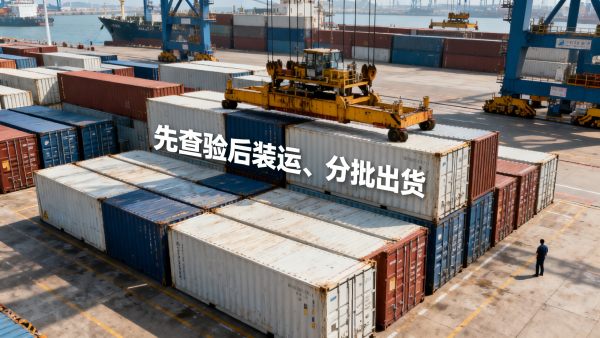
On 2026-05-01, attention in the export trade and logistics market turned to a clear customs execution change: from May 2026, China Customs is expanding the pilot for a “inspect first, load later” model for LCL exports to 12 ports, including Ningbo, Qingdao, and Xiamen. For exporters, supply chain service providers, buyers, and shipment planning teams involved in market procurement, cross-border e-commerce, and modular exports of RAS Systems equipment, this matters because it changes how inspection and shipment timing can be organized and may reduce delivery uncertainty for high-value cargo.
What the pilot expansion confirms
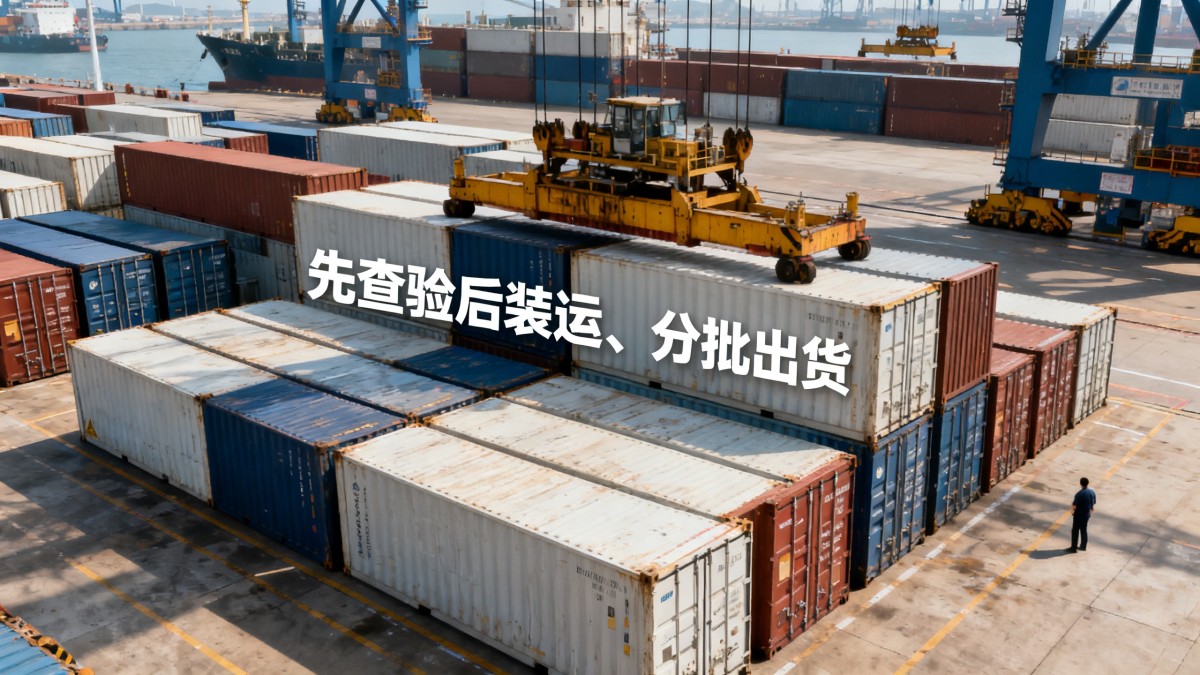
The confirmed change is that, starting in May 2026, the General Administration of Customs has expanded the pilot arrangement for “inspect first, load later” in export LCL operations to 12 ports, including Ningbo, Qingdao, and Xiamen.
The scope described in the event summary includes market procurement, cross-border e-commerce, and modular export scenarios for RAS Systems equipment. The summary also states that companies can complete inspection on a full-container basis and then ship in batches.
The same summary indicates that this arrangement improves export LCL efficiency by 35% and materially lowers logistics uncertainty for high-value equipment such as aquaculture systems and smart greenhouse controllers.
Where the operational impact may appear first
Shipment planning becomes more relevant for exporters of modular equipment
From an industry perspective, exporters handling modular equipment or other high-value goods may be among the first to feel the practical effect, because the rule change is directly tied to inspection sequence and staged shipment. The main impact may appear in cargo consolidation, shipment scheduling, and delivery coordination. What deserves closer attention is whether internal export documentation, product descriptions, and batch shipment records remain consistent when goods are pre-inspected together but dispatched in multiple lots.
Supply chain service providers may need to adjust execution steps
For freight forwarders, consolidation operators, and other supply chain service providers, the change matters because it can alter the order of warehouse handling, inspection booking, loading, and release planning. Analysis shows that the operational value is not only faster movement, but also clearer coordination between customs-facing procedures and downstream delivery commitments. These participants should pay close attention to document control, cargo identification, and handoff records linked to split shipments after pre-inspection.
Buyers and procurement teams may revisit delivery risk assumptions
For procurement teams sourcing aquaculture systems, smart greenhouse controllers, or similar high-value equipment, the relevance lies in delivery predictability rather than in customs procedure alone. Observably, if exporters can pre-inspect a larger shipment and release goods in batches, procurement planning, installation sequencing, and acceptance timing may be managed with less logistics uncertainty. Even so, buyers still need to monitor how suppliers reflect this arrangement in delivery schedules, technical files, and post-shipment traceability materials.
What companies should watch in practice
Keep compliance files aligned with staged shipment arrangements
Analysis shows that companies should review whether product documentation, packing data, inspection-related materials, and shipment records can support a model in which goods are checked before later batch dispatch. Where equipment is high in value or modular in structure, consistency across documents becomes more important.
Follow port-level execution wording and official clarifications
What deserves closer attention is the operational wording that may follow this expansion at the port and execution level. The event summary confirms the expansion and application scope, but it does not provide detailed implementation language for every scenario. Companies should therefore keep watching for official clarifications that affect daily filing, release timing, and shipment coordination.
Review delivery commitments for market procurement and cross-border e-commerce flows
For businesses operating in market procurement and cross-border e-commerce channels, this development may influence how delivery promises are structured. It is more appropriate to understand this as a practical trade-process change that could affect dispatch planning, customer communication, and exception handling, rather than as a blanket guarantee of identical results across all export cases.
Prepare after-sales and traceability records for high-value equipment
For suppliers of aquaculture systems, smart greenhouse controllers, and similar goods, it remains important to keep shipment batches, technical materials, and after-sales tracking aligned. Observably, lower logistics uncertainty does not remove the need for clear quality traceability when equipment is delivered in stages.
Why this looks like an execution signal rather than a finished rule story
Analysis shows that this update is best read as an execution signal with immediate operational relevance, not as a closed policy story. The confirmed facts point to a broader customs trial footprint and a more flexible sequence between inspection and shipment for LCL exports. At the same time, the market still needs to observe how consistently the approach is implemented across covered ports and business scenarios.
From an industry perspective, the significance lies in the fact that customs procedure is moving closer to the practical needs of staged export delivery, especially where equipment value is high and shipment timing carries commercial risk. That said, it would be premature to treat the current information as a complete picture of all execution standards.
How to read this development now
At this stage, this event is more appropriately understood as a landed procedural change with broader pilot coverage and visible implications for export coordination, compliance handling, and delivery planning. It does not by itself confirm uniform outcomes for every exporter or cargo type, but it does indicate that inspection sequence is becoming a more important part of trade execution strategy for affected LCL flows.
A neutral reading is that the development deserves close attention from exporters, logistics operators, and buyers that depend on staged shipment of high-value equipment. The practical impact will be clearer as implementation language, market feedback, and business execution continue to emerge.
Basis of this article and what still needs verification
This article is generated from the user-provided news title, event date, and event summary. It does not rely on any additional unverified policy number, corporate case, market figure, or external link.
Source types commonly relevant to developments of this kind include official announcements, releases from customs or trade authorities, industry association notices, standard-setting documents, and reporting by authoritative media. A specific official source link was not provided in the input, so it still requires ongoing verification.
What still needs observation includes later policy details, execution wording, customs practice at covered ports, any compliance interpretation linked to specific cargo categories, changes in tender or procurement documentation, and feedback from companies implementing the arrangement in actual export operations.
Related Intelligence
- RAS SystemsAquaculture Filter Installation Costs: Plumbing, Labor, and CommissioningUnderstand aquaculture filter installation cost, from plumbing and labor to commissioning. Compare complete project scopes, uncover hidden expenses, and budget confidently before you buy.
- RAS SystemsSizing RAS Equipment: Matching Biofilters and Oxygen Supply to Feed LoadSize ras equipment around peak feed load—not tank volume. Learn how to match biofilters and oxygen supply, avoid costly sizing errors, and plan reliable backup capacity.
- RAS SystemsAquaculture System Technologies: Comparing Ponds, Flow-Through, and RASCompare aquaculture systems technologies—ponds, flow-through, and RAS—to assess water needs, costs, and risks. Discover which system best fits your site and production goals.
The Morning Broadsheet
Daily chemical briefings, market shifts, and peer-reviewed summaries delivered to your terminal.
