

The Authority in Global Agricultural Chemistry & Bio-Resources
Peru Tightens Eco-Standard for Imported Fishing Gear
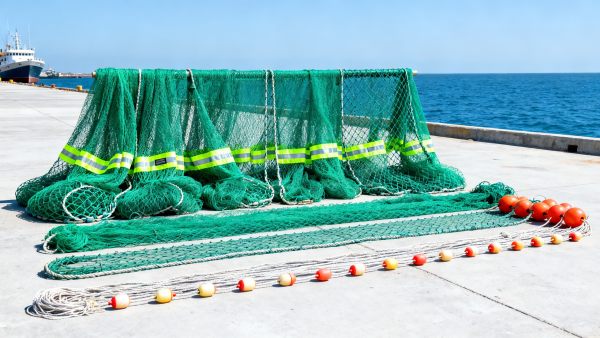
On May 14, 2026, Peru’s Institute of Marine Research (IMARPE) issued Resolution No. 089-2026-IMARPE, mandating new ecological entanglement risk requirements for imported commercial fishing gear—including trawls, purse seines, and longlines. The regulation directly affects Chinese fishing gear exporters, requiring third-party certification to demonstrate ≤0.3% entanglement probability for sea turtles, seabirds, and juvenile fish in Peruvian waters. With implementation deadlines looming by August 2026, the rule signals a growing regulatory convergence between Latin American fisheries management and global sustainability benchmarks.
Event Overview
IMARPE published Resolution No. 089-2026-IMARPE on May 14, 2026. It requires all imported commercial fishing gear—specifically bottom trawls, pelagic trawls, purse seines, and buoy-anchored longlines—to undergo an ‘Ecological Entanglement Risk Assessment’ (ERA). The ERA must be conducted by IMARPE-authorized laboratories and confirm that the gear’s entanglement probability for protected or vulnerable marine species (sea turtles, seabirds, and juvenile fish) does not exceed 0.3% under representative Peruvian operational conditions. Chinese manufacturers must complete initial ERA testing for their flagship export models by August 2026.
Industries Affected
Direct Export Trading Firms: These companies face immediate compliance pressure, as IMARPE’s ERA certification is now a mandatory customs clearance condition—not merely a technical recommendation. Non-certified shipments risk rejection at Peruvian ports, triggering contractual penalties, storage fees, and reputational exposure with local distributors. Unlike prior voluntary eco-labeling schemes, this resolution carries binding legal force under Peru’s General Fisheries Law (Law No. 28693).
Raw Material Sourcing Enterprises: Suppliers of monofilament nylon, biodegradable twine, and acoustic netting components must now provide traceable environmental performance data—such as polymer degradation rates in seawater or mesh visibility indices—to support ERA modeling. Their material specifications will directly influence whether final gear assemblies pass the 0.3% threshold.
Fishing Gear Manufacturing Companies: Design and production workflows are impacted at multiple stages: prototype testing must now include species-specific hydrodynamic simulations; mesh geometry, float-sink ratios, and line diameter distributions must be documented for ERA submission; and quality control records must align with IMARPE’s audit trail requirements. Retrofitting legacy products may prove cost-prohibitive, prompting accelerated R&D cycles.
Supply Chain Service Providers: Certification consultants, logistics coordinators handling lab sample dispatch, and marine surveyors engaged for field validation tests face increased demand—but also heightened liability. IMARPE explicitly states that false or incomplete ERA submissions may trigger joint liability across the entire certification chain, including third-party service providers.
Key Considerations and Recommended Actions
Verify IMARPE-Authorized Laboratory Eligibility
Not all ISO/IEC 17025-accredited labs qualify. Only those listed on IMARPE’s updated Registro de Laboratorios Autorizados para Evaluaciones ERA (updated May 2026) may issue valid reports. Exporters should cross-check lab status before initiating testing—and note that lab capacity remains limited, with average turnaround exceeding 45 working days.
Conduct Pre-Certification Gap Analysis
Manufacturers should commission internal ERA screening using IMARPE’s publicly released simulation parameters (e.g., current velocity profiles for the Humboldt Current system, regional seabird dive-depth datasets). This helps identify high-risk design features—such as excessive net panel overlap or low-visibility leader lines—before formal lab engagement.
Update Commercial Contracts and Incoterms
FOB or CIF clauses must now explicitly allocate responsibility for ERA certification costs, documentation ownership, and liability for non-compliance. Buyers in Peru increasingly require ERA readiness confirmation as a pre-shipment condition—making contract renegotiation urgent for ongoing orders.
Editorial Perspective / Industry Observation
Observably, this resolution reflects a broader shift: Latin American fisheries agencies are moving beyond catch-quota enforcement toward upstream gear-level accountability. While similar standards exist in the EU (e.g., Regulation (EU) 2019/1241) and New Zealand (Fishing Rules 2022), IMARPE’s explicit 0.3% probabilistic threshold introduces unprecedented quantifiability—and thus greater enforceability. Analysis shows that fewer than 12% of currently exported Chinese trawl designs meet that threshold in preliminary modeling, suggesting significant near-term adjustment costs. From an industry perspective, this is less a one-off compliance hurdle and more a signal that ecological risk modeling is becoming foundational infrastructure—not optional add-on verification.
Conclusion
This policy marks a structural inflection point: environmental performance is no longer differentiated as a marketing attribute but embedded as a technical prerequisite for market access. For Chinese fishing gear exporters, adaptation requires coordinated action across R&D, procurement, legal, and logistics functions—not isolated certification procurement. The August 2026 deadline is not merely procedural; it tests operational resilience in responding to science-based, jurisdiction-specific sustainability mandates.
Source Attribution
Official source: IMARPE Resolution No. 089-2026-IMARPE, published May 14, 2026, available at imarpe.gob.pe/resoluciones/089-2026. Annexes include ERA methodology guidelines and laboratory accreditation criteria. Note: IMARPE has indicated plans to extend ERA requirements to artisanal-scale gear and aquaculture netting in Q1 2027—subject to stakeholder consultation currently underway. This extension remains under observation.
Related Intelligence
- Commercial FishingWhat Should You Check in a Fishery Equipment Maintenance Contract?What should I look for in a fishery equipment maintenance contract? Explore coverage, response times, costs, records, safety, and biosecurity essentials.
- Commercial FishingDo commercial fishing vessels with hybrid diesel-electric propulsion reduce fuel cost per kg landed by more than 12%?Commercial fishing vessels with hybrid diesel-electric propulsion *can* cut fuel cost per kg landed by >12%—but only under precise operational and infrastructure conditions. Discover the real ROI.
- Commercial FishingHow to Choose Oyster Processing Equipment for Capacity, Hygiene, and Labor EfficiencyOyster processing equipment guide: compare capacity, hygienic design, and labor efficiency to build a reliable, scalable line and make smarter buying decisions.
The Morning Broadsheet
Daily chemical briefings, market shifts, and peer-reviewed summaries delivered to your terminal.
