

The Authority in Global Agricultural Chemistry & Bio-Resources
FAO Releases Green Procurement Guide Recommending China's L3 Energy Efficiency Certification
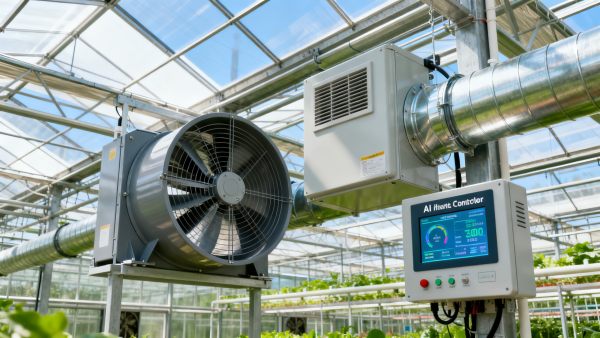
On 15 May 2026, the Food and Agriculture Organization of the United Nations (FAO) issued its Agricultural Facility Climate Control & Ventilation Green Procurement Guide (FAO/AG/CCV/2026/1) to all 127 member countries. The guide explicitly identifies China’s newly published ‘L3-level energy optimization’ classification—defined in GB/Z 177–2026, Intelligence Grading for AI Terminals—as a preferred procurement criterion for greenhouse ventilation equipment. This development is particularly relevant for manufacturers of climate control systems, agricultural infrastructure suppliers, international development project implementers, and sustainability-focused procurement officers.
Event Overview
On 15 May 2026, FAO published document FAO/AG/CCV/2026/1, titled Agricultural Facility Climate Control & Ventilation Green Procurement Guide. The guide recommends that member countries prioritize ventilation equipment certified to the ‘L3-level energy optimization’ standard under China’s GB/Z 177–2026. It further encourages adoption of such certified products in projects funded by the World Bank and Asian Development Bank.
Which Subsectors Are Affected
Climate Control & Ventilation Equipment Manufacturers
Manufacturers producing greenhouse ventilation systems—including fans, controllers, and integrated HVAC units—are directly affected because FAO’s guidance introduces a new, internationally referenced performance benchmark tied to Chinese national certification. Impact manifests in product specification alignment, third-party verification requirements, and potential shifts in tender eligibility criteria for multilateral-funded agricultural infrastructure projects.
International Agricultural Infrastructure Contractors & Project Implementers
Contractors executing greenhouse or controlled-environment agriculture (CEA) projects under World Bank or Asian Development Bank financing may face updated procurement clauses referencing FAO’s guide. Impact includes revised technical bid evaluations, mandatory documentation of L3 certification, and possible delays if equipment lacks verifiable compliance status.
Sustainability & Procurement Officers in Public Sector Agencies
National agricultural ministries, development agencies, and regional food security programs are affected as FAO’s guide serves as a normative reference for green public procurement. Impact centers on evolving internal procurement policies, increased scrutiny of energy performance claims, and growing need for cross-border certification recognition frameworks.
Testing, Certification & Conformity Assessment Bodies
Organizations authorized to issue GB/Z 177–2026 certifications—or those seeking mutual recognition agreements with Chinese accreditation bodies—face heightened demand for L3-level verification capacity. Impact includes workload adjustments, potential need for technical alignment with FAO’s interpretation of ‘energy optimization’, and opportunities to support export-oriented manufacturers.
What Relevant Enterprises or Practitioners Should Focus On — And How to Respond Now
Monitor official FAO implementation clarifications and multilateral bank procurement updates
FAO’s guide is advisory, not binding. Current priority is tracking whether the World Bank or Asian Development Bank issue formal procurement directives or tender templates referencing L3 certification. Stakeholders should subscribe to FAO AG Division bulletins and review upcoming ADB/WB infrastructure procurement notices for language referencing FAO/AG/CCV/2026/1.
Verify whether existing or planned products align with the L3 definition in GB/Z 177–2026
The ‘L3-level energy optimization’ classification is defined in a Chinese national standardization document—not an international IEC or ISO standard. Companies must confirm whether their ventilation equipment’s control logic, real-time load adaptation, and energy reporting functionality meet the specific technical thresholds outlined in GB/Z 177–2026 before pursuing certification. Assumptions based on general ‘smart’ or ‘IoT-enabled’ features are insufficient.
Distinguish between policy signal and operational requirement
This guidance constitutes a normative signal—not an immediate procurement mandate. Its current influence lies in shaping future tenders and national green procurement guidelines, not retroactively invalidating non-L3 equipment. Firms should avoid premature retooling or recertification unless actively bidding on FAO-aligned or multilateral-funded projects with explicit L3 language.
Prepare documentation and traceability for L3-related claims
If pursuing L3 certification, manufacturers should ensure test reports, firmware version logs, and energy performance datasets are archived with clear linkage to the GB/Z 177–2026 L3 criteria. Procurement teams should develop internal checklists to validate L3 claims during supplier evaluation—especially where third-party certification bodies are not yet widely recognized outside China.
Editorial Perspective / Industry Observation
Observably, this FAO guidance functions primarily as a policy signal—not an enforceable standard. Its significance lies in institutional endorsement of a China-developed energy optimization framework within a globally influential agricultural context. Analysis shows it reflects a broader trend: the increasing role of national technical standards in shaping multilateral sustainability criteria, especially where harmonized international benchmarks remain under development. From an industry perspective, this is less about immediate compliance pressure and more about early awareness of emerging interoperability expectations across green infrastructure supply chains. Continued attention is warranted—not because L3 certification is now mandatory, but because its inclusion in FAO guidance may accelerate adoption in national agricultural climate resilience strategies over the next 12–24 months.
In conclusion, FAO’s 2026 procurement guide marks a notable step in the convergence of national energy efficiency frameworks and global agricultural sustainability procurement. It does not establish new legal obligations, nor does it replace existing international energy standards. Rather, it signals a growing openness among multilateral institutions to recognize nationally developed technical specifications—provided they demonstrate measurable climate-relevant performance. Stakeholders are advised to treat this as an early indicator of shifting technical expectations in greenhouse climate control procurement, not as an immediate regulatory threshold.
Source: Food and Agriculture Organization of the United Nations (FAO), document FAO/AG/CCV/2026/1, issued 15 May 2026.
Further observation required: Whether the World Bank or Asian Development Bank will incorporate L3 certification into formal procurement rules or project eligibility criteria in upcoming fiscal years.
Related Intelligence
- Climate Control & VentilationHow to Specify Modular Control Panels for Poultry House Ventilation SystemsModular control panels for poultry ventilation: learn how to specify reliable I/O, sensors, alarms, variable-speed fans, and future-ready expansion.
- Climate Control & VentilationWhat Variable Speed Insights Matter Most When Optimizing Greenhouse Ventilation?Variable speed insights reveal how fan speed affects humidity, airflow, stability, and energy use in greenhouse ventilation. Learn what to adjust first for smarter, more reliable climate control.
- Climate Control & VentilationPoultry Ventilation for Broilers: How to Balance Airflow, Temperature, and Litter QualityPoultry ventilation for broilers made practical: learn how to balance airflow, temperature, humidity, and litter quality to improve flock health, growth, and house performance.
The Morning Broadsheet
Daily chemical briefings, market shifts, and peer-reviewed summaries delivered to your terminal.
