

The Authority in Global Agricultural Chemistry & Bio-Resources
Is outboard motors wholesale worth it for growth?
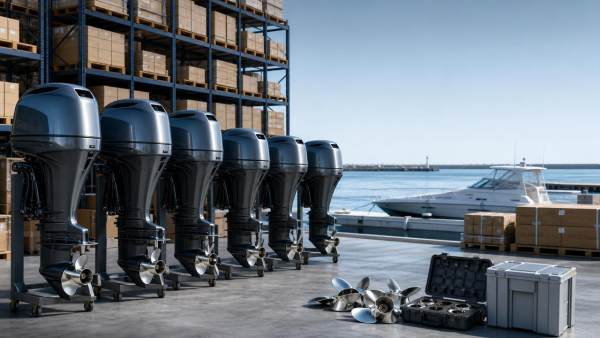
For dealers, distributors, and agents evaluating scale, outboard motors wholesale can be more than a pricing strategy—it can be a pathway to stronger margins, broader inventory control, and faster market response. But is it truly worth the investment for growth? This article examines the commercial benefits, operational risks, and supplier considerations that matter most when building a profitable expansion plan.
In practical B2B terms, the answer depends less on unit price alone and more on turnover speed, after-sales capacity, compliance readiness, and supplier discipline. For marine equipment channels serving fishing fleets, aquaculture operators, workboat owners, and rural transport users, wholesale purchasing can improve market position if the business can manage capital exposure, parts availability, and seasonal demand swings.
This matters in adjacent primary industries as well. Aquaculture sites, inland fisheries, feed transport operations, and agricultural waterway logistics often rely on dependable propulsion systems in the 15HP to 150HP range. That makes outboard motors wholesale a cross-sector procurement topic, not just a recreational marine discussion.
Why wholesale purchasing can support channel growth
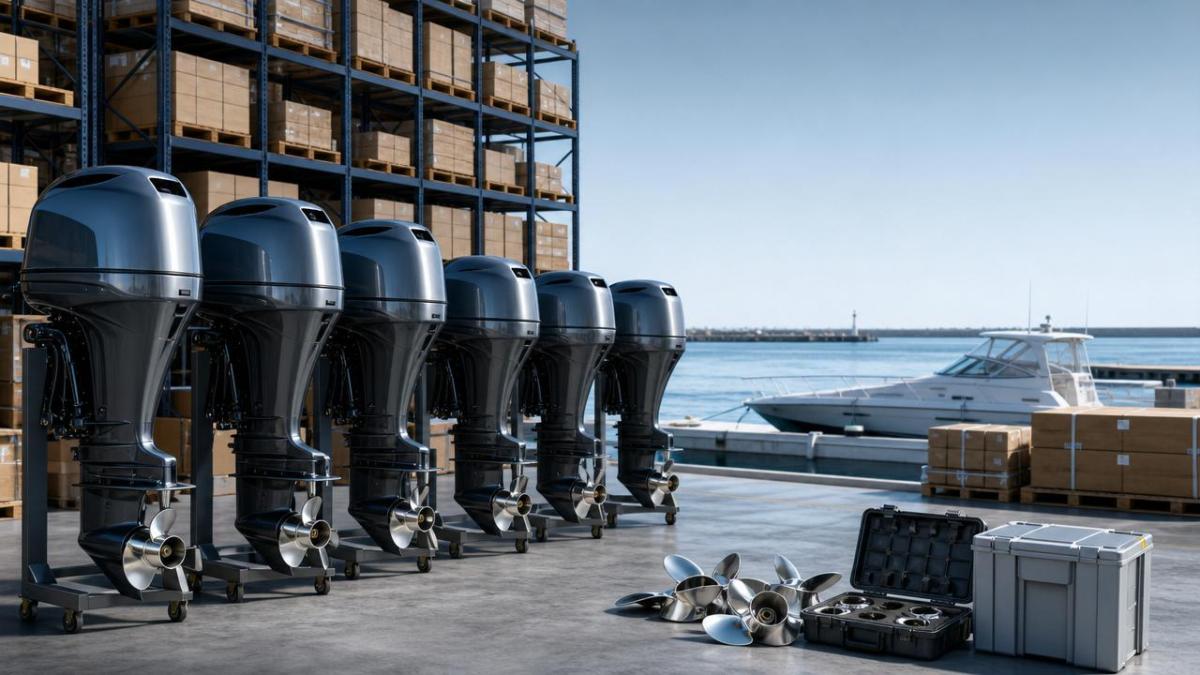
For distributors, growth usually comes from 4 measurable gains: better gross margin, wider SKU coverage, faster replenishment, and stronger negotiating leverage. When annual volume reaches stable levels, wholesale buying often shifts the business from reactive order-taking to planned inventory management.
Margin expansion is only the first layer
A common mistake is to judge outboard motors wholesale only by headline discount. A dealer saving 6% to 12% on unit cost may still underperform if warehousing time exceeds 90 days, warranty claims rise above expected levels, or working capital is tied up in slow-moving horsepower categories.
The stronger model is margin plus velocity. If a distributor can rotate core inventory every 30 to 60 days, maintain parts fill rates above 85%, and bundle engines with rigging kits, controls, and service packages, the wholesale model becomes more defensible.
Inventory depth improves response to fragmented demand
Industrial and commercial buyers rarely purchase with the same pattern. Small fishery operators may seek 15HP to 40HP units for nearshore mobility, while aquaculture support boats often need 60HP to 115HP engines for heavier duty cycles. Wholesale access lets a channel partner cover multiple use cases without waiting 3 to 8 weeks per order.
That faster response matters during seasonal peaks. In many regional markets, pre-harvest logistics, fish stocking periods, and coastal maintenance cycles create narrow sales windows of 6 to 10 weeks. Stockouts during those periods can shift repeat buyers to competitors for an entire season.
Commercial advantages most relevant to B2B resellers
- Ability to reserve mixed horsepower batches instead of buying single units
- Improved bundle pricing for propellers, fuel systems, and control assemblies
- More room to negotiate payment terms such as 30/70 or 20/80 structures
- Higher credibility with institutional buyers that require repeatable supply
- Better service planning when parts and engines come from aligned sources
The table below shows how wholesale economics usually differ from ad hoc purchasing for dealers serving industrial and marine-adjacent customers.
The key conclusion is that outboard motors wholesale becomes attractive when a reseller is building a repeatable supply program, not when it is simply chasing a one-time discount. Growth comes from supply certainty and serviceability as much as from purchase cost.
When wholesale is worth it—and when it is not
Not every dealer should move immediately into wholesale purchasing. The model works best when there is evidence of recurring demand, adequate storage, and a service network that can support installation and warranty handling within 24 to 72 hours of a customer request.
Good fit scenarios
Outboard motors wholesale is usually worth it for channel businesses that serve at least 3 repeat buyer groups, such as commercial fishers, aquaculture farms, and utility boat operators. It is also suitable where annual demand can justify ordering in batches of 10, 20, or more units across a controlled horsepower range.
- Regional distributors with multi-branch sales coverage
- Agents supplying institutional or fleet-based marine users
- Dealers able to stock consumables, propellers, and spare parts
- Businesses operating in markets with seasonal surges and limited import flexibility
Weak fit scenarios
The model is less suitable when demand is irregular, customer preferences are highly brand-specific, or financing is expensive. If inventory carrying cost is high and average sales turnover exceeds 120 days, wholesale stocking can compress cash flow instead of supporting expansion.
It is also risky when the business lacks technician coverage. Selling 25 engines in a quarter may look positive on paper, but unresolved installation issues, delayed commissioning, and slow spare parts support can damage channel reputation within a single season.
Practical decision thresholds
- Target turnover: under 60 to 90 days for core models
- Initial batch planning: 60% fast movers, 30% mid-range demand, 10% specialty stock
- Service response: diagnostic acknowledgment within 24 hours
- Parts support: critical items stocked for at least 6 common maintenance categories
Supplier evaluation: what dealers should verify before committing
The supplier matters as much as the pricing model. In outboard motors wholesale, hidden weaknesses usually appear in documentation, packaging quality, technical support, or inconsistent accessory compatibility. A disciplined review process reduces those risks before the first shipment lands.
Check the commercial structure, not just the catalog
A credible supplier should define MOQ, batch composition flexibility, payment stages, parts availability, and claim procedures in writing. Dealers should also ask whether pre-delivery inspection records, serial tracking, and export packaging standards are available for every batch.
Documentation becomes even more important for cross-border trade. Packing lists, engine specifications, control system compatibility notes, and maintenance guidance should be clear enough for sales, warehousing, and after-sales teams to use without repeated clarification.
The following matrix helps distributors compare suppliers beyond unit price alone.
A supplier that performs well across these 4 areas often delivers more long-term value than one offering a slightly lower landed price. Wholesale growth depends on continuity, not just transaction savings.
Verify application fit for industrial users
Because ACC readers often operate close to primary industries, dealers should map engine selection to duty cycle rather than broad consumer demand. Engines used for aquaculture feeding routes, shoreline inspection, or fish transport support may require different shaft lengths, corrosion resistance expectations, and fuel efficiency priorities.
For example, a distributor serving inland ponds may prioritize lightweight 15HP to 40HP stock with simple maintenance access. A coastal operations channel may need 60HP to 115HP coverage, stronger anti-corrosion measures, and more rigorous spare parts planning for saltwater exposure.
Operational risks in outboard motors wholesale
Wholesale expansion creates opportunity, but it also introduces 5 common operational risks: cash flow stress, poor product mix, inadequate parts planning, weak warranty procedures, and inconsistent technical onboarding. These issues can erode gains quickly if not addressed early.
Cash flow and carrying cost
The first risk is obvious but often underestimated. A wholesale order may improve unit economics by 8%, yet warehousing, insurance, inland transport, and financing charges can absorb much of that benefit if sell-through is slow. Dealers should model landed cost over 60, 90, and 120 days rather than relying on ex-works price alone.
Wrong horsepower allocation
The second risk is buying too broadly. A catalog with 8 horsepower bands looks attractive, but channel performance often comes from 3 to 4 high-rotation segments. If 20% of inventory remains inactive for more than one quarter, growth capital gets trapped in the wrong models.
After-sales strain
Outboard motors wholesale without a service plan is incomplete. Commercial buyers expect practical support on installation, break-in procedures, maintenance intervals, and fault diagnosis. If a dealer cannot supply replacement consumables or technician guidance within 48 hours, customer confidence falls sharply.
Risk control checklist
- Set reorder points for top 5 to 10 moving SKUs
- Separate fast-moving and project-based inventory in planning sheets
- Stock service essentials for first 100 to 200 running hours
- Document warranty intake steps in 3 to 5 standard actions
- Train sales staff to qualify use case before recommending horsepower
How to build a profitable wholesale rollout
The most effective wholesale programs are phased. Instead of scaling all at once, high-performing distributors usually move through 3 stages: market validation, controlled stocking, and service-backed expansion. This lowers risk while preserving flexibility.
Stage 1: validate demand by segment
Start by grouping customers into commercial use cases such as aquaculture support, fishery transport, utility craft, or rural marine logistics. Track inquiries and conversions for at least 8 to 12 weeks. This shows where demand clusters by horsepower, shaft preference, and accessory needs.
Stage 2: stock only proven fast movers
Build the first wholesale batch around the models most likely to turn within 30 to 60 days. Avoid overcommitting to niche variants. A narrower starting mix usually performs better than a broad but slow catalog, especially in emerging or price-sensitive regions.
Stage 3: add service and account management
Growth becomes more durable when engines are paired with commissioning support, maintenance reminders, and account-level reorder planning. For B2B buyers, reliability of support often influences repeat purchasing as much as the original engine price.
Implementation steps for distributors
- Audit demand history across the last 2 to 4 quarters
- Select 3 to 5 priority horsepower categories
- Negotiate MOQ, spare parts package, and lead time terms
- Create stock and service SOPs before the first shipment
- Review sell-through and warranty patterns every 30 days
A short answer to the core question
Yes, outboard motors wholesale is worth it for growth when the distributor has recurring demand, disciplined SKU planning, and the ability to support installation and after-sales service. It is far less effective when inventory is speculative, support is thin, and buyer demand is not yet segmented.
For dealers, distributors, and agents serving marine-adjacent primary industries, the strongest expansion path is to treat wholesale as an operating system rather than a buying tactic. That means pairing pricing advantage with stock visibility, documentation discipline, and dependable service execution.
If your business is assessing wholesale entry or planning to refine an existing supply model, now is the right time to review supplier capability, parts strategy, and regional demand mix. Contact us to explore a tailored market visibility plan, discuss product positioning, or learn more solutions for building authority with serious industrial buyers.
Related Intelligence
- Commercial FishingWhat Should You Check in a Fishery Equipment Maintenance Contract?What should I look for in a fishery equipment maintenance contract? Explore coverage, response times, costs, records, safety, and biosecurity essentials.
- Commercial FishingDo commercial fishing vessels with hybrid diesel-electric propulsion reduce fuel cost per kg landed by more than 12%?Commercial fishing vessels with hybrid diesel-electric propulsion *can* cut fuel cost per kg landed by >12%—but only under precise operational and infrastructure conditions. Discover the real ROI.
- Commercial FishingHow to Choose Oyster Processing Equipment for Capacity, Hygiene, and Labor EfficiencyOyster processing equipment guide: compare capacity, hygienic design, and labor efficiency to build a reliable, scalable line and make smarter buying decisions.
The Morning Broadsheet
Daily chemical briefings, market shifts, and peer-reviewed summaries delivered to your terminal.
