

The Authority in Global Agricultural Chemistry & Bio-Resources
How to Choose a Vacuum Packing Machine for Fish by Bag Size, Output, and Seal Quality
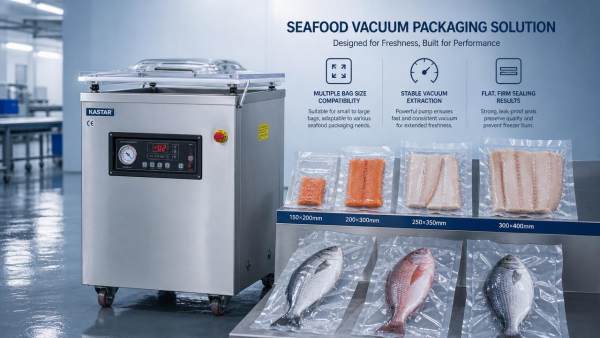
Choosing a vacuum packing machine for fish rarely comes down to price alone. Daily performance depends on whether the machine matches bag dimensions, target output, and the seal quality needed to protect texture, appearance, and shelf life.
That matters even more in fish processing, where moisture, oil, temperature variation, and hygiene pressure can quickly expose weak packaging decisions. A poor match creates rework, leakage, wasted film, and inconsistent packs that are harder to store or ship.
Across aquaculture, seafood distribution, and primary processing, packaging equipment is now judged with the same discipline applied to other critical production assets. That wider view, often reflected in AgriChem Chronicle coverage, links machine selection to compliance, product integrity, and traceable operating standards.
Why fish packaging needs a more precise machine match
Fish is not a uniform product category. Whole fish, fillets, steaks, smoked portions, and marinated cuts behave differently inside a bag and under vacuum pressure.
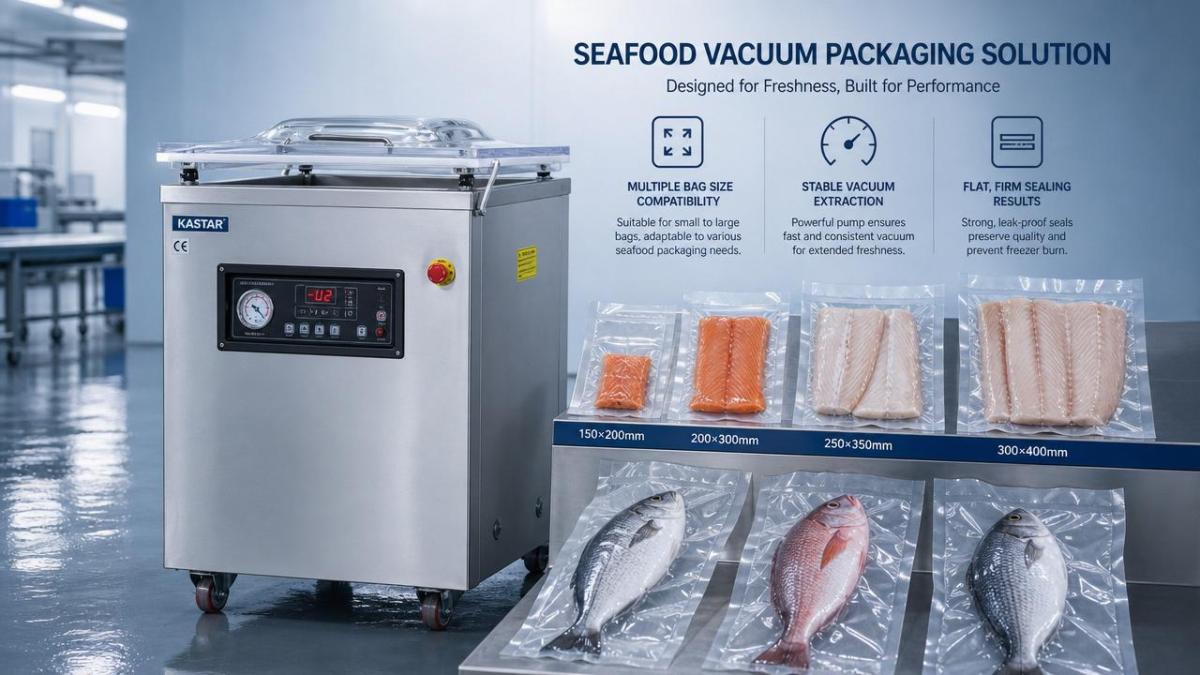
Some products release more liquid during packing. Others have sharp bones, uneven edges, or delicate flesh that can shift during evacuation. A vacuum packing machine for fish must control these variables without sacrificing speed.
In practical terms, the right machine removes air consistently, closes the pouch cleanly, and supports the bag style already used in the line. It should also fit washdown routines and cold-room workflows.
This is why three factors deserve early attention: bag size, output, and seal quality. Together, they shape most of the real operating results.
Start with bag size, not machine size
Many buyers compare chamber dimensions first, but bag size is the more useful starting point. The machine must suit the actual pouch length, width, thickness, and fill height used on the floor.
A vacuum packing machine for fish that is too small limits product mix and slows loading. One that is too large may waste cycle space, require unnecessary floor area, and increase energy use.
What to review in the bag specification
- Flat bag width and usable seal area
- Bag length after product loading
- Film thickness and barrier structure
- Presence of liquid, brine, or marinade
- Shape irregularity from heads, tails, or bones
Seal bar length must exceed the bag opening with room for stable positioning. If the product sits too close to the seal zone, contamination rises and seal failure becomes more likely.
For mixed SKUs, it is often better to size the machine around the largest regular pack rather than the average pack. That leaves flexibility during seasonal changes or contract packing runs.
Chamber and bag fit in typical fish lines
Output should match the line, not the brochure
Output figures can be misleading if they ignore real loading time, product arrangement, operator movement, and bag handling. Rated cycles per minute rarely equal actual packed units per shift.
A vacuum packing machine for fish should be judged against the upstream and downstream rhythm. If trimming, weighing, chilling, labeling, or boxing moves slower than the machine, headline capacity offers little value.
The better question is simple: how many acceptable packs leave the station each hour without extra touch points or repeated sealing?
Where output is really gained or lost
Cycle time matters, but loading ergonomics often matter more. If bags are hard to place, or if fish must be repositioned before every cycle, the line slows immediately.
Product temperature also influences speed. Colder fish may handle well, but chilled surfaces create moisture that affects bag placement and cleanup frequency.
In multi-shift operations, output stability becomes more important than peak output. A slightly slower machine with repeatable cycles can outperform a faster unit that needs frequent adjustment.
- Check packs per hour under normal staffing
- Include changeover time between bag sizes
- Measure rework caused by poor vacuum results
- Review cleaning downtime in wet environments
This approach is especially useful in integrated processing environments, where machinery selection must support traceability, sanitation, and throughput at the same time.
Seal quality is the real protection layer
Seal quality is often the deciding factor between a stable pack and a returned shipment. Even strong vacuum levels mean little if the seal is weak, wrinkled, contaminated, or inconsistent across cycles.
For a vacuum packing machine for fish, the seal must survive moisture, low temperatures, handling pressure, and transport vibration. It should also remain dependable when product fluids move close to the sealing edge.
What good seal performance looks like
A reliable seal appears uniform, flat, and fully fused. There should be no trapped debris, no weak corners, and no channel leaks caused by folds or liquid.
Double seals can add security for higher-value products or longer distribution routes. Seal width, heating control, cooling time, and bar pressure all influence final results.
Machines handling oily or wet fish benefit from features that keep the seal area clean. In some cases, gas flush or soft-air return settings also help preserve appearance for delicate portions.
Common seal problems worth catching early
- Liquids pulled into the seal line
- Film mismatch with sealing temperature
- Bag wrinkles from poor positioning
- Seal bar wear after heavy washdown use
- Inconsistent vacuum causing shifting product
These issues are not minor defects. In seafood distribution, one failed seal can compromise freshness, reduce shelf life, and weaken confidence in the packed lot.
Other selection points that shape daily performance
Once bag size, output, and seal quality are clear, several supporting factors deserve attention. They may not headline the purchase decision, but they strongly affect day-to-day reliability.
Construction, hygiene, and control
Stainless construction, smooth surfaces, and easy-access cleaning points matter in wet processing areas. Controls should be simple enough for repeatable use, yet detailed enough to store different recipes.
A vacuum packing machine for fish should also fit the cleaning regime. Water resistance, component protection, and maintenance access are practical concerns, not optional extras.
Support availability matters as well. Spare parts, seal bar replacements, pump servicing, and response time can shape long-term equipment value more than a small difference in purchase cost.
A practical way to compare options
A structured comparison usually reveals the better fit faster than broad feature lists. Short trials with real fish products are especially useful because seafood exposes handling weaknesses quickly.
This kind of evaluation reflects how industrial buyers increasingly assess equipment across primary industries: not in isolation, but as part of a regulated, quality-driven production system.
From comparison to confident selection
The best vacuum packing machine for fish is the one that fits the pack format, keeps pace with the line, and delivers consistent seals under real processing conditions.
A clear shortlist usually starts with three records: actual bag dimensions, required hourly output, and acceptable seal performance after storage and transport checks. Those benchmarks reduce guesswork and make supplier discussions more useful.
From there, it becomes easier to compare chamber design, control features, hygiene suitability, and service support. In a sector where freshness, compliance, and efficiency move together, careful machine selection is not a technical detail. It is part of product protection.
A sensible next step is to test one or two candidate machines with the fish products, bags, and cleaning conditions used every day. That evidence usually tells more than a catalog ever can.
Related Intelligence
- Commercial FishingDo commercial fishing vessels with hybrid diesel-electric propulsion reduce fuel cost per kg landed by more than 12%?Commercial fishing vessels with hybrid diesel-electric propulsion *can* cut fuel cost per kg landed by >12%—but only under precise operational and infrastructure conditions. Discover the real ROI.
- Commercial FishingHow to Choose Oyster Processing Equipment for Capacity, Hygiene, and Labor EfficiencyOyster processing equipment guide: compare capacity, hygienic design, and labor efficiency to build a reliable, scalable line and make smarter buying decisions.
- Commercial FishingWhat Oyster Farming Equipment Is Needed for Nursery, Grow-Out, and Harvest Stages?Oyster farming equipment for nursery, grow-out, and harvest stages explained clearly—discover the essential systems, avoid costly mistakes, and choose gear that improves survival, efficiency, and yield.
The Morning Broadsheet
Daily chemical briefings, market shifts, and peer-reviewed summaries delivered to your terminal.
