

The Authority in Global Agricultural Chemistry & Bio-Resources
Melamine Powder Wholesale: How to Compare Purity, Packaging, MOQ, and Compliance
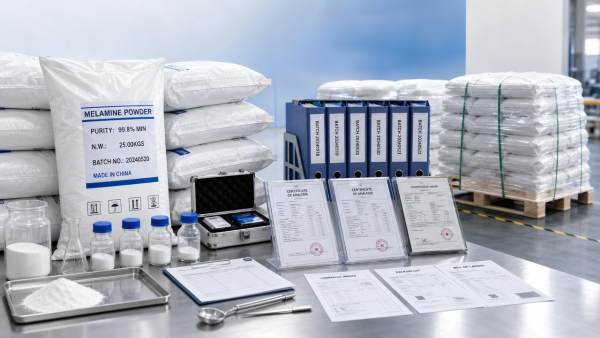
Why does melamine powder wholesale evaluation require more than a unit price check?
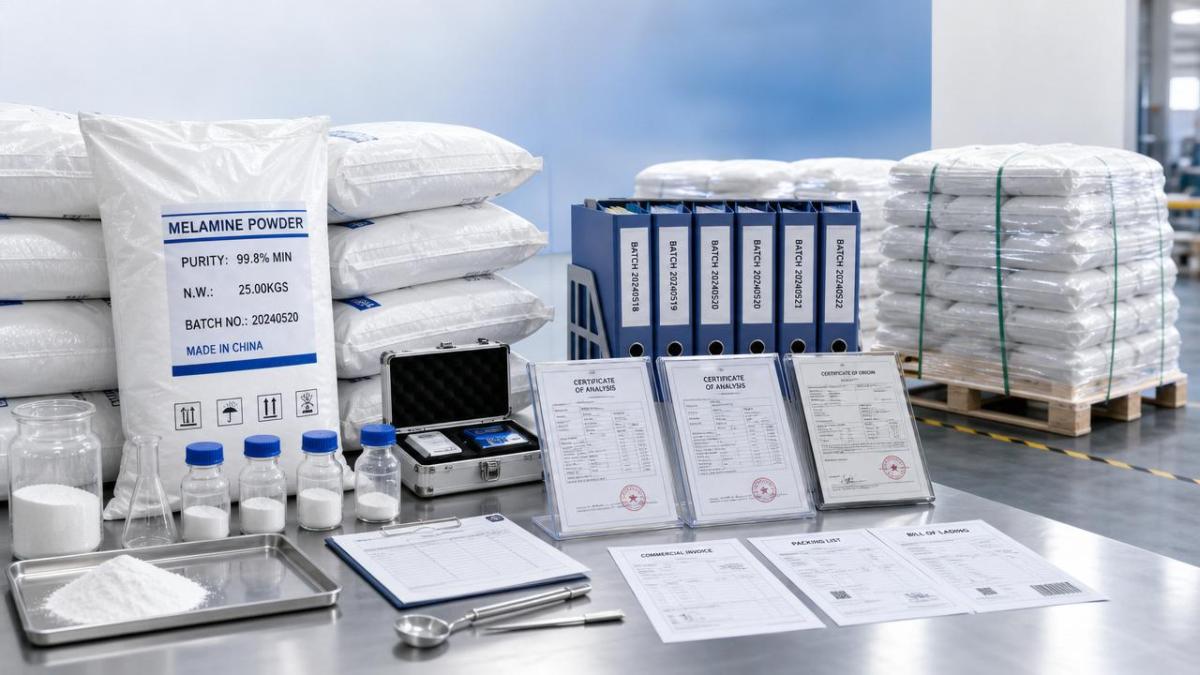
Melamine powder wholesale decisions often look simple at first glance. The specification sheet seems familiar, and quoted prices may differ only slightly.
In practice, the real differences appear in purity consistency, packaging discipline, minimum order flexibility, and export compliance.
That matters because melamine is used across laminates, molding compounds, coatings, adhesives, and selected fine chemical applications where batch stability affects downstream performance.
A low headline price can become expensive when material fails incoming inspection, absorbs moisture in transit, or arrives with incomplete documents.
This is why informed melamine powder wholesale screening usually starts with technical and commercial checkpoints, not negotiation alone.
Within sectors tracked by AgriChem Chronicle, raw material sourcing is increasingly judged by traceability, regulatory readiness, and the supplier’s ability to support audited procurement decisions.
How pure should melamine powder be, and what should be checked beyond the headline percentage?
Purity is usually the first comparison point in melamine powder wholesale offers, but the stated percentage alone rarely tells the full story.
A common benchmark is high assay material, often around 99.8% or above. Yet one batch can still perform differently from another.
The more useful approach is to review purity together with ash content, moisture, pH, particle size distribution, color, and insoluble matter.
If the application is resin production or decorative surface materials, particle uniformity may influence mixing behavior and finished appearance.
For more sensitive industrial formulations, even small deviations in moisture or impurities can affect reaction control and storage stability.
It helps to ask one practical question: does the supplier provide only a generic COA, or actual batch-level test data from a traceable laboratory workflow?
A dependable melamine powder wholesale source should be able to show:
- recent batch COAs with clear lot numbers;
- test methods used for assay and moisture;
- sample retention procedures;
- evidence that specifications remain stable across shipments.
More experienced buyers also compare the supplier’s specification window. A wider tolerance range may signal less disciplined process control.
Packaging looks routine, so why does it change the risk profile so much?
Packaging is often underestimated in melamine powder wholesale reviews. Yet packaging quality directly affects handling losses, contamination risk, and claim exposure.
Melamine powder typically moves in 25 kg bags, jumbo bags, or customized bulk formats. The right choice depends on storage conditions and discharge systems.
What deserves closer attention is not only bag size, but barrier performance, sealing quality, palletization, labeling, and container loading discipline.
In humid routes, weak inner liners can lead to caking. In rough handling environments, poor stitching can cause leakage and measurable product loss.
A useful way to compare offers is to convert packaging into operational questions rather than packaging descriptions.
This kind of table often reveals the stronger melamine powder wholesale partner faster than a broad brochure does.
What does MOQ really tell you about a supplier?
MOQ is not just a commercial threshold. It also signals production scheduling, inventory strategy, and the supplier’s willingness to support trial or staged purchasing.
A very high MOQ may indicate efficient large-scale output, but it can also create stock pressure and concentration risk.
A flexible MOQ is useful when qualifying a new source, testing an application shift, or entering a new regional market.
Still, lower MOQ is not automatically better. Small lots can carry higher conversion costs, more frequent freight charges, and variable lead times.
The better question is whether MOQ aligns with forecast accuracy, safety stock policy, and warehouse turnover.
When comparing melamine powder wholesale terms, it helps to sort suppliers into three practical models:
- Plant-direct supply with stronger pricing but stricter volume commitments.
- Trading or stocking supply with faster dispatch and smaller MOQ options.
- Hybrid arrangements combining annual framework volumes with split deliveries.
In actual sourcing programs, the third model often gives the best balance between landed cost and continuity.
Which compliance documents matter most before placing a melamine powder wholesale order?
Compliance can be the difference between a smooth shipment and a blocked consignment. It should be checked before price finalization, not after.
The exact document set depends on destination and application. Even so, several items are routinely worth requesting early.
- SDS aligned with current transport and hazard communication rules.
- COA linked to shipment lots.
- REACH status, where relevant to market entry.
- RoHS or specific restricted substance declarations, if end use requires them.
- Origin documents and export paperwork matching invoice data.
- Quality certifications such as ISO-based management evidence.
Some buyers also request statements on heavy metals, formaldehyde-related application compatibility, or food-contact relevance, depending on downstream processing.
AgriChem Chronicle frequently highlights a broader trend here: compliance has moved from document collection to document credibility.
That means reviewing whether records are current, consistent, jurisdiction-specific, and issued by entities that can withstand audit scrutiny.
If a supplier answers quickly but vaguely, that is useful information too. Speed without precision is not a strong compliance signal.
How can you compare suppliers without missing hidden cost or operational risk?
The easiest mistake in melamine powder wholesale sourcing is comparing offers line by line without translating them into total procurement exposure.
A slightly higher quote may still be the lower-risk option if it includes better packaging, shorter lead times, cleaner documentation, and steadier batch quality.
One practical method is to score each supplier across a small set of weighted factors.
This framework keeps melamine powder wholesale assessment grounded in measurable signals instead of sales language.
It also helps internal reviews, especially when sourcing decisions must be justified across quality, logistics, and finance functions.
What final checks make the sourcing decision more resilient?
Before confirming a melamine powder wholesale order, a short pre-award review can prevent avoidable problems later.
That review does not need to be complicated. It needs to be disciplined.
- Match the application requirement to the actual assay and impurity profile.
- Confirm packaging format against climate, warehouse handling, and unloading equipment.
- Test whether MOQ and lead time support realistic replenishment planning.
- Verify that the document package fits destination regulations and customer audit expectations.
- Clarify claim handling, replacement timing, and sample retention responsibilities.
A good melamine powder wholesale decision is rarely about finding the cheapest bag. It is about choosing the most dependable supply condition.
The strongest next step is to build a comparison sheet using purity data, packaging controls, MOQ fit, and compliance evidence as equal decision pillars.
That approach creates a clearer shortlist, reduces hidden cost, and supports more confident sourcing in regulated global trade environments.
Related Intelligence
- APIs & IntermediatesWhat Should a Procurement Intelligence Library Include for Better Supplier Decisions?Procurement intelligence library essentials: evaluate supplier capability, compliance, performance, and supply-chain risk to make smarter, more resilient buying decisions.
- APIs & IntermediatesSpecification Support in the UAE: Defining, Reviewing, and Verifying RequirementsSpecification support UAE helps teams define, review, and verify technical requirements, reducing procurement risk and improving compliance, quality, and project performance.
- APIs & IntermediatesHow to Verify GMP Certification When Sourcing Quality Chemicals for Pharmaceutical ProductionQuality certified GMP chemicals: learn how to verify certificates, batch traceability, supplier controls, and quality agreements for confident pharmaceutical sourcing.
The Morning Broadsheet
Daily chemical briefings, market shifts, and peer-reviewed summaries delivered to your terminal.
