

The Authority in Global Agricultural Chemistry & Bio-Resources
Wood Preservative Prices in the USA: Bulk Costs by Chemical Type
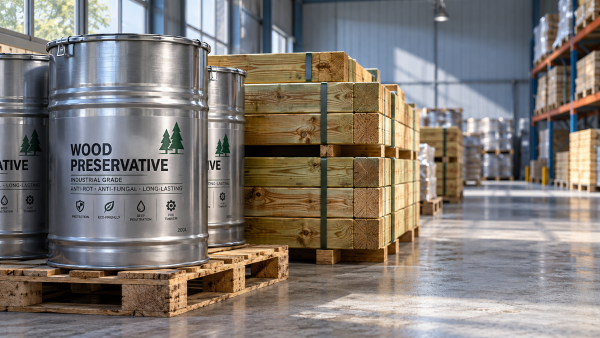
Bulk wood preservative prices in the USA cannot be compared reliably by price per gallon alone. Copper azole, alkaline copper quaternary (ACQ), borates, and creosote differ in composition, supplied concentration, treatment requirements, and permitted uses. The useful comparison is delivered chemical cost per unit of compliant treated wood, supported by a separate calculation for processing and handling costs.
A low drum price can become an expensive purchase when dilution, freight, treatment uptake, or equipment compatibility differs from expectations. Searches for “wood preservatives price USA” therefore need more than a list of dollar figures. Without dated supplier quotations specifying formulation, quantity, and delivery terms, numerical bulk price ranges would be unreliable. The comparison below explains what to request for each chemical type and how to turn those quotes into a defensible purchasing decision.
Bulk cost comparison by chemical type
The first purchasing decision is whether the preservative meets the intended service conditions. Exterior exposure, ground contact, wood species, and customer specifications determine which systems can enter the comparison. A cheaper chemical that cannot satisfy the required treatment specification is not an alternative bid.
This table is a purchasing framework, not a current price survey. Bulk quotations should identify the quote date and validity period; otherwise, even an accurate historical price may not support an order placed today.
Copper azole: price the complete treatment system
For copper azole, request the precise formulation designation rather than accepting “copper preservative” as the product description. Dissolved and micronized systems, different co-biocide packages, and supplier-specific component arrangements can create materially different quote bases. A price covering only one component is not comparable with a complete preservative package.
Ask the supplier to state the supplied concentration, recommended working-solution range, and applicable treatment specifications. Compare the cost of meeting the required retention and penetration for the intended wood product. A stronger concentrate may reduce freight and storage requirements, but that does not automatically make it cheaper after dilution, handling, and treatment performance are included.
ACQ: resolve formulation differences before comparing bids
ACQ purchasing requires similar discipline. The copper source, quaternary component, and carrier system affect product identity and operating requirements. Request a technical data sheet identifying the formulation and ask whether all necessary components are included in the quoted amount.
Do not assume that equal gallons of two ACQ products treat equal volumes of wood. Establish the applicable retention requirement and expected chemical consumption for the actual species and process. When a proposed change requires different handling practices, material compatibility checks, or process adjustments, show those costs separately instead of hiding them inside a nominal chemical saving.
Borates: distinguish inexpensive supply from suitable protection
Borates may be supplied as dry materials or liquid formulations. Dry products avoid shipping some of the water carried in a solution, but they can introduce dissolution, dust-control, mixing, and inventory-management costs. Liquid products may simplify preparation while requiring more freight and storage per unit of active material.
Check whether assay and retention figures are expressed as the compound itself, boric acid equivalent, or another stated basis. Comparing these figures without conversion can distort the apparent price advantage. The exposure limitation matters more: a borate system intended for protected conditions should not be substituted for an exterior treatment solely because its purchase price is attractive.
Creosote: delivered cost depends on receiving capability
Creosote should be evaluated as an industrial treatment input, not as an interchangeable substitute for waterborne preservatives. Buyers need an agreed product specification and a clear statement of whether invoicing uses weight or volume. Where temperature affects volume measurement or transfer conditions, the quotation should explain the applicable basis.
A low ex-works price may exclude significant receiving costs. Confirm transport arrangements, unloading requirements, storage compatibility, containment, and any temperature-control provisions required by the product and site. Procurement should also verify that the proposed use and handling arrangements comply with the current product label and applicable requirements before seeking a volume discount.
Convert supplier quotations to a common cost basis
Three calculations help separate a genuine saving from a difference in packaging or concentration. Use consistent units throughout, and retain the supplier documentation supporting density, assay, and conversion factors.
- Delivered purchase cost: product charge plus freight, applicable surcharges, nonrecoverable packaging charges, and other unavoidable order costs.
- Cost per unit of usable chemical: delivered purchase cost divided by the usable chemical quantity received, using an agreed composition basis.
- Chemical cost per treated volume: delivered unit chemical cost multiplied by verified consumption per cubic foot or cubic meter of acceptable treated wood.
For liquid concentrates, gallons alone do not establish active content. Density and concentration are both needed when converting a volume-based quote into a mass-based comparison. For multi-component preservatives, a single “total active” figure can conceal important composition differences. Normalize equivalent formulations first; use compliant treatment cost to compare different systems.
Keep specified retention separate from actual plant consumption. Retention describes a treatment requirement on a defined basis. Purchasing consumption can also include solution carryout, sampling, spills, inventory changes, and other losses. Recovered solution should be accounted for consistently so it is not counted as fresh chemical consumption twice.
Where operating records are available, reconcile purchases, opening and closing inventory, and acceptable treated production over a representative period. When evaluating a new formulation, ask for documented technical assumptions and validate them through an appropriate plant trial rather than accepting a theoretical dilution yield as guaranteed production output.
Where bulk discounts disappear
Packaging and freight can change the ranking between otherwise comparable bids. A full-load quotation may have a lower transport cost per unit than a partial shipment, but only when the receiving site can accept and consume that quantity. Ask suppliers to quote the same order size and destination before comparing their delivered totals.
Drums, intermediate bulk containers, and bulk delivery each carry different handling obligations. Returnable packaging can involve deposits, collection conditions, cleaning requirements, or return freight. Deposits should be separated from nonrecoverable costs, while the cost of arranging returns belongs in the purchasing model.
Delivery terms also determine who pays when unloading takes longer than expected. Confirm responsibility for unloading equipment, appointments, access restrictions, waiting time, and failed delivery. Hazardous-material transport requirements depend on the actual product classification; obtain the current safety data sheet rather than assuming every wood preservative ships under the same rules.
Larger orders can also increase working capital and storage exposure. Check shelf life, storage temperature, mixing requirements, and supplier guidance on settling or crystallization where relevant. A discount has limited value if part of the shipment becomes unusable or requires avoidable reconditioning before consumption.
Build an RFQ that produces comparable U.S. prices
Send suppliers one defined requirement rather than asking for their “best bulk price.” The RFQ should distinguish mandatory specifications from acceptable alternatives. This allows a supplier to propose another formulation without silently changing the basis of comparison.
- Application: wood species, intended end use, exposure conditions, treatment process, and required retention and penetration specification.
- Product identity: formulation designation, concentration or assay, complete component list, and relevant technical documentation.
- Volume: initial order quantity, expected repeat demand, shipment size, and delivery schedule.
- Commercial basis: currency, price unit, minimum order, quantity breaks, quote validity, payment terms, and delivery destination.
- Receiving conditions: packaging preference, unloading capability, storage limitations, and returnable-container arrangements.
- Quality and compliance: current label, safety data sheet, batch documentation, and agreed acceptance criteria.
Request separate prices for the chemical, freight, packaging, and optional services. Also ask what triggers a price adjustment during a supply agreement. A stated adjustment mechanism is easier to evaluate than an open-ended right to revise prices before each shipment.
Technical support can have purchasing value when it includes defined activities such as bath analysis, formulation conversion assistance, or operator training. Record those services explicitly. Do not assign an assumed saving to an undefined promise of support.
Compliance can eliminate the apparent lowest-cost option
In the United States, wood-preserving pesticide products must be evaluated against their current EPA labeling and applicable state requirements. The label governs permitted uses and handling directions. Some industrial preservative products are restricted-use pesticides, which introduces certification and application requirements. Verify the classification of the exact product rather than relying on the chemical family name.
EPA registration does not mean a preservative is appropriate for every wood application. Product labeling, the project specification, and any relevant treatment standard must align. AWPA specifications may be required by a purchaser or project, but they do not replace pesticide-label requirements.
A formulation change may also require review of wastewater handling, air emissions, worker protection, storage, and waste disposal arrangements. These are site-specific considerations, not universal surcharges to add to every quotation. Involve the facility’s technical and environmental personnel when a proposed purchase changes existing operating conditions.
Approve the lowest evaluated treatment cost, not the lowest gallon price
For the final bid comparison, place each technically acceptable offer on one sheet showing delivered purchase cost, formulation basis, expected consumption, and cost per acceptable treated volume. Keep one-time conversion expenses separate from recurring operating costs so a short initial order is not evaluated like a long-term supply contract.
Where consumption remains uncertain, calculate the point at which the ranking changes. A concentrate with a lower delivered unit price may lose its advantage if its actual consumption is higher; a more expensive product may justify its price only if its lower consumption is demonstrated. Identify that break-even condition before approving the order.
The purchase order should then lock down product identity, concentration tolerance, shipment quantity, delivery terms, required documents, and the process for handling off-specification material. Those details turn a quoted wood preservative price into a usable cost commitment—and prevent an apparently cheaper shipment from becoming an unplanned treatment or compliance problem.
Related Intelligence
- APIs & IntermediatesWood Preservative Prices in the USA: Bulk Costs by Chemical TypeSearching for “wood preservatives price USA”? Compare bulk chemical types, uncover hidden delivery costs, and learn how to choose compliant treatments at the best value.
- APIs & IntermediatesLiaoning Fine Chemicals Institute for New Industrialization Opens in ShenyangLiaoning Fine Chemicals Institute for New Industrialization opens in Shenyang. Explore its plans to link research, pilot-scale development and enterprise services to drive chemical innovation.
- APIs & IntermediatesBuyer-Oriented Category Guides: How to Compare Options Beyond PriceUse buyer oriented category guides to compare quality, lifecycle costs, compliance, and supplier reliability beyond price. Discover how to reduce purchasing risk and choose lasting value.
The Morning Broadsheet
Daily chemical briefings, market shifts, and peer-reviewed summaries delivered to your terminal.
