

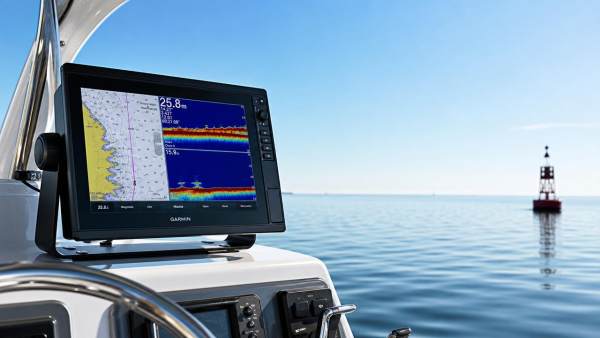
GPS Chartplotters for Fishing Boats: Key Features for Safer Navigation
For fishing boat operators, safe navigation depends on more than experience—it requires reliable, real-time marine intelligence.
GPS chartplotters for fishing boats combine positioning, mapping, sonar integration, route planning, and hazard awareness to help crews operate confidently in changing waters.
Whether managing nearshore trips or longer offshore runs, the right chartplotter can improve situational awareness, reduce navigation risks, and support more efficient fishing decisions.
This guide explores the key features operators should evaluate when choosing a system built for safety, accuracy, and practical use on the water.
The main question is not whether a fishing boat needs electronic navigation. For most working operators, the question is which system reduces risk without complicating daily work.
A good unit should help crews know where they are, where hazards are, how weather may affect travel, and how to return safely.
Operators usually search this topic because they are comparing products, upgrading older electronics, or trying to avoid costly navigation mistakes.
They want practical guidance, not abstract technology descriptions. Screen readability, mapping quality, reliability, and integration matter more than promotional feature lists.
Start With Navigation Reliability, Not Screen Size Alone
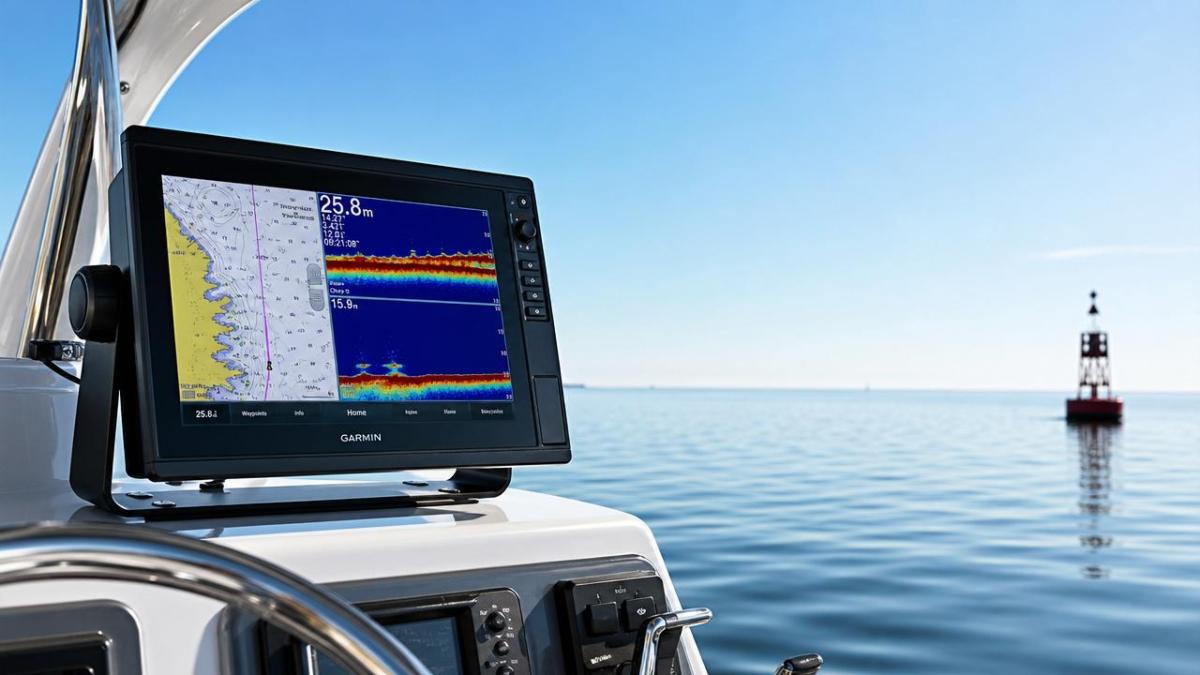
The first priority for GPS chartplotters for fishing boats is dependable positioning. A large display is useful only if the underlying navigation data is accurate.
Operators should look for fast satellite acquisition, stable GPS reception, and support for multiple satellite constellations where available.
In busy harbors, fog, rain, or low-light conditions, delayed position updates can create uncertainty at exactly the wrong moment.
High-quality receivers help the chartplotter maintain vessel position when approaching channels, reefs, shoals, moorings, or tight working areas.
Accuracy becomes especially important for boats that repeatedly return to specific fishing grounds, trap lines, aquaculture zones, or offshore marks.
If the boat operates in remote regions, confirm whether the system performs well beyond strong coastal signal environments.
For professional or semi-commercial operators, reliability should also include rugged construction, waterproof ratings, and resistance to vibration, salt, and temperature variation.
A fishing boat electronics package lives in a harsh environment. Hardware that works in a showroom may not survive years of spray and deck impact.
Choose Marine Charts That Match Your Fishing Area
Chart quality is one of the biggest differences between basic plotters and systems operators trust for serious navigation.
The best unit is not necessarily the one with the most maps. It is the one with the most useful local chart detail.
Operators should compare coverage for their actual fishing grounds, including nearshore structures, channels, restricted areas, depth contours, and known hazards.
For coastal fishing, detailed bathymetric contours can support both navigation and decision-making around fish-holding structure.
For inland lakes or reservoirs, verify that the chart database includes accurate shorelines, depth shading, submerged features, and seasonal water-level considerations.
For offshore work, chartplotters should provide reliable routing references, depth zones, wrecks, ledges, and navigation aids relevant to longer passages.
Operators should also check how chart updates are delivered. Outdated charts can miss changes in channels, markers, restrictions, or harbor layouts.
A safe system makes updating simple, whether through Wi-Fi, memory card, companion software, or subscription-based marine chart services.
Evaluate Screen Visibility Under Real Operating Conditions
Fishing boat operators rarely use chartplotters in ideal conditions. They read screens in glare, rain, vibration, darkness, and while wearing gloves.
Screen size matters, but brightness, contrast, viewing angle, and interface layout often matter more during active operation.
A seven-inch display may be adequate for small boats, while larger helm stations often benefit from nine, twelve, or multi-display systems.
Operators should consider where the unit will be mounted, how far the skipper sits from it, and whether crew members also need visibility.
Touchscreens are intuitive for planning routes and adjusting views, but physical buttons can be valuable in heavy rain or rough seas.
Hybrid controls are often practical because they combine quick menu access with dependable operation when hands are wet or the boat is moving hard.
Night mode, adjustable backlighting, and uncluttered chart views reduce eye strain during early departures, late returns, or overnight fishing.
A screen that is easy to interpret quickly can reduce hesitation, which is critical when navigating around traffic, rocks, or shifting weather.
Look for Route Planning That Helps Prevent Operator Error
Route planning is more than drawing a line from harbor to fishing ground. It should help operators avoid preventable risks.
Useful chartplotters allow crews to create, save, edit, and name routes for regular runs, seasonal areas, and emergency return paths.
Waypoints should be easy to mark and manage, especially for productive fishing spots, hazards, gear locations, and safe approaches.
Operators should value systems that display distance, estimated time, bearing, cross-track error, and arrival information clearly.
These details help crews stay aware of whether they are drifting off course or approaching a turn too quickly.
Automatic routing can be helpful, but it should never replace operator judgment or local knowledge of tides, draft, and seasonal hazards.
Before trusting any generated route, operators should review depth, bridge clearance, restricted waters, shipping lanes, and known obstructions.
The safest systems make manual verification easy, because electronic tools are strongest when they support good seamanship rather than replace it.
Prioritize Sonar and Fish-Finding Integration Carefully
Many buyers compare GPS chartplotters for fishing boats because they also want sonar, fish-finding, and bottom-structure information.
Integrated sonar can be highly valuable, but operators should match sonar capability to fishing style and water depth.
Traditional CHIRP sonar is useful for identifying fish targets and bottom composition across many general fishing applications.
Down imaging can provide clearer views of structure beneath the boat, while side imaging helps scan wider areas efficiently.
For deeper offshore fishing, transducer selection becomes as important as the chartplotter itself. Power, frequency, and mounting location all affect performance.
Operators should not assume every display supports every transducer. Compatibility should be checked before purchase, especially during upgrades.
A well-integrated system lets the operator view chart, sonar, depth, and navigation data together without switching constantly between screens.
This combined view can improve both safety and catch efficiency, particularly when working near structure, contour breaks, or changing seabed conditions.
Consider Radar, AIS, and VHF Connectivity for Safer Operations
Navigation safety improves when the chartplotter becomes part of a broader marine electronics network rather than a standalone screen.
Radar integration is valuable for boats operating in fog, darkness, rain, or crowded waters with limited visibility.
Overlaying radar on charts can help operators compare mapped objects with real-world targets, improving awareness near shorelines or traffic lanes.
AIS connectivity adds another safety layer by showing nearby vessels equipped with transponders, including identity, course, speed, and closest approach.
For fishing boats working near commercial traffic, ferry routes, or offshore service vessels, AIS information can support earlier avoidance decisions.
NMEA 2000 or NMEA 0183 compatibility allows integration with engines, fuel sensors, autopilots, VHF radios, compasses, and other onboard systems.
Digital Selective Calling through a connected VHF can help share position information during emergencies, improving response accuracy.
Operators should choose connectivity based on actual vessel needs, not simply the longest specification sheet offered by the manufacturer.
Assess Weather, Tides, and Environmental Awareness Features
Fishing operations are strongly affected by weather, tide, current, and sea state. Chartplotters that display environmental information can support better decisions.
Some systems offer tide tables, current predictions, moon phases, barometric trends, or weather overlays through connected services.
These tools are useful when planning departure times, estimating safe return windows, or choosing fishing areas with favorable conditions.
Operators should still verify critical forecasts through official marine weather sources, especially before offshore runs or rapidly changing seasonal conditions.
Environmental overlays should be treated as decision support, not guaranteed predictions. Local wind shifts and squalls can develop faster than expected.
For professional crews, the best workflow combines chartplotter data, VHF weather updates, radar observation, and practical local experience.
A chartplotter cannot eliminate weather risk, but it can help crews identify changing patterns earlier and adjust routes more confidently.
When conditions deteriorate, quick access to saved safe routes, harbor entrances, and emergency waypoints becomes especially valuable.
Check Ease of Use Before Buying, Not After Installation
A feature-rich chartplotter can become a liability if operators cannot use it quickly under pressure.
Before purchasing, crews should test menu structure, waypoint creation, zooming, route editing, split-screen layouts, and alarm settings.
The system should make common tasks simple, including returning to a mark, navigating home, and adjusting chart scale.
Complex settings should be available without making everyday controls confusing. A crowded interface can slow decisions during stressful moments.
Alarm customization is particularly important. Depth, arrival, anchor drag, off-course, and collision-related alerts should be understandable and adjustable.
Operators should also consider whether multiple crew members can learn the system. Safety should not depend on one person knowing every menu.
For fleet or cooperative operations, consistent user interfaces across vessels can reduce training time and improve operational discipline.
The right system is one that operators will actually use correctly, not merely one with impressive features hidden in complicated menus.
Match Power, Mounting, and Installation to the Vessel
Even the best chartplotter performs poorly if installation is weak. Power supply, grounding, cable routing, and mounting location all matter.
Voltage drops, loose connections, corrosion, and water intrusion can cause shutdowns when navigation support is most needed.
Operators should use marine-grade wiring, proper fusing, waterproof connectors, and secure mounts appropriate for vibration and wave impact.
The display should be mounted where it is visible without blocking sightlines or interfering with steering, throttle, or deck movement.
Transducers require careful placement to avoid turbulence, cavitation, hull interference, and trailer damage on smaller boats.
Professional installation may be worthwhile for complex systems involving radar, AIS, autopilot, engine data, or multiple displays.
Operators upgrading older boats should verify available helm space, electrical capacity, network compatibility, and future expansion needs before buying.
A clean installation improves reliability, protects the investment, and reduces troubleshooting time during the fishing season.
Understand Cost by Evaluating Total Operating Value
Price comparisons can be misleading because the chartplotter is only one part of the complete navigation system.
Total cost may include charts, transducers, mounting hardware, networking cables, subscriptions, software updates, and installation labor.
A low-cost unit can become expensive if it lacks required chart coverage or cannot support needed sensors later.
At the same time, operators should avoid paying for advanced capabilities they will never use in their fishing area.
Small inshore boats may need dependable GPS, clear charts, basic sonar, and simple waypoint management more than full network integration.
Offshore or commercial operators may justify higher investment through better route safety, fuel planning, radar integration, and operational continuity.
The best value comes from matching features to real risk, fishing method, vessel size, and crew capability.
Operators should consider not only purchase price, but also reduced downtime, safer returns, better planning, and fewer navigation mistakes.
A Practical Buying Checklist for Fishing Boat Operators
Before selecting a model, define the boat’s normal operating range, water type, crew experience, and most common navigation risks.
Confirm that charts cover the actual waters used, including harbors, channels, fishing grounds, restricted zones, and depth-sensitive areas.
Check display readability at the intended mounting distance, in sunlight, at night, and while wearing gloves or foul-weather gear.
Review GPS performance, update speed, satellite support, waterproof rating, and durability for saltwater or freshwater conditions.
Verify sonar compatibility, transducer requirements, radar or AIS options, and networking standards before committing to a platform.
Test route planning, waypoint marking, alarm setup, split-screen use, and emergency navigation functions whenever possible.
Ask how software and charts are updated, whether subscriptions are required, and how long the manufacturer supports the product line.
Finally, consider installation quality and crew training as part of the purchase, because safe navigation depends on correct use.
Conclusion: Choose the System That Improves Decisions on the Water
GPS chartplotters for fishing boats are most valuable when they improve real decisions, not when they simply add more electronics.
The right system gives operators accurate position, useful charts, readable displays, reliable routing, and timely awareness of hazards.
For fishing crews, safety and efficiency are closely connected. Better navigation helps protect people, equipment, time, fuel, and fishing opportunities.
Operators should focus first on reliability, chart quality, usability, integration, and installation rather than choosing by brand reputation alone.
A carefully selected chartplotter will not replace seamanship, but it can strengthen it with clearer information and faster situational awareness.
When matched to the vessel and fishing environment, it becomes a practical navigation partner for safer, more confident operations.
