

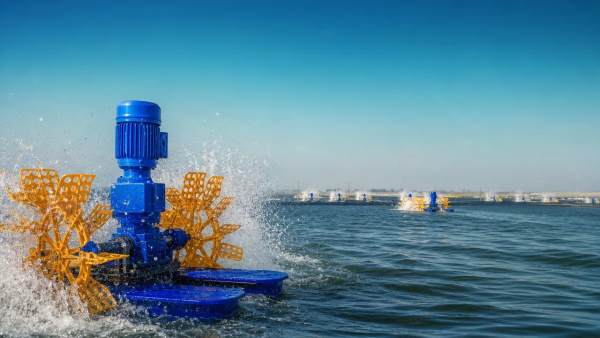
Paddle Wheel Aerator Wholesale Buying Guide: Power, Pond Size, and MOQ
For procurement teams evaluating paddle wheel aerator wholesale options, the lowest unit price rarely tells the full story.
Power rating, pond size compatibility, oxygen transfer efficiency, materials, warranty terms, and MOQ determine whether a bulk order creates value.
This guide helps aquaculture operators and industrial purchasers compare suppliers with greater confidence before committing to large-volume sourcing decisions.
Begin With Pond Demand, Not Supplier Price Lists
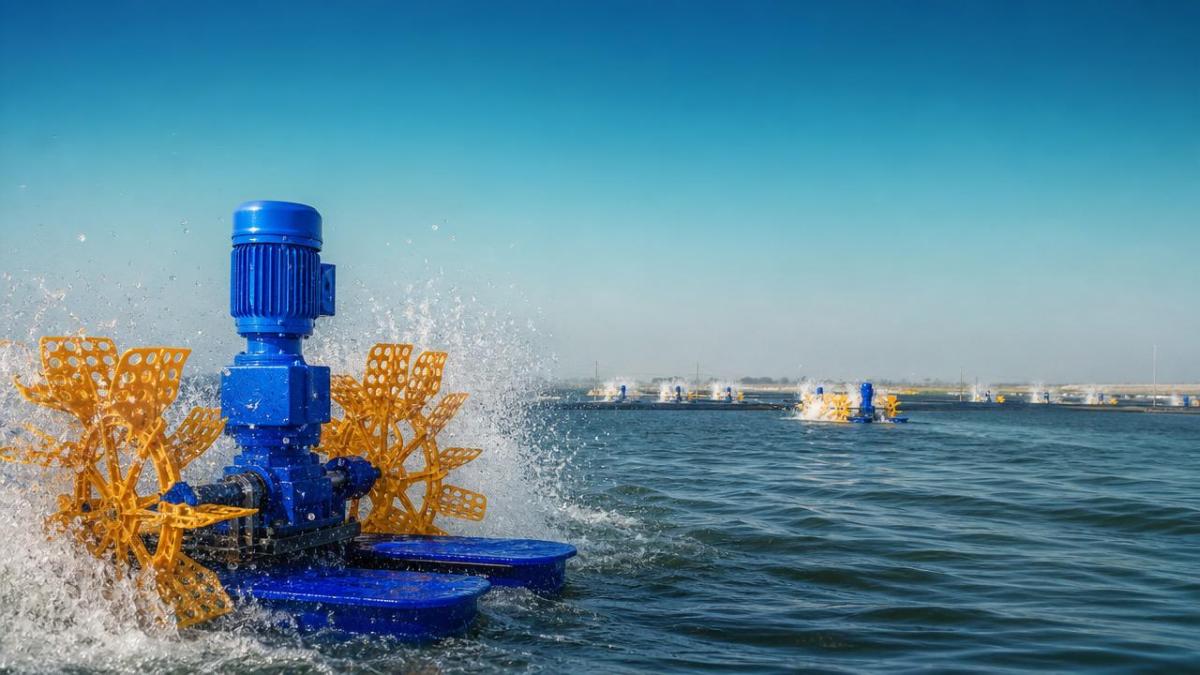
The first buying question is not “How cheap is each unit?” but “Will this configuration protect biomass under peak oxygen stress?”
Paddle wheel aerators are working assets, and procurement mistakes usually appear later as fish loss, power waste, or repeated breakdowns.
For wholesale buyers, the best starting point is a clear map of pond area, stocking density, water depth, species, and climate.
Aeration demand rises sharply during hot weather, intensive feeding, algae crashes, and late-night dissolved oxygen drops.
A supplier quotation only becomes meaningful when each model is matched against those operating conditions, not against catalog claims alone.
Procurement teams should request selection support based on pond hectares, expected biomass, culture method, and daily operating hours.
If a vendor cannot explain why a 1 HP, 2 HP, or 3 HP model fits the site, comparison should remain cautious.
Power Rating: What HP Really Means in Wholesale Purchasing
Horsepower is the most visible specification, but it does not automatically describe aeration performance or long-term operating cost.
Two aerators with the same motor rating may deliver different oxygen transfer because of paddle design, rotation speed, and gearbox efficiency.
In wholesale evaluation, procurement teams should compare motor power together with oxygenation capacity, water circulation range, and energy consumption.
Common commercial paddle wheel aerators range from 1 HP to 3 HP, with larger configurations available for intensive aquaculture systems.
A 1 HP unit may support smaller ponds or lower-density operations, while 2 HP units often serve broader commercial applications.
For high-density shrimp, tilapia, or fish farming, underpowered aeration creates biological risk even when the initial purchase appears economical.
Buyers should also check whether rated power reflects true continuous-duty performance, rather than optimistic laboratory or short-cycle conditions.
For international sourcing, confirm voltage, frequency, phase, plug standards, and motor certification before accepting a bulk quotation.
Matching Aerators to Pond Size and Stocking Density
Pond size recommendations are useful, but they should never be treated as universal guarantees across all farming systems.
A shallow pond with moderate stocking may need less aeration than a deeper pond holding dense biomass and heavy feeding schedules.
Procurement teams should request application ranges that include pond area, water depth, species type, and stocking density assumptions.
For shrimp farms, circulation pattern is especially important because dead zones can accumulate organic matter and reduce pond stability.
For fish ponds, oxygen distribution and surface agitation help stabilize feeding response, reduce stress, and support more predictable growth.
A practical wholesale specification should state the recommended number of units per hectare under standard and intensive production conditions.
Suppliers with field experience can often provide layout guidance, including machine spacing, direction of water flow, and placement near feeding zones.
That support has commercial value because poor placement can reduce oxygen benefit even when the equipment quality is acceptable.
Oxygen Transfer and Energy Efficiency Drive Total Cost
Wholesale buyers should measure value through total cost of ownership, not only factory price or freight-inclusive unit price.
Electricity is often the largest lifetime cost of a paddle wheel aerator, especially in farms operating nightly during long seasons.
Oxygen transfer efficiency indicates how effectively power consumption is converted into dissolved oxygen and useful water movement.
Ask suppliers for standardized testing data, operating curves, or field performance references instead of relying only on promotional language.
Efficient paddle geometry, balanced floats, durable reducers, and stable motors can reduce energy waste over thousands of operating hours.
Even a modest difference in power efficiency becomes significant when a farm purchases dozens or hundreds of aerators.
For procurement teams, a slightly higher purchase price may be justified when energy savings, durability, and lower downtime are verified.
The strongest paddle wheel aerator wholesale offers present cost per operating season, not just cost per unit shipped.
Materials, Corrosion Resistance, and Field Durability
Aquaculture equipment operates in wet, chemically active, and sometimes saline environments, so material selection directly affects service life.
Key components include paddles, floats, frame, shaft, bearings, gearbox, fasteners, and motor housing protection.
High-density polyethylene floats, reinforced nylon paddles, stainless or galvanized structural parts, and sealed bearings are common quality indicators.
For brackish or marine shrimp ponds, corrosion resistance becomes more important than cosmetic finishing or minor specification advantages.
Procurement teams should ask for material grades, coating thickness, salt-spray test information, and real farm references where possible.
Gearbox durability deserves careful review because reducer failure can stop oxygen supply and trigger emergency replacement costs.
Look for clear lubrication requirements, spare gear availability, shaft alignment quality, and warranty treatment for gearbox defects.
A supplier that can ship replacement paddles, floats, bearings, and reducers quickly is often safer than a cheaper unknown vendor.
MOQ, Packaging, and Bulk Order Economics
Minimum order quantity affects price, payment exposure, warehouse planning, and the buyer’s ability to test equipment before scaling procurement.
Factories may set MOQ by model, motor specification, branding requirement, packaging type, or container-loading efficiency.
A low MOQ is useful for pilot testing, but large orders usually unlock better tooling allocation, packaging optimization, and unit pricing.
For serious procurement, ask suppliers to quote several tiers, such as sample order, mixed-model pallet, half-container, and full-container quantities.
This makes negotiation more transparent and helps finance teams compare price breaks against inventory risk and project schedule.
Packaging matters because floats, paddles, frames, and motors can suffer deformation or damage during long-distance transport.
Request carton dimensions, gross weight, loading quantities, spare parts packaging, and photos of export packing before confirming shipment.
For distributors, private labeling and manual language should be discussed early because customization can change MOQ and lead time.
Supplier Qualification: What Procurement Should Verify
A wholesale supplier should be evaluated as an operating partner, not merely as a source of machinery listings.
Procurement teams should verify manufacturing capacity, quality inspection procedures, export experience, certifications, and after-sales support structure.
Important documents may include business licenses, product test reports, motor certificates, inspection records, and export shipment references.
For regulated or institutional buyers, supplier transparency can be as important as price because procurement audits require traceable decisions.
Ask whether the supplier performs motor load testing, water leakage checks, gearbox inspections, and final assembly verification.
Video factory tours, third-party inspections, and pre-shipment quality control reports can reduce uncertainty before releasing balance payment.
Strong suppliers also maintain consistent parts across batches, preventing maintenance teams from dealing with incompatible components later.
If the vendor frequently changes motors, gearboxes, or materials without notice, long-term fleet management becomes harder.
Warranty, Spare Parts, and Maintenance Planning
Warranty terms should specify coverage period, covered components, claim evidence, replacement process, and responsibility for freight costs.
A broad warranty is less useful if the supplier cannot provide fast diagnosis, spare parts, or practical maintenance guidance.
Procurement teams should request a recommended spare parts kit for every bulk order, especially for remote aquaculture sites.
Typical spare parts include paddles, bearings, belts if applicable, seals, fasteners, floats, reducers, and motor protection components.
Maintenance requirements should be simple enough for local technicians to follow without specialized tools or repeated supplier intervention.
Ask for manuals, exploded diagrams, troubleshooting sheets, and training videos before delivery, not after the first field failure.
For farms with continuous production cycles, downtime risk should be calculated into the sourcing decision from the beginning.
A reliable spare parts channel often creates more real value than a small discount on the original aerator purchase.
Comparing Quotes Without Being Misled
Wholesale quotes can look similar while hiding major differences in motor quality, material strength, freight terms, and service commitments.
Procurement teams should normalize each quotation by using the same specification sheet, quantity, voltage, packaging, and delivery term.
Compare whether prices are EXW, FOB, CIF, or DDP, because logistics responsibilities can change the real landed cost significantly.
Also confirm whether spare parts, manuals, branding, inspection, and inland transport are included or charged separately.
A useful comparison matrix should score technical fit, expected energy cost, warranty reliability, supplier credibility, and delivery risk.
Do not treat a sample unit as full proof unless the supplier confirms identical components will be used in mass production.
For larger orders, include pre-production confirmation and batch inspection milestones in the purchase agreement.
Clear commercial discipline helps prevent the common problem of receiving equipment that differs from the approved sample.
When to Choose Standard Models or Customized Designs
Standard models are usually preferable when buyers need faster delivery, lower MOQ, proven parts availability, and predictable maintenance.
Customized designs may be justified for unusual pond layouts, brand distribution, special voltage requirements, or harsh saline conditions.
However, customization can increase lead time, tooling cost, spare parts complexity, and quality risk if specifications are not controlled.
Procurement teams should only request customization when it solves a measurable operational or market requirement.
For distributors, color, logo, manual, and packaging customization may improve resale positioning without changing core mechanical design.
For farming groups, mechanical customization should be validated through field testing before being applied across a large estate.
A staged procurement strategy is often safer: test standard units, collect operating data, then customize only where necessary.
This approach protects budget while still allowing long-term optimization of aeration performance and brand requirements.
Practical Procurement Checklist Before Placing an Order
Before confirming a paddle wheel aerator wholesale order, buyers should create a documented checklist covering technical and commercial essentials.
Technical items should include power rating, oxygen performance, pond coverage, materials, voltage, motor protection, reducer design, and spare parts.
Commercial items should include MOQ, price tiers, payment terms, lead time, warranty, packaging, shipping term, and inspection process.
Operational items should include installation guidance, maintenance frequency, local repair ability, spare parts availability, and emergency support response.
Buyers should also calculate landed cost and expected operating cost over at least one production season.
If the supplier provides credible answers in all these areas, the order decision becomes easier to defend internally.
If several answers remain vague, it is usually better to delay the order than accept preventable field risk.
In aquaculture procurement, a cautious specification process is cheaper than emergency replacement during a low-oxygen event.
Conclusion: Buy Aeration Capacity, Not Just Equipment
The best paddle wheel aerator wholesale decision balances technical fit, energy efficiency, supplier reliability, and realistic bulk-order economics.
Procurement teams should begin with pond oxygen demand, then evaluate horsepower, coverage, materials, MOQ, warranty, and service support.
A cheap unit can become expensive if it consumes excess power, fails early, or cannot be repaired quickly.
A slightly higher-priced aerator can deliver better value when it reduces mortality risk, maintenance disruption, and seasonal operating cost.
For aquaculture operators and distributors, the strongest sourcing strategy is evidence-based, specification-driven, and supported by qualified suppliers.
When power, pond size, and MOQ are assessed together, bulk purchasing becomes a controlled investment rather than a price gamble.
