

The Authority in Global Agricultural Chemistry & Bio-Resources
RCEP Launches Green Machinery Standards Mutual Recognition
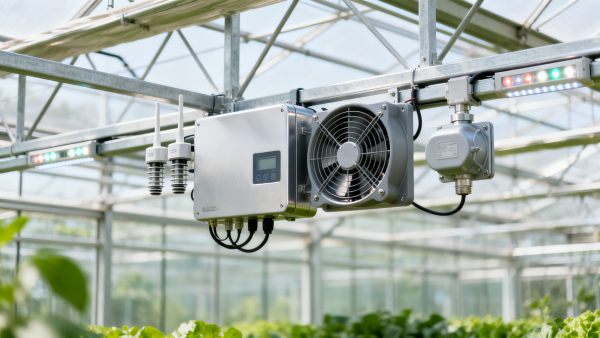
On May 28, 2026, the Regional Comprehensive Economic Partnership (RCEP) Secretariat, together with national agricultural machinery standardization bodies from China, Japan, South Korea, Australia, New Zealand, and six ASEAN member states, implemented the RCEP Framework for Mutual Recognition of Green Energy Efficiency and Safety in Agricultural Equipment. This development directly affects manufacturers, exporters, importers, and supply chain service providers in precision farming equipment, controlled-environment agriculture, and automated livestock systems — as it reshapes market access requirements across 15 economies.
Event Overview
Effective May 28, 2026, the RCEP Secretariat and agricultural machinery standardization institutions from China, Japan, South Korea, Australia, New Zealand, and six ASEAN countries jointly launched the RCEP Framework for Mutual Recognition of Green Energy Efficiency and Safety in Agricultural Equipment. The first group of products covered under mutual recognition includes Smart Greenhouse Environment Controllers, Climate Control & Ventilation Systems, and Feeding & Watering Systems. Certification issued by any one participating country is now accepted across all 15 RCEP members, reducing average import approval timelines by 42 days.
Industries Affected
Manufacturers of Precision Agricultural Equipment
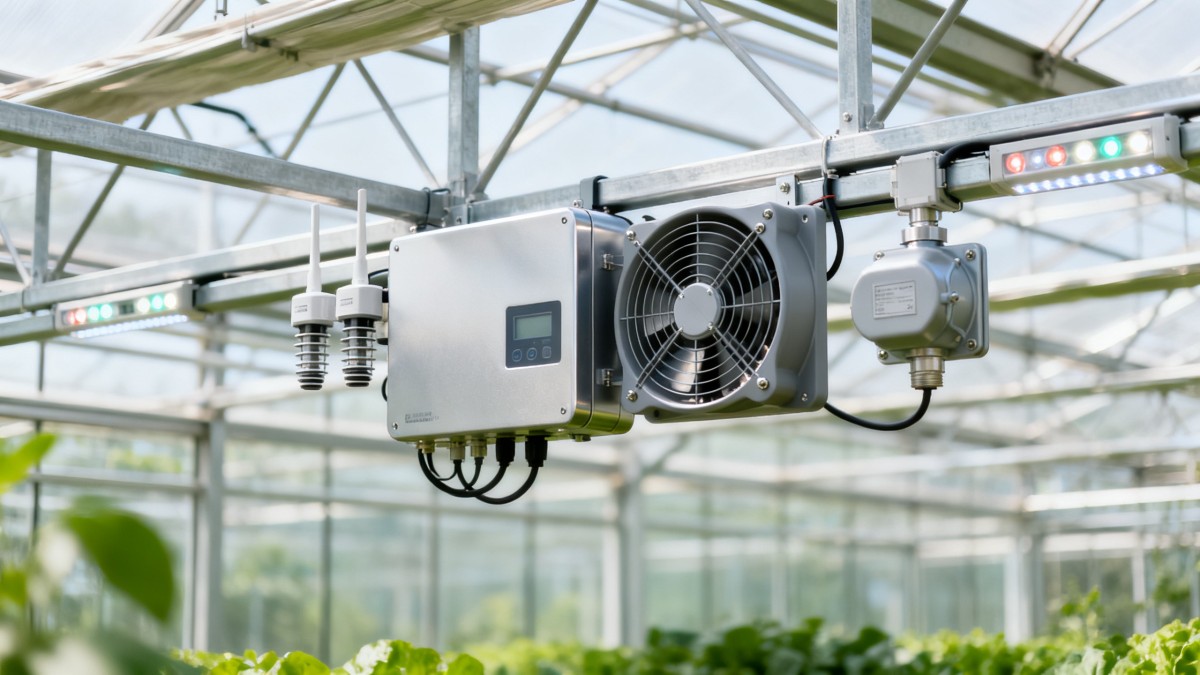
These firms produce Smart Greenhouse Environment Controllers, Climate Control & Ventilation Systems, and Feeding & Watering Systems — the three product categories explicitly named in the Framework. They are affected because conformity assessment conducted in one RCEP country now suffices for regulatory acceptance in the other 14, eliminating redundant testing and certification cycles per market.
Exporters and Importers of Farm Automation Systems
Companies engaged in cross-border trade of the three covered product types face reduced administrative lead time and lower compliance costs. The 42-day reduction in average import approval duration directly improves cash flow predictability and inventory planning accuracy, especially for time-sensitive seasonal deployments.
Supply Chain and Certification Service Providers
Third-party testing labs, certification bodies, and logistics coordinators supporting agricultural equipment exports must adapt to a harmonized recognition pathway. Their role shifts from managing multiple parallel certification workflows toward supporting single-point conformity assessments aligned with the Framework’s technical scope.
What Relevant Enterprises or Practitioners Should Monitor and Do Now
Track official implementation guidance from national standardization authorities
The Framework establishes mutual recognition in principle, but national agencies must issue operational guidelines on application procedures, scope interpretation, and certificate validation mechanisms. Enterprises should monitor announcements from bodies such as SAC (China), JISC (Japan), KATS (South Korea), and Standards Australia — particularly for updates on transitional arrangements or exclusions.
Verify whether existing product certifications qualify under the Framework
Not all prior certifications automatically apply. Only those issued under standards referenced in the Framework’s Annex — and assessed by designated national bodies — are eligible. Firms should audit current certificates against the listed standards (e.g., ISO 50001-based energy efficiency protocols or IEC 62061-compliant safety requirements) and confirm accreditation status of issuing labs.
Distinguish between policy signal and enforceable requirement
The Framework signals alignment on green performance criteria, but does not replace national safety, electromagnetic compatibility (EMC), or labeling laws. Enterprises must continue complying with local market-specific regulations outside the mutual recognition scope — including post-market surveillance obligations and technical documentation retention rules.
Prepare documentation and internal alignment ahead of first multi-country submissions
Organizations planning simultaneous market entries should consolidate test reports, risk assessments, and declarations of conformity into a unified format acceptable across jurisdictions. Internal teams — including R&D, regulatory affairs, and export operations — should align on terminology, units of measurement, and data reporting conventions used in the Framework’s annexes.
Editorial Perspective / Industry Observation
Observably, this initiative functions primarily as a procedural harmonization tool rather than a substantive technical standard. It does not introduce new environmental or safety thresholds, but enables consistent application of existing national standards across borders. Analysis shows its immediate value lies in administrative streamlining — not regulatory convergence. From an industry perspective, it reflects growing coordination among RCEP members on sustainability-linked trade facilitation, yet remains narrow in scope: only three product groups are included at launch, and no timeline has been published for expansion. Current developments are better understood as an early-stage infrastructure step — one that lowers transactional friction but does not eliminate the need for localized compliance expertise.
This is not yet a de facto regional standard, nor does it override national enforcement authority. Rather, it marks the formalization of a shared administrative protocol — meaningful for operational efficiency, but requiring continued attention to jurisdiction-specific implementation details.
It is more accurately interpreted as a signal of coordinated intent than an outcome with broad technical impact. The real test will be how consistently national authorities validate foreign-issued certificates — and whether disputes over interpretation trigger appeals or adjustments to the Framework itself.
Consequently, industry stakeholders should treat this as a procedural milestone — valuable for planning, but insufficient on its own to simplify full-market entry strategies without parallel engagement with national regulators.
For now, the Framework is best understood as a targeted trade facilitation measure focused on three defined product categories, not a comprehensive green standard for agricultural machinery across RCEP.
Information Source: Official announcement issued by the RCEP Secretariat on May 28, 2026; confirmed participation list and product scope published jointly by the Standardization Administration of China (SAC), Japanese Industrial Standards Committee (JISC), Korean Agency for Technology and Standards (KATS), Standards Australia, Standards New Zealand, and the ASEAN Centre for Energy (ACE). Note: Further technical annexes and national implementation timelines remain pending publication and are subject to ongoing monitoring.
Related Intelligence
- Smart GreenhouseGreenhouse Equipment for Vertical Farming: Choosing Lighting and VentilationChoose greenhouse equipment for vertical farming with confidence. Compare lighting, airflow, and moisture control to improve crop uniformity and manage costs. Explore the guide.
- Forestry EquipmentChoosing Compact Forestry Machinery for Small Woodlots and Narrow AccessChoose compact forestry machinery that fits small woodlots and narrow access. Compare payload, turning clearance, safety, and running costs to find the right machine for your site.
- APIs & IntermediatesProcurement Planning: Which Resource Reports Help Prevent Material Shortages?Discover how procurement planning resource reports reveal usable stock, shortage dates, and supplier risks so you can prevent material shortages and keep production on track.
The Morning Broadsheet
Daily chemical briefings, market shifts, and peer-reviewed summaries delivered to your terminal.
