

The Authority in Global Agricultural Chemistry & Bio-Resources
India Extends Import License for Heavy Agri Machinery to Dec 2026
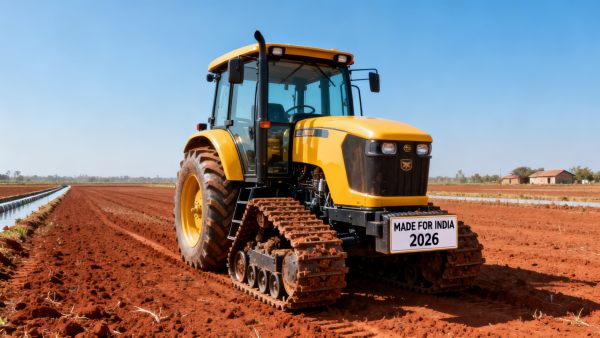
On May 27, 2026, India’s Ministry of Commerce announced an extension of import licenses for heavy agricultural machinery—specifically the Import Authorization (IML) for such equipment—to December 31, 2026. This update directly impacts exporters of tractors, seeders, grain dryers, and related critical components, particularly OEM manufacturers in China with proven rapid delivery capabilities.
Event Overview
The Department of Commerce, Government of India, issued a formal notification on May 27, 2026, extending the validity of Import Authorizations (IMLs) for heavy agricultural machinery to December 31, 2026. The notification also waives the requirement for local agent accreditation for new IML applications submitted between June 1 and December 31, 2026. The stated objective is to alleviate equipment shortages ahead of the upcoming sowing season.
Industries Affected
Direct Exporters (OEMs and Tier-1 Suppliers)
Exporters holding or applying for IMLs are directly affected because the extended license window reduces administrative uncertainty for shipments scheduled through end-2026. The waiver of the local agent requirement lowers entry barriers for new exporters during the second half of 2026, especially for firms without established Indian distribution infrastructure.
Component Manufacturers (Tier-2 and Subsystem Suppliers)
Suppliers of key subsystems—including hydraulic systems, precision seeding units, and drying drum assemblies—may experience increased order visibility, as OEMs gain greater confidence in committing to full-machine production schedules aligned with the extended IML timeline.
Logistics and Compliance Service Providers
Firms offering customs clearance, IML application support, and regulatory advisory services for agri-machinery imports into India may see elevated demand for documentation support in Q3–Q4 2026, especially for first-time applicants benefiting from the waived local agent condition.
Key Considerations and Practical Responses
Monitor official updates from DGFT and Customs
The Directorate General of Foreign Trade (DGFT) may issue clarifications on implementation—e.g., whether the extension applies automatically to existing IMLs or requires revalidation. Exporters should track DGFT notifications and customs circulars closely through July 2026.
Prioritize high-demand equipment categories
Given the policy’s linkage to sowing-season readiness, tractors (especially sub-50 HP), no-till seeders, and portable grain dryers are likely to face strongest near-term demand. Exporters should align inventory planning and shipping schedules accordingly for June–November 2026.
Distinguish policy intent from operational execution
The exemption from local agent requirements simplifies application but does not eliminate other compliance obligations—such as BIS certification, import declarations, or state-level agricultural equipment registration. Firms must verify that all non-license prerequisites remain fully satisfied.
Prepare supply chain buffers for Q3 ramp-up
With the license extension enabling firmer export commitments, Chinese OEMs and their suppliers should assess lead times for critical components (e.g., gearboxes, sensors) and consider pre-positioning stock in Indian bonded warehouses—or confirming air-freight contingency options—to meet potential delivery windows in August–October 2026.
Editorial Observation / Industry Perspective
Observably, this measure functions primarily as a short-to-medium-term administrative enabler—not a structural trade liberalization. It addresses a time-bound domestic procurement gap rather than signaling broader tariff or regulatory reform. Analysis shows the extension reflects India’s continued reliance on imported capacity to meet seasonal agricultural timelines, especially where domestic manufacturing scale remains constrained. From an industry perspective, it reinforces the importance of responsiveness and regulatory agility over long-term market access guarantees. The policy’s real-world impact will depend less on its duration and more on how consistently Indian customs and state agricultural departments implement supporting procedures during peak import months.
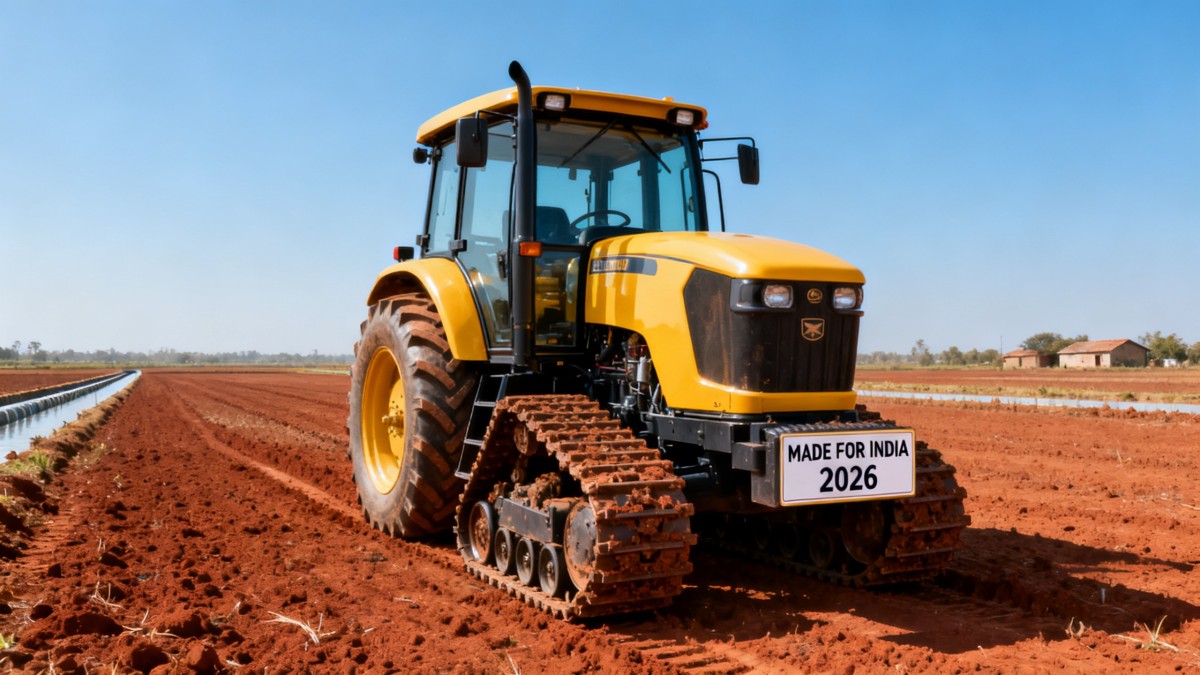
India’s decision to extend heavy agri machinery import licenses underscores a pragmatic response to cyclical domestic supply constraints—not a shift in long-term industrial policy. For international suppliers, the update offers a clarified 7-month operational window, but sustained competitiveness will hinge on execution speed, compliance precision, and adaptability to localized implementation practices—not just license validity.
Source: Notification No. [to be assigned], Directorate General of Foreign Trade (DGFT), Ministry of Commerce and Industry, Government of India, dated May 27, 2026.
Note: Implementation details—including automatic extension mechanics and state-level enforcement consistency—remain subject to ongoing observation.
Related Intelligence
- Smart GreenhouseGreenhouse Equipment for Vertical Farming: Choosing Lighting and VentilationChoose greenhouse equipment for vertical farming with confidence. Compare lighting, airflow, and moisture control to improve crop uniformity and manage costs. Explore the guide.
- Forestry EquipmentChoosing Compact Forestry Machinery for Small Woodlots and Narrow AccessChoose compact forestry machinery that fits small woodlots and narrow access. Compare payload, turning clearance, safety, and running costs to find the right machine for your site.
- APIs & IntermediatesProcurement Planning: Which Resource Reports Help Prevent Material Shortages?Discover how procurement planning resource reports reveal usable stock, shortage dates, and supplier risks so you can prevent material shortages and keep production on track.
The Morning Broadsheet
Daily chemical briefings, market shifts, and peer-reviewed summaries delivered to your terminal.
