

The Authority in Global Agricultural Chemistry & Bio-Resources
Poultry Farming Systems Compared: Cage, Free-Range, Deep Litter, and Aviary
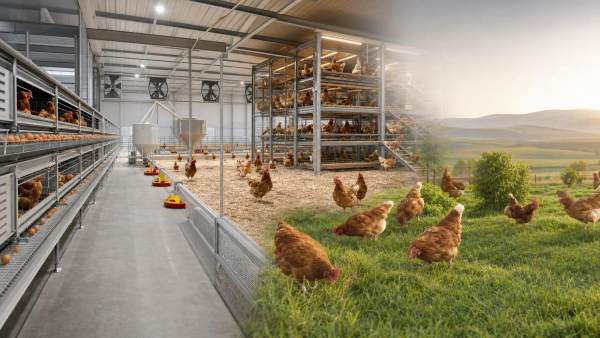
Choosing between cage, free-range, deep litter, and aviary housing is no longer a narrow production decision. It shapes cost structure, welfare compliance, labor design, flock health exposure, and the market story attached to eggs or meat.
That is why Poultry farming systems now sit at the intersection of animal science, equipment investment, feed efficiency, traceability, and retail positioning. In a supply environment watched closely by regulators and buyers, the right system depends less on fashion and more on fit.
Why system choice matters more than before
Across primary industries, housing models are being assessed with the same discipline applied to machinery, feed processing, and compliance systems. Poultry operations are under similar pressure.
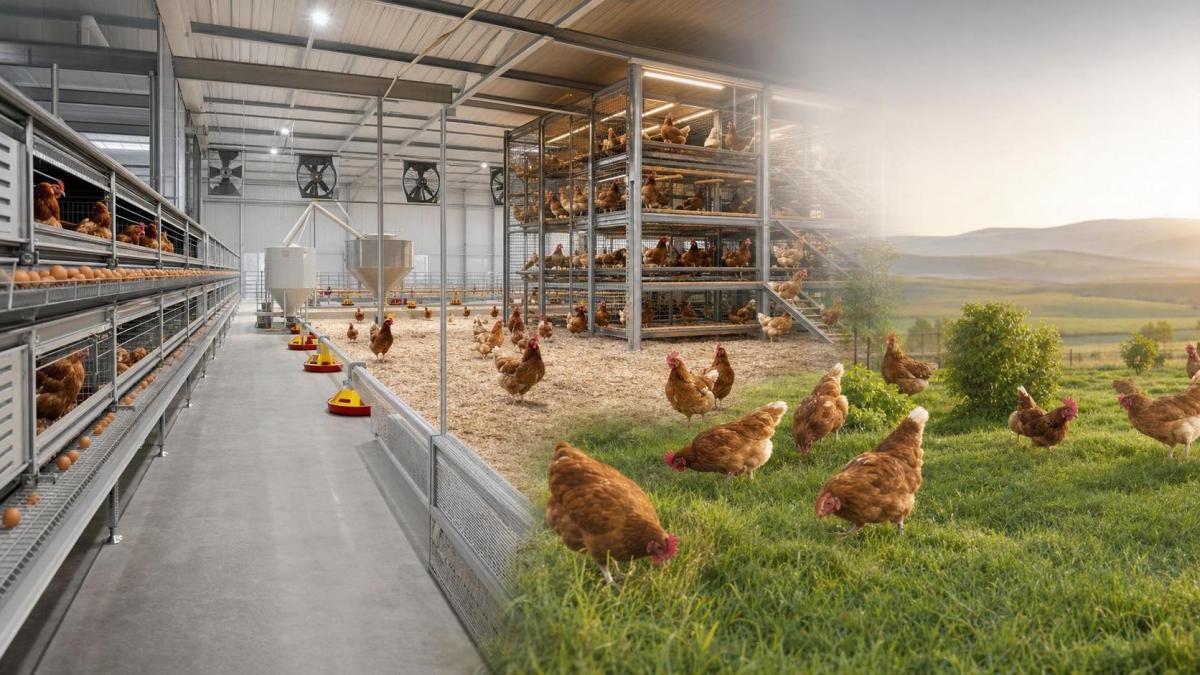
A poultry house now affects more than bird placement density. It influences ventilation demand, manure handling, mortality risk, medication strategy, audit readiness, and downstream brand acceptance.
From the broader ACC editorial perspective, this matters because agricultural output is increasingly linked with technical validation, environmental controls, and transparent operating standards.
Poultry farming systems therefore need to be compared as operating platforms, not just barn layouts.
Four poultry farming systems in practical terms
Each model organizes birds, labor, waste, and movement differently. Those differences shape both biological results and commercial outcomes.
Cage systems
Cage systems place layers in controlled compartments, often with automated feeding, watering, egg collection, and manure removal. They are designed for output consistency and close flock supervision.
The main strengths are feed conversion, egg cleanliness, lower floor egg losses, and efficient labor per bird. Disease observation is usually easier because movement patterns are predictable.
The main constraint is welfare scrutiny. In some markets, cage eggs face restricted retail access or premium market exclusion.
Free-range systems
Free-range systems combine indoor shelter with outdoor access. They are often associated with higher welfare perception and stronger positioning in premium consumer channels.
This model may support brand differentiation, especially where retailers demand visible welfare credentials. It can also align with regional land availability.
However, flock uniformity is harder to manage. Weather, predators, parasites, biosecurity breaches, and uneven ranging behavior all complicate control.
Deep litter systems
Deep litter systems keep birds on a bedding-covered floor, usually with materials such as rice husk, wood shavings, or chopped straw. Birds can move freely indoors.
They are often selected for moderate capital cost and operational flexibility. For many developing or expanding operations, this is the most accessible entry point among Poultry farming systems.
Performance depends heavily on litter management. Moisture, ammonia, caking, and pathogen load can quickly erode bird welfare and feed efficiency.
Aviary systems
Aviary systems allow birds to move vertically and horizontally through tiered structures. They are often used to balance non-cage welfare expectations with indoor management control.
They can improve market access in regions moving away from cages while retaining mechanized feeding and egg collection infrastructure.
The trade-off is complexity. Bird training, pecking behavior, floor eggs, and air quality management require stronger supervision and better house design.
Operational comparison at a glance
A side-by-side view helps clarify where each model fits.
No system wins on every metric. The better question is which weakness can be controlled, financed, and accepted by the target market.
What the industry is watching closely
The conversation around Poultry farming systems has shifted from simple productivity toward resilience and compliance. Several issues now shape investment decisions.
- Retail and export channels increasingly define acceptable housing categories.
- Disease prevention is linked to building design, visitor control, and manure handling.
- Feed margins require systems that protect conversion efficiency, not only bird numbers.
- Environmental scrutiny makes ammonia, runoff, and waste reuse more visible.
- Automation decisions must match labor costs, energy reliability, and maintenance capacity.
These concerns mirror trends seen across processing, chemicals, and industrial agriculture: buyers increasingly expect technical proof, not broad claims.
Matching system design to business reality
In practice, Poultry farming systems should be chosen against a clear operating model. Location, climate, financing, product destination, and compliance exposure all matter.
When cage systems still make sense
They remain viable where output standardization, lower mortality variability, and mechanized efficiency outweigh reputational pressure. This is common in tightly controlled supply chains.
When free-range gains an edge
It suits markets that reward welfare labeling and can absorb higher production costs. Strong land management and disciplined biosecurity are essential.
Where deep litter works best
It fits operations seeking flexibility, moderate capital commitment, and simpler infrastructure. Success depends less on concept and more on daily litter, ventilation, and stocking discipline.
Why aviary is often strategic
Aviary systems are frequently chosen during transition planning. They can preserve access to non-cage channels without fully adopting outdoor production.
Decision points that deserve closer analysis
A housing choice should be stress-tested before construction or conversion. Several questions usually reveal whether a system is operationally sound.
- Will the target buyer specify cage-free, free-range, or mixed acceptance?
- Can the site maintain temperature, airflow, and litter quality year-round?
- Is labor trained for bird behavior management, not just routine handling?
- Do waste streams meet local environmental rules and reuse plans?
- Will automation reduce long-term cost, or create service dependency?
- Does the selected system support traceability claims during audits or customer review?
This is where a cross-sector view becomes useful. Housing should be reviewed alongside feed supply, veterinary protocols, equipment servicing, and reporting standards.
A practical next step for evaluating poultry farming systems
The most reliable comparisons start with a shortlist of non-negotiables: target market category, welfare threshold, capital ceiling, land profile, and disease tolerance.
From there, Poultry farming systems can be scored against measurable factors such as feed conversion, mortality trend, egg quality, labor hours, manure handling cost, and regulatory fit.
That approach creates a stronger basis for investment than broad assumptions about which housing model is “best.” In most cases, the best system is the one that remains defensible when biology, compliance, and market access are assessed together.
For teams building a long-term production roadmap, the useful next move is to compare present facilities against future channel requirements, then test whether conversion, expansion, or a mixed-system strategy offers the soundest return.
Related Intelligence
- Poultry Housing & CagingWhen a Lower Layer Cage Price Can Increase Long-Term Farm Operating CostsLayer cages price is more than an upfront quote. Discover how cheaper systems can raise labor, repair, egg-loss, and automation costs over time.
- Poultry Housing & CagingHow Poultry Equipment Layout Affects Cleaning, Biosecurity, and MaintenancePoultry equipment and their uses shape cleaning access, biosecurity, and maintenance. Discover layout strategies that reduce risks and improve farm efficiency.
- Poultry Housing & CagingMaintenance Challenges and Design Features That Extend Service Life of Automated Poultry Cage Systemsautomated poultry cages face corrosion, jamming & fatigue—discover design features that cut maintenance costs and extend service life by years.
The Morning Broadsheet
Daily chemical briefings, market shifts, and peer-reviewed summaries delivered to your terminal.
