

The Authority in Global Agricultural Chemistry & Bio-Resources
What Is Category-Based Agricultural Supply Chain Intelligence and How Can It Guide Sourcing?
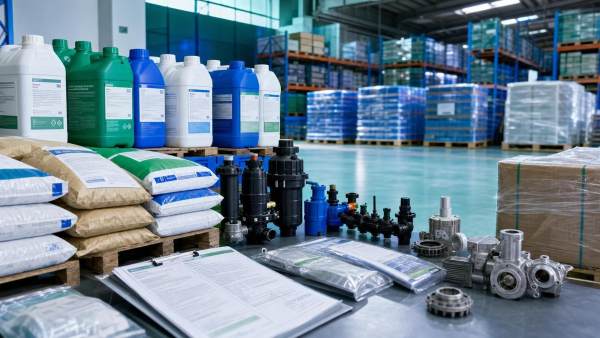
What Is Category-Based Agricultural Supply Chain Intelligence and How Can It Guide Sourcing?
In volatile farm input markets, category based agricultural supply chain intelligence gives procurement teams a clearer way to compare suppliers, assess risk, and align sourcing with technical and regulatory requirements. By organizing insights by product category, buyers can move beyond price checks to evaluate capacity, compliance, logistics, and long-term supply resilience with greater confidence.
If you buy crop nutrients, feed additives, processing chemicals, aquaculture systems, or machinery parts across more than one market, you already know the problem: two suppliers can look similar on paper and still carry very different operational risk. One has stable upstream raw material access but weak export documentation. Another is technically strong yet too dependent on one plant, one port, or one toll manufacturer. This is where category-based intelligence starts to matter. It helps procurement look at a supplier inside the realities of that product group, not as a generic vendor record.
In practical terms, category based agricultural supply chain intelligence means collecting and organizing market, technical, regulatory, and trade information around a defined sourcing category. Not just “chemicals” or “equipment,” but narrower groups that behave differently in the market: fermentation-derived additives, solvent-based intermediates, compound feed ingredients, irrigation control components, hatchery systems, or replacement parts for forestry machinery. Each category has its own failure points. Good intelligence makes those visible before they show up as delayed shipments, failed audits, or unstable pricing.
What procurement teams should actually check
A lot of sourcing teams say they monitor the market, but the work is often still reactive. Someone asks for three quotes, compares lead time and price, then moves on. That may work for low-risk MRO items. It is not enough for inputs tied to batch consistency, traceability, residue controls, pharmacological standards, or environmental approvals.
A more useful checklist starts with category structure.
- Define the buying category narrowly enough that the supply dynamics are comparable. “Agricultural chemicals” is too broad. “Chelated micronutrients for foliar application” or “feed-grade amino acid inputs” is closer to something you can analyze.
- Map what matters in that category before contacting suppliers. For some categories, purity profile and impurity handling dominate. For others, spare parts availability, field service coverage, or cold-chain stability matter more than headline unit cost.
- Separate commercial substitutes from true technical substitutes. Buyers often assume two materials are interchangeable because the label looks close. In practice, application rates, formulation compatibility, moisture tolerance, or equipment calibration may say otherwise.
- Check whether the category is driven by seasonal harvest cycles, petrochemical inputs, regulated precursors, or container availability. Those drivers change how you read supplier promises.
This sounds basic, but it is usually where weak sourcing starts. If the category is poorly defined, every comparison after that gets noisy.
The next checkpoint is supplier capability in category context. A supplier may be credible in one segment and marginal in another. For example, a producer with strong blending and packaging operations is not automatically a reliable source for high-specification intermediates or regulated inputs requiring tight batch control and auditable documentation. Procurement should ask: is this company genuinely a manufacturer for this category, a formulator, an assembler, a trading house, or some mix of the three? The answer changes the risk profile immediately.
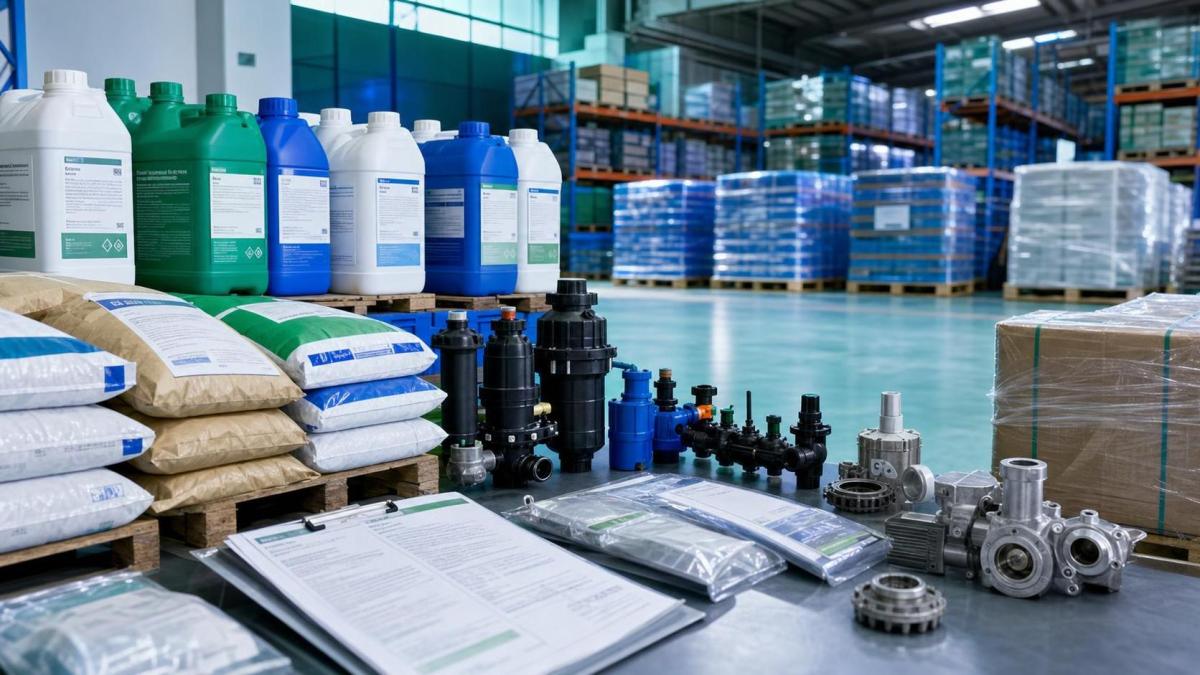
One point that experienced buyers rarely skip: documentation has to match the transaction, not just exist somewhere in a sales deck. A certificate can be valid and still irrelevant. If the material is intended for a regulated downstream use, confirm the issuing entity, covered site, product scope, and date status. If environmental or safety registration applies in the destination market, check that too. The specifics vary by product and jurisdiction, and some claims will need direct verification against current regulator records or customer-required standards 【待核实】.
Where intelligence becomes useful instead of decorative
Good category intelligence should help you make a better decision, not just produce a nicer supplier slide. In sourcing meetings, I would expect it to answer a few uncomfortable questions quickly.
- Are we buying in a category with hidden concentration risk?
- Does our approved supplier list include real process diversity, or only different commercial fronts sourcing from the same network?
- Which quality failures are category-specific and therefore predictable?
- Which region is strong in production, and which region is strong only in distribution or after-sales support?
- What would make substitution difficult: formulation, registration, machine compatibility, operator training, or customer approval?
Take feed and grain processing inputs as an example. A buyer may focus on protein content, price, and freight. But category-based analysis usually goes further: storage stability, contamination exposure points, moisture management, mycotoxin controls where relevant, and regional handling practices can all shape actual usability. The lowest offer may still become the most expensive lot if it creates rework, storage loss, or customer complaints.
For agricultural and forestry machinery, the trap is different. Buyers sometimes overvalue the initial unit price and undervalue service footprint, spare part lead times, firmware support, and fit with local operating conditions. A machine category may look standardized in a catalog, but field conditions, emissions requirements, hydraulic system compatibility, and maintenance training can turn a “good deal” into a stranded asset.
In bio-extracts and ingredients, the category lens matters because biological variability changes everything. Source crop, extraction method, seasonal variation, solvent system, and specification tolerance all affect consistency. Two suppliers may both offer a botanical ingredient, yet one is built for nutraceutical-grade repeatability and the other is only suitable for less controlled applications. If your sourcing team ignores that distinction, quality disputes arrive late and expensively.
A working checklist before you shortlist suppliers
- Write a category brief in plain language. Include use case, critical specification, destination market, required documents, handling conditions, and acceptable substitute range.
- Ask what part of the value chain the supplier controls directly. Plant, blending line, warehouse, export desk, field installation, service network, or none of the above.
- Test capacity claims carefully. Nameplate capacity is not the same as available capacity for your grade, packaging format, or season.
- Identify single-point dependencies. One plant, one precursor, one lab, one border crossing, one local service agent. These are often more important than the quoted discount.
- Match compliance to the end market. A document accepted in one jurisdiction may be insufficient in another. This is especially important where pharmaceutical, feed, environmental, or food-contact rules intersect.
- Review complaint history by failure type if available. Late shipment, batch variance, labeling error, customs documentation problem, calibration drift, installation delays. Patterns matter more than isolated incidents.
- Check whether lead time is production lead time or shipping lead time. Sellers blur this all the time.
- Pressure-test substitution. If the primary source fails, how much revalidation would the alternate need?
That last point deserves more attention than it usually gets. In many agricultural sourcing environments, “dual sourcing” is treated as a solved problem once two names appear on a list. But unless those suppliers are technically interchangeable in your actual process, you do not have resilience. You have paperwork.
How to use it in day-to-day sourcing
The best use of category based agricultural supply chain intelligence is not a once-a-year market report. It is a standing decision tool. Procurement teams can use it to set should-cost expectations, decide when to lock contracts, flag categories that need extra compliance review, and spot where supplier diversification is only cosmetic.
It also improves internal conversations. Engineering, QA, regulatory, operations, and sourcing often talk past each other because each team sees a different slice of risk. A category view gives them a shared reference point. Instead of debating whether a supplier is “good,” they can discuss whether the supplier is suitable for this category, this market, this quality threshold, and this service model.
For procurement people, that is the real value. Not more noise. Better filters.
If you are new to the concept, start small. Pick one category that regularly causes delays, price surprises, or approval friction. Build a short intelligence file around it: supplier roles, upstream dependencies, compliance checkpoints, substitution limits, and logistics constraints. After one or two sourcing cycles, the difference becomes obvious. You stop buying as if every supplier in the category were comparable, because they are not.
That is really what category-based intelligence is for. It helps procurement see the supply chain in the same shape the risk actually appears.
- Bio-Extracts
- Grain Processing
- Aquaculture Systems
- Feed Additives
- Agricultural Chemicals
- Feed Ingredients
- Aquaculture
- Feed and Grain
- Agricultural and Forestry Machinery
- Feed and Grain Processing
- Bio-Extracts and Ingredients
- Forestry Machinery
- Agricultural Supply Chain
- Agricultural supply chain intelligence
- category based agricultural supply chain intelligence
Related Intelligence
- AgrochemicalsUSDA Announces Over $500 Million for Eight Fertilizer Production ProjectsUSDA announces over $500 million for eight fertilizer production projects. Explore how expanded domestic supply could affect farm costs and agricultural supply chains.
- AgrochemicalsAgrochemicals Category Intelligence: Tracking Cost Drivers and Supply RiskExplore agrochemicals category intelligence to track cost drivers, uncover supply risks, and strengthen sourcing decisions. Learn how to negotiate smarter and secure reliable supply.
- AgrochemicalsChina’s Phosphate Fertilizer Exports Near Zero, Tightening Global SupplyChina’s phosphate fertilizer exports near zero in 2026 as sulfur shortages tighten global supply. Explore the risks for importers, prices and sourcing strategies.
The Morning Broadsheet
Daily chemical briefings, market shifts, and peer-reviewed summaries delivered to your terminal.
