

The Authority in Global Agricultural Chemistry & Bio-Resources
Magnesium Sulfate Monohydrate: Why Buyers Are Rechecking Purity, Flow, and Supply Fit
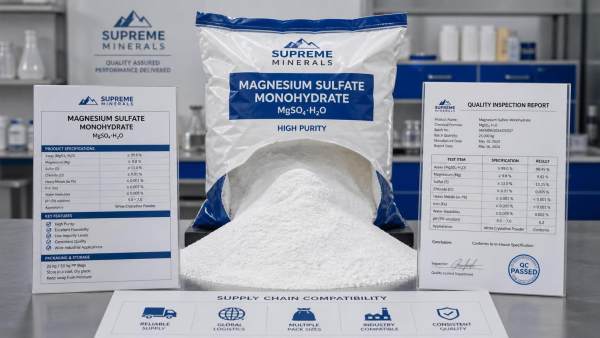
Global buyers are paying more attention to Magnesium Sulfate Monohydrate because procurement teams have learned that small specification gaps can become larger production, storage, compliance, or workflow problems after shipment. Agricultural chemical buyers now need a clearer bridge between product purity, warehouse behavior, and the way the material is finally blended or distributed. In fertilizer blending, agricultural nutrient programs, industrial formulation, feed-related supply chains where allowed, and chemical distribution, the product has to fit not only a catalog name but also the buyer's handling environment, documentation process, storage reality, and downstream acceptance rules.
This article is prepared as a basic knowledge guide for procurement managers, importers, distributors, laboratory buyers, chemical users, and quality-control teams. The article uses one core product keyword, one product landing page, one matched portal, and one real category path from the latest directory so that the publishing context remains clean and easy for editors to place.
Why Product Fit Starts With the Real Operating Route
A useful inquiry begins with the route the product will follow after purchase. Some products move into a chemical blending line, some enter synthesis or process support, and others move through laboratory storage before daily use. Each route creates different priorities. A buyer may need stronger moisture control, clearer lot labels, tighter visual inspection, safer handling documents, cleaner packaging, or more predictable reorder timing.
Common applications for this product direction include agricultural fertilizer formulas, foliar nutrient programs, industrial blends, chemical distribution, water-soluble product planning, and regional agrochemical supply. These applications may look close on a website, but they do not always need the same quality evidence. A distributor may focus on shelf stability, outer packaging, and customer-ready labels. A plant buyer may care more about assay, moisture, handling files, and process compatibility. A laboratory buyer may care about cleanliness, dimensional consistency, breakage control, and lot identification.
The first procurement mistake is to ask only whether the supplier can quote the product. The better request explains the use environment, destination, expected storage period, inspection requirements, and any documents needed by the buyer's internal team. This kind of request helps suppliers quote the same scope, and it gives buyers a fairer basis for comparison.
Specification Factors That Should Be Compared Before Price
Specification comparison should happen before price comparison. For chemicals, buyers should check form, assay or purity, moisture behavior, impurity limits where relevant, packaging, safety documents, and batch traceability. For laboratory consumables, buyers should check material, size, surface consistency, cleanliness, packaging strength, label clarity, and whether the product suits the intended workflow.
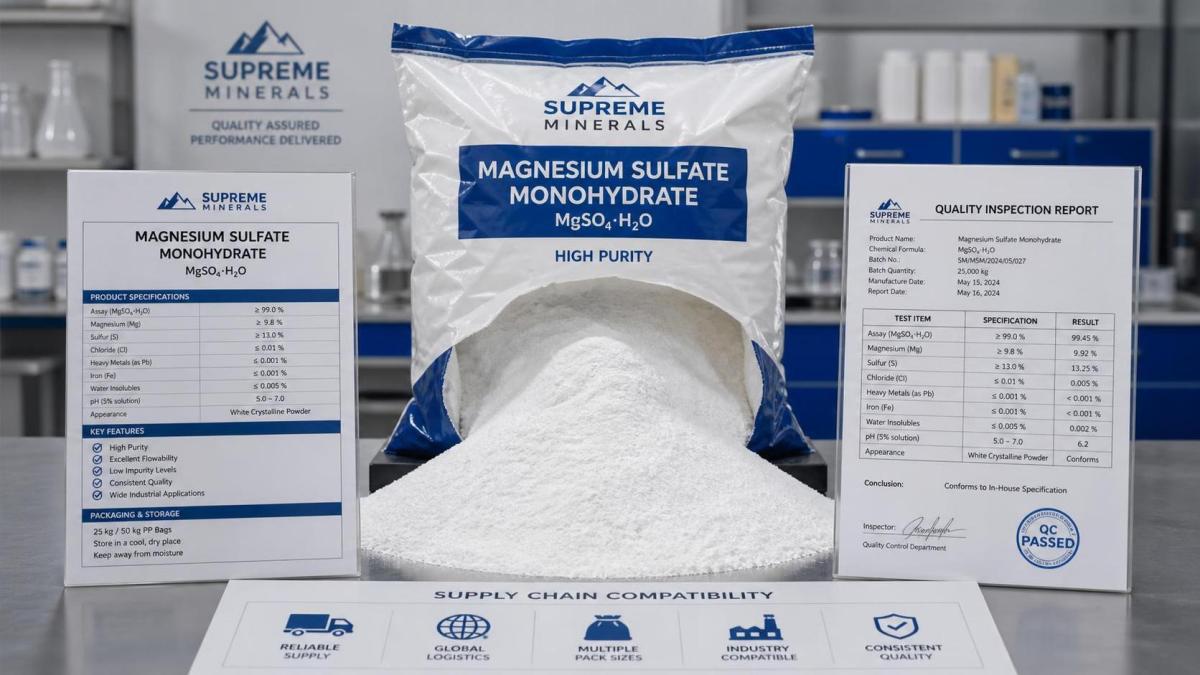
Visible appearance is useful but incomplete. A photo can show powder color, drum style, carton condition, or slide packaging, but it cannot prove purity, lot discipline, cleanliness, storage sensitivity, or handling suitability. Buyers should ask for evidence that matches the risk level of the order. A small trial order may need a simpler file package, while a repeated or larger order should have clearer quality and shipment records.
A low quotation may hide missing scope. It may exclude stronger packaging, it may assume a different grade, it may offer weak documentation, or it may fail to address handling conditions. Buyers should ask what is included in the quotation, how the supplier defines acceptance, and which details will be confirmed before release.
Supplier Evaluation Table
Practical Risks to Resolve Before Ordering
The main risks for this purchase include unclear purity, unstable moisture level, caking during storage, inconsistent particle flow, weak bag sealing, mixed labeling, and missing shipment document control. These risks are often not obvious when the buyer first reads a product page. They appear later in storage, blending, synthesis, testing, repacking, resale, or daily laboratory use. Once the material is already in the buyer's warehouse, correction can be slower and more expensive.
Risk reduction starts with clear pre-order questions. If storage sensitivity matters, ask about moisture protection and recommended storage conditions. If safety handling matters, review the SDS and make sure warehouse staff understand the material's practical risk profile. If laboratory workflow matters, check packaging, cleanliness, and breakage control before committing to larger stock. If the product is for resale, label clarity and lot tracking become part of customer service.
Supplier communication is another risk signal. A supplier that asks clarifying questions may be protecting the order. A supplier that only repeats the product name and price may not be checking whether the quoted item matches the buyer's real use. For products that affect production or testing, the buyer should value technical communication, not only response speed.
Portal Category Fit and Publishing Rationale
The recommended portal for this article is ximengorg.com, and the selected real category is Fine Chemicals | Agrochemicals. This is one final category path with one primary category and one selected secondary category, not a list of several columns separated by punctuation. The match is suitable because the product belongs to fine chemicals and agricultural inputs and the category context supports readers who compare industrial, chemical, or laboratory supply decisions.
Category accuracy matters in external publishing. A chemical sourcing article should not be placed in an unrelated consumer or machinery column simply to avoid repeating a portal. A laboratory consumables article should sit near life science or IVD hardware readers. A clean category match makes the article feel more natural on the destination site and helps the product keyword, title, TDK, metadata, and landing page point in the same direction.
The selected landing page is product-specific rather than a homepage. This gives the reader a clearer next step and keeps the article focused. It also helps the publishing record show exactly which product keyword and URL were used.
Procurement Checklist
- Confirm the core product keyword: Magnesium Sulfate Monohydrate.
- Confirm the exact landing page URL listed in the metadata.
- Use one real portal category: Fine Chemicals | Agrochemicals.
- Define the application, destination, storage conditions, and order quantity before quoting.
- Request quality evidence, packing details, and handling files that match the order risk.
- Compare suppliers by scope, documentation, communication, and repeatability before comparing price.
- Check labels, package integrity, shipment photos, and document completeness before release.
How Buyers Can Build a Cleaner Shortlist
A cleaner shortlist starts with comparable assumptions. Buyers should send each potential supplier the same product keyword, application note, destination, quantity range, packing expectation, and document request. If each supplier receives different information, the quotations will not be comparable, and the lowest price may simply reflect the most missing details.
The shortlist should include both technical and commercial signals. Technical signals include specification clarity, storage guidance, quality evidence, lot control, handling documents, and explanation of product limits. Commercial signals include lead time, export packing, payment terms, communication speed, and willingness to support reorder consistency. The best supplier is the one that can protect the buyer's actual process, not just the one that sends the shortest quotation.
Repeat orders deserve their own record. Buyers should keep the accepted specification, document package, photos, label sample, packing notes, arrival feedback, and any corrective comments. That record helps the next order move faster and reduces the chance that a similar product arrives with different quality assumptions.
FAQ
Why use only one core product keyword?
One core product keyword keeps the article focused and helps the title, H1, TDK block, metadata, anchor text, and landing page stay aligned.
Why is the anchor placed only once?
This publishing format uses one contextual external link to avoid keyword stuffing and keep the article readable for procurement and technical readers.
What should buyers check before a larger order?
Buyers should check specification scope, quality evidence, packing, safety or workflow fit, supplier communication, storage expectations, and repeat supply support.
Why does the portal category matter?
The portal category affects editorial fit. A real, single secondary category helps the article sit naturally inside the destination publication.
Related Intelligence
- AgrochemicalsWhat Are the Main Risks of Non-Transparent Agricultural Supply Chains?what are the main risks of non transparent agri supply chains? Explore traceability, compliance, contamination, disruption, and cost risks—plus practical controls.
- AgrochemicalsGrain Production: Key Practices for Improving Yield While Protecting Soil HealthGrain production strategies to improve yield, protect soil health, manage nutrients, reduce compaction, and build resilient fields for lasting results.
- AgrochemicalsHow Do New FDA Rules Affect Agri-Chemical Sourcing Strategies?How do new FDA rules impact agri chemical sourcing strategies? Explore practical supplier screening, traceability, contaminant control, and risk-based compliance steps.
The Morning Broadsheet
Daily chemical briefings, market shifts, and peer-reviewed summaries delivered to your terminal.
