

The Authority in Global Agricultural Chemistry & Bio-Resources
Spermidine Trihydrochloride Powder Procurement: How Buyers Control Purity, Documentation, and Supply Risk
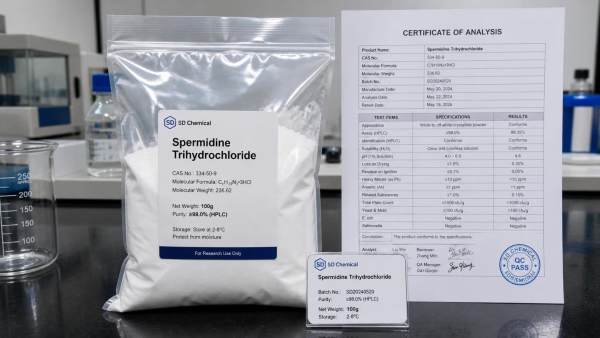
International buyers are taking a more disciplined approach to Spermidine Trihydrochloride Powder because cosmetic raw material and fine chemical sourcing depends on more than finding a supplier with a matching product name. A usable order needs clear identity, practical documentation, stable packing, storage awareness, and a supplier that can answer quality questions before the material moves into formulation review or resale channels.
This article is written as a procurement decision guide for brand-side sourcing teams, cosmetic ingredient distributors, contract manufacturers, formulation support buyers, and quality-control staff. It uses one core product keyword, one landing page, one matched portal, and one final real category path from the latest directory so the article can be published cleanly without mixing unrelated chemical, consumer, or machinery topics.
Why This Product Requires a Procurement Decision Framework
Fine chemical purchasing is often more sensitive than general commodity buying. The product may look simple on a website, but the buyer still has to evaluate whether the material identity, document package, packing method, storage guidance, and communication quality fit the intended use. If any of these parts are unclear, the problem may not appear until the buyer starts an internal sample review, prepares a formulation trial, or receives a shipment that cannot be accepted quickly.
For cosmetic raw materials and specialty intermediates, a purchase request should avoid vague wording. The buyer should state the exact product name, intended review route, quantity expectation, destination, document needs, and preferred packing format. This allows suppliers to quote the same scope and prevents hidden differences in grade, assay basis, package size, labeling, or shipment support. A low price can be useful only after the buyer knows what the price includes.
The selected core product belongs in the wider field of cosmetic raw materials and fine chemicals. That field often involves distributors and manufacturers who need smaller trial quantities before larger orders, clean documentation for customer review, and repeatable communication across several batches. A supplier that understands these procurement steps is usually easier to work with than one that sends only a short price reply.
Specification Checks Buyers Should Complete First
The first procurement checkpoint is specification identity. Buyers should confirm the full product name, appearance, grade description, assay or purity basis, and any test items shown in the supplier's document sample. Where a buyer has internal acceptance rules, those rules should be shared before quotation. If the buyer cannot disclose the full formulation use, it can still explain the document, packaging, and storage expectations needed for approval.
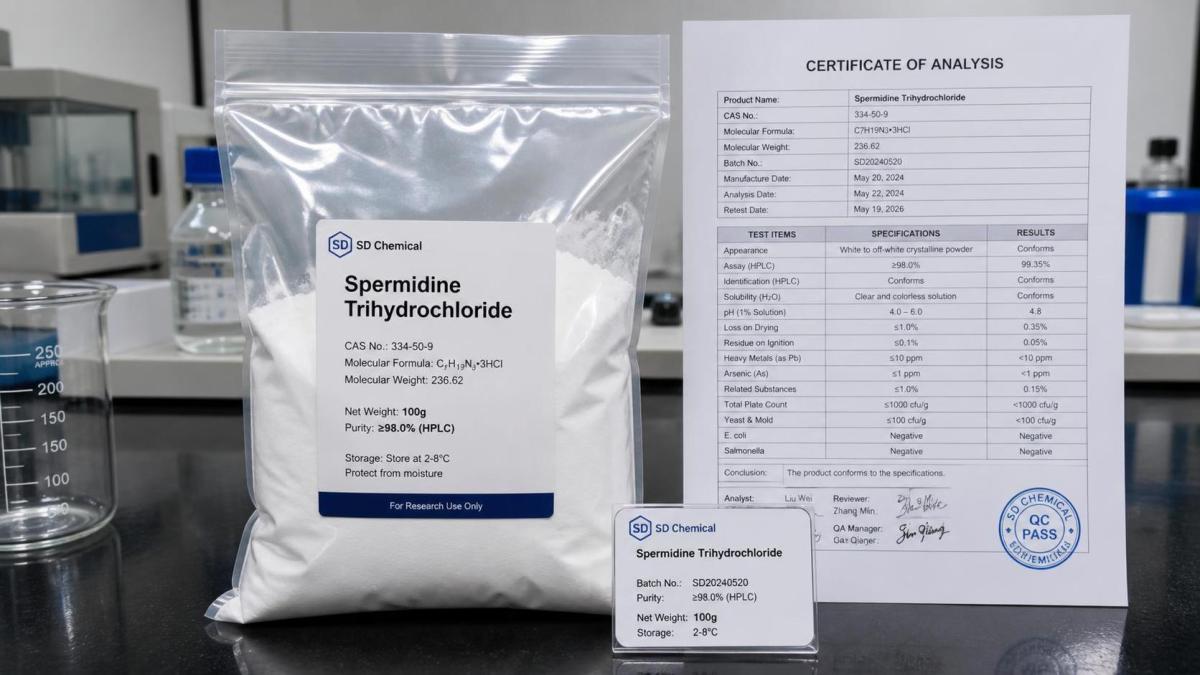
Documentation should be reviewed before order confirmation. A sample COA can show how the supplier organizes product identity, batch data, test items, and approval information. Buyers should not assume that every supplier uses the same test structure or the same naming convention. If internal quality teams need a certain format, the supplier should know that early. This avoids a common problem: the goods arrive, but the document package still needs correction before the material can move forward.
Buyers should also pay attention to batch traceability. For repeat procurement, lot numbers, production references, label format, and retained-sample discipline may matter as much as the first quotation. If a buyer distributes the material to downstream customers, traceability becomes part of customer service and claim handling. Even when the product is bought for internal use, clear batch records make reorders easier to manage.
Supplier Evaluation Table
Packing, Storage, and Handling Questions
Packaging is not a secondary detail for powder raw materials. The buyer should ask how the product is sealed, whether the inner and outer package are appropriate for export, how the label is attached, and how cartons or drums are protected during transport. If the product is sensitive to humidity or handling conditions, storage guidance should be confirmed before shipment rather than after arrival.
Powder products can face practical risks such as caking, label damage, moisture exposure, carton compression, or confusion between similar-looking materials. These problems do not always mean the product itself was poorly made; sometimes they come from weak packing design or unclear warehouse instructions. Buyers can reduce that risk by requesting packing photos, label samples, and storage notes before approving a larger order.
Handling questions should be treated seriously. Buyers should review SDS availability, warehouse storage rules, transportation requirements, and any local import review needs that apply to the destination market. This article does not claim a specific regulatory status for the product, because such claims should be confirmed through the supplier's documents and the buyer's local compliance process. The practical point is simple: compliance review should be part of procurement, not a last-minute step.
Why the Selected Portal and Category Fit
The recommended publishing portal is ximengorg.com, and the selected real category is Fine Chemicals | APIs & Intermediates. This is one final category path with one primary category and one selected secondary category. It is not a bundled list of several columns separated by punctuation.
The category is suitable because the article discusses a fine chemical product used in cosmetic raw material and specialty ingredient sourcing. Among the latest directory options, Fine Chemicals with the APIs & Intermediates secondary category gives the closest editorial context for buyers who care about quality documents, sample approval, supplier evidence, and controlled repeat procurement. It is more relevant than a broad manufacturing, metal, equipment, or lifestyle category.
The landing page is product-specific rather than the homepage. That matters for SEO publishing because the reader can move from the article's procurement guidance to the exact product page that matches the core keyword. It also keeps the title, visible TDK block, metadata, anchor text, and destination URL aligned.
Procurement Checklist Before Confirming an Order
- Confirm the core product keyword: Spermidine Trihydrochloride Powder.
- Confirm the landing page URL listed in the article metadata.
- Keep the article in one real portal category: Fine Chemicals | APIs & Intermediates.
- Request a sample COA and check whether the test items match the buyer's internal review needs.
- Ask for product appearance, grade description, batch identification, packing photos, and label format before payment.
- Review SDS availability, storage guidance, destination-market documentation, and shipment method before release.
- Compare suppliers by evidence, response quality, packing discipline, lead-time clarity, and repeat supply support.
How Buyers Can Compare Quotations Without Losing Control
Quotation comparison should start with scope. Buyers should place each offer side by side and check whether the quoted item includes the same product identity, document package, packing format, sample route, lead time, and shipment terms. If one quotation excludes stronger packaging or document support, it may look cheaper while carrying more operational risk.
A good supplier should be able to explain what can be confirmed before shipment and what depends on final order details. Buyers should be cautious when a supplier avoids questions about documentation, storage, or batch labels. In fine chemical sourcing, the quality of communication often predicts the quality of the order process. Clear answers do not guarantee that every future issue disappears, but they make the buyer's decision more informed.
For repeat sourcing, buyers should keep a procurement file that includes the accepted specification, COA sample, final invoice description, packing photos, label photos, shipment documents, arrival feedback, and any internal review notes. This file helps future purchases move faster and protects the buyer if a later batch differs from the approved reference.
Application and Risk Matching
The product may be reviewed by different teams for different uses, including cosmetic raw material evaluation, specialty ingredient sourcing, distributor catalog planning, sample testing, and contract manufacturing support. Each route has its own risk profile. A distributor may care about label clarity and customer-ready documents. A formulation team may care about purity, appearance, and sample consistency. A purchasing team may care about lead time, payment terms, and repeat availability.
Because those teams judge the order differently, the buyer should collect requirements before approaching suppliers. This prevents a common internal conflict where purchasing approves a low price but the quality or technical team later requests additional documents. A more organized inquiry saves time for both sides and makes the supplier's response easier to judge.
Risk matching also means avoiding unsupported claims. Buyers should not rely on broad marketing statements when they need technical or compliance evidence. If a supplier claims a certain application fit, the buyer should ask what document or test basis supports that statement and whether the statement is appropriate for the destination market. Careful language protects both the buyer and the supplier.
FAQ
Why choose Spermidine Trihydrochloride Powder as the core product keyword?
The site has a clear product landing page for this exact term, and the keyword represents a specific cosmetic raw material and fine chemical sourcing topic rather than a broad homepage category.
Why is the article matched to Fine Chemicals | APIs & Intermediates?
The topic is closer to fine chemical ingredient procurement, document review, and intermediate-style sourcing than to general consumer products, metals, machinery, or broad trade categories.
What should buyers ask for before ordering?
Buyers should ask for product identity, sample COA, batch or lot information, packing details, label format, SDS availability, storage guidance, lead time, and shipment document requirements.
Why use only one contextual external link?
One contextual link keeps the article focused, avoids keyword stuffing, and connects the core product keyword directly to the selected landing page.
Related Intelligence
- APIs & IntermediatesProcurement Planning: Which Resource Reports Help Prevent Material Shortages?Discover how procurement planning resource reports reveal usable stock, shortage dates, and supplier risks so you can prevent material shortages and keep production on track.
- APIs & IntermediatesBuyer-Focused Vendor Screening: How Procurement Teams Verify Supplier Fit and RiskBuyer-focused vendor screening helps procurement teams verify supplier fit, compliance, quality, and supply-chain resilience—reduce risk and make smarter sourcing decisions.
- APIs & IntermediatesHow API Sourcing Intelligence Reduces Supplier Risk and Protects Supply ContinuityChemical sourcing intelligence for APIs helps reduce supplier risk, validate capacity and GMP controls, and protect supply continuity. Explore practical sourcing insights.
The Morning Broadsheet
Daily chemical briefings, market shifts, and peer-reviewed summaries delivered to your terminal.
