

The Authority in Global Agricultural Chemistry & Bio-Resources
Grain Prices Rise as Phosphate and Potash Demand Accelerates
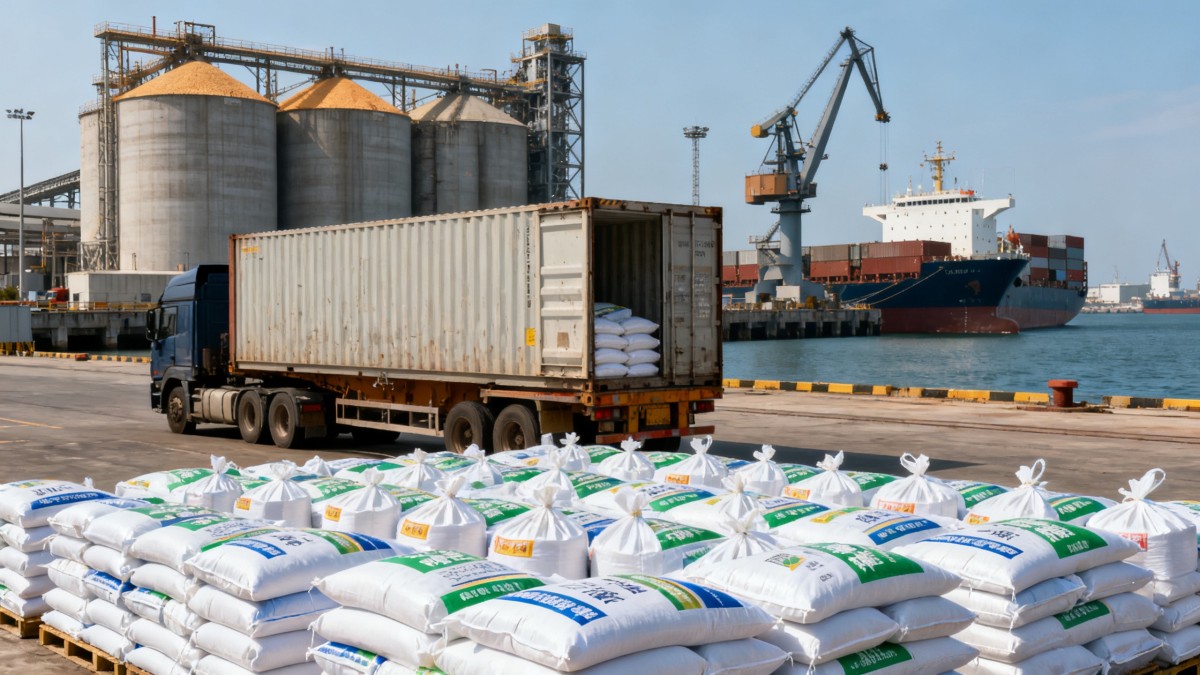
On June 11, direct confrontation between Iran and Israel sharply raised shipping risk in the Persian Gulf, while CBOT wheat and corn futures gained about 3.8% to 5.2% over half a month. For the fertilizer trade, this matters not only as a commodity price move, but as a signal that export demand for phosphate chemicals and potash may be releasing faster, with implications for overseas importers, exporters, and supply-chain operators focused on procurement timing, inventory planning, and customs clearance efficiency.
What the June 11 move confirmed
According to the provided information, the latest trigger was the direct Iran-Israel confrontation, which pushed up shipping risk in the Persian Gulf on June 11. Over the following half-month window referenced in the summary, CBOT wheat and corn futures rose by more than 3.8% to 5.2%.
The same summary states that the turn in grain prices has helped start a stronger cycle for global agrochemicals. Huaxin Securities further noted that the 6 to 12 months after a grain-price turning point are typically a peak period for fertilizer stocking, and that export windows for Chinese phosphate chemical producers, including Xingfa Group and Chuanjinnuo, as well as potash, have materially opened.
The information also makes clear that this change is already creating more practical demands on overseas importers, especially in procurement pace, inventory strategy, and the timeliness of customs declaration and clearance preparation.
Why different market participants are watching this closely
Exporters are looking at timing, not just price
From an industry perspective, Chinese suppliers of phosphate chemicals and potash are likely to pay close attention to whether the newly opened export window translates into faster order discussions and tighter delivery coordination. The immediate business impact is less about abstract sentiment and more about how quickly buyers move, how contracts are sequenced, and whether shipment schedules can keep up with changes in demand.
Overseas buyers face a stocking decision
Analysis shows that importers may be affected most directly through purchasing rhythm and inventory planning. If grain prices are viewed as having turned upward, buyers may reassess whether to buy earlier, hold more buffer stock, or shorten internal approval cycles. What deserves closer attention is that these are operational decisions tied to timing, not only to headline price direction.
Supply-chain service providers must watch execution risk
For logistics, customs, and trade execution service providers, the summary points to a narrower tolerance for delays. With Persian Gulf shipping risk rising and fertilizer demand windows opening, customs declaration readiness, document completeness, and shipment coordination become more sensitive points in the transaction chain.
Processors and channel operators may need faster coordination
Observably, processing manufacturers and channel distributors linked to fertilizer flows may also feel indirect pressure. If procurement and export activity accelerate, coordination across delivery schedules, stock positioning, and customer communication may need to move faster even before any longer-term market direction becomes clearer.
Where companies should focus now
Track the gap between market signal and executable orders
Analysis shows that companies should distinguish between a stronger market signal and confirmed business conversion. The opening of an export window does not by itself define shipment volume or customer commitment, so firms should focus on actual order cadence, counterpart feedback, and readiness to fulfill within the expected timeframe.
Review inventory logic against the 6-12 month stocking window
Given the reference to a peak fertilizer stocking period after a grain-price turning point, importers and exporters alike may need to reassess whether current inventory assumptions still fit the market. What deserves closer attention is the balance between securing supply and avoiding unnecessary stock pressure if demand timing proves uneven.
Strengthen document and clearance preparation
The summary specifically highlights customs declaration timeliness as a practical issue. In operational terms, that means companies should pay closer attention to supporting documents, internal handoff speed, and communication with customs or trade service partners so that execution risk does not rise alongside market opportunity.
Keep customer communication tied to delivery reality
From an industry perspective, customer communication now needs to stay closely linked to shipment feasibility and lead-time visibility. Where procurement pace changes quickly, mismatches between quoted availability and actual delivery capability can become a more immediate issue than price discussion alone.
How this signal should be interpreted
Observably, this development is best read as a near-term market signal with clear operational implications rather than as a fully settled long-term outcome. The confirmed facts point to higher shipping risk, firmer grain futures, and a more open export window for phosphate chemicals and potash, but they do not by themselves establish a final demand trajectory.
Analysis shows that the main value of this update lies in its timing. It links geopolitical disruption, agricultural price movement, and fertilizer trade behavior in a way that may alter business decisions over the next procurement cycle. That is why the market is likely to keep watching whether buying activity, stock-building behavior, and customs execution actually accelerate in step with the signal.
What this means for the market right now
At this stage, it is more appropriate to understand the June 11 development as an actionable industry alert rather than a completed market outcome. The strongest immediate message is that grain-price strength and shipping disruption are beginning to influence fertilizer export expectations and buyer behavior at the same time.
For companies across the phosphate and potash trade chain, the practical implication is to focus on timing, inventory discipline, and execution readiness. The broader direction may still require further observation, but the operational pressure points identified in the summary are already relevant.
Basis of this article and points for further verification
This article is based on the user-provided news title, event date, and event summary. The specific official source link was not provided in the input, so the underlying details still require continued verification against source materials commonly relevant to this type of industry update, such as official announcements, company disclosures, industry association information, authoritative media reporting, and other formal market communications.
For continued observation, readers may focus on whether subsequent market statements, trade execution updates, and buyer procurement behavior confirm that the current export window for phosphate chemicals and potash is translating into sustained business activity rather than only short-term sentiment.
Related Intelligence
- AgrochemicalsUSDA Announces Over $500 Million for Eight Fertilizer Production ProjectsUSDA announces over $500 million for eight fertilizer production projects. Explore how expanded domestic supply could affect farm costs and agricultural supply chains.
- AgrochemicalsAgrochemicals Category Intelligence: Tracking Cost Drivers and Supply RiskExplore agrochemicals category intelligence to track cost drivers, uncover supply risks, and strengthen sourcing decisions. Learn how to negotiate smarter and secure reliable supply.
- AgrochemicalsChina’s Phosphate Fertilizer Exports Near Zero, Tightening Global SupplyChina’s phosphate fertilizer exports near zero in 2026 as sulfur shortages tighten global supply. Explore the risks for importers, prices and sourcing strategies.
The Morning Broadsheet
Daily chemical briefings, market shifts, and peer-reviewed summaries delivered to your terminal.
