

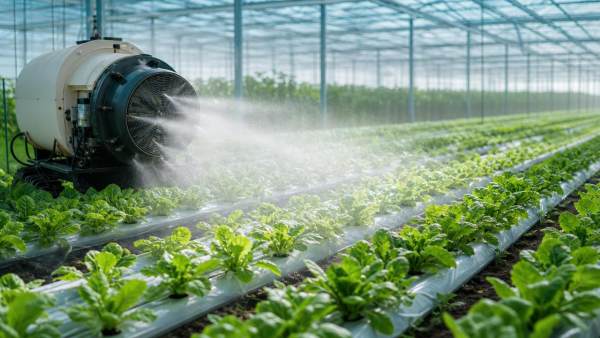
Do Agricultural Fogging Machines Reduce Crop Loss?
Crop loss is rarely caused by a single factor; pests, fungal pressure, heat stress, and uneven chemical coverage often interact across the production cycle.
For technical evaluators, the key question is whether agricultural fogging machines can deliver measurable reductions in loss compared with conventional spraying methods.
This article examines how fogging performance, droplet size, canopy penetration, formulation compatibility, and operational controls influence crop protection outcomes.
It also helps procurement and agronomy teams assess where fogging technology adds practical value, and where its limitations must be carefully managed.
The short answer: fogging can reduce crop loss, but only in the right operating window
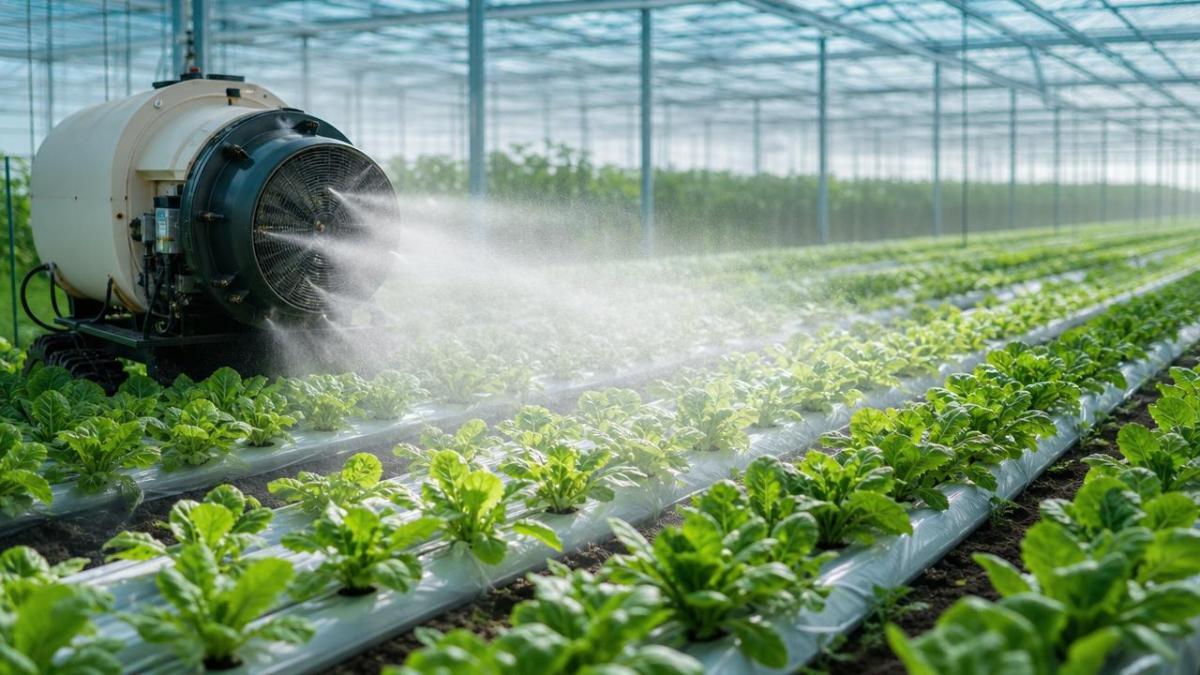
Agricultural fogging machines can reduce crop loss when the target problem requires fine, uniform coverage across dense foliage or enclosed production areas.
The greatest value appears in protected cultivation, nurseries, orchards, seed production, and high-value crops where disease or pest pressure spreads rapidly.
However, fogging is not a universal replacement for boom sprayers, air-blast sprayers, drip chemigation, or targeted biological control programs.
Its effectiveness depends on droplet spectrum, airflow behavior, active ingredient chemistry, operator discipline, and environmental conditions during application.
For technical evaluators, the real question is not whether fogging works, but whether it works better for a defined crop-risk scenario.
What searchers usually want to know before evaluating fogging equipment
Most users searching this topic are not looking for a simple product description. They want evidence of loss reduction and operational fit.
Technical teams typically compare fogging against familiar spraying systems, especially where labor costs, residue limits, and disease outbreaks affect profitability.
They also need to know whether agricultural fogging machines support existing crop protection programs without increasing drift, phytotoxicity, or compliance risk.
The most useful evaluation therefore connects agronomic outcomes with engineering variables, rather than treating fogging as a generic application method.
Key concerns include coverage uniformity, biological efficacy, chemical compatibility, maintenance demand, worker safety, documentation, and total cost per protected hectare.
How fogging reduces loss: coverage, timing, and biological pressure
Crop loss is reduced when a treatment reaches the target organism or plant surface early enough, at the correct dose, and with sufficient uniformity.
Fogging systems generate small droplets that remain suspended longer than conventional spray droplets, allowing broader distribution through air movement.
This can improve contact with lower leaf surfaces, internal canopy zones, plant trays, greenhouse benches, and other difficult-to-reach microenvironments.
In disease control, this matters because fungal spores and bacterial inoculum often persist in humid, shaded, poorly ventilated crop zones.
In insect management, fogging may improve contact against mobile or concealed pests when product selection and application timing are properly aligned.
Loss reduction is strongest when fogging is deployed preventively or during early infestation, before pest populations or lesions become economically damaging.
Droplet size is the first technical checkpoint
Droplet size determines whether the fog behaves like a controlled treatment cloud or becomes an uncontrolled drift and evaporation problem.
Ultra-low-volume fogging can produce very fine droplets, often useful for space treatment, but not always ideal for deposit-heavy crop protection.
Larger droplets improve deposition but reduce suspension time, making airflow design and machine positioning more important in dense crop architecture.
Evaluators should request droplet spectrum data, not only average droplet size, because distribution width affects both coverage and safety.
A machine with adjustable output gives agronomy teams greater flexibility across crop stages, canopy densities, formulation types, and target organisms.
Without droplet control, fogging may appear visually impressive while delivering inconsistent biological performance and unpredictable residue distribution.
Canopy penetration separates useful fogging from cosmetic fog
Many fogging failures occur because the aerosol cloud fills open space but fails to penetrate the crop canopy where pressure is concentrated.
Canopy penetration depends on plant spacing, leaf density, airflow direction, greenhouse circulation, machine output, and application duration.
In tall crops, orchards, and trellised systems, evaluators should verify coverage at multiple heights and interior canopy points.
Water-sensitive paper, fluorescent tracers, and residue sampling provide practical evidence of deposition patterns before full-scale adoption.
If lower canopy coverage remains weak, fogging may need supplemental fans, adjusted travel paths, pruning changes, or another application technology.
The best results come when equipment evaluation includes real crop architecture rather than empty-room or open-field demonstrations alone.
Where agricultural fogging machines usually create the strongest value
Protected cultivation is the most obvious fit because enclosed spaces allow the fog to remain within the target treatment zone.
Greenhouses, vertical farms, propagation rooms, mushroom facilities, and nurseries can benefit from uniform atmospheric distribution and reduced operator exposure.
High-value crops also justify fogging more readily because smaller percentage gains in marketable yield can offset equipment investment quickly.
Examples include ornamentals, berries, vegetable seedlings, herbs, seed crops, and specialty horticultural products with strict quality requirements.
Fogging can also support sanitation programs in storage areas, packing rooms, and production structures when approved disinfectants are used correctly.
For broadacre commodity crops, the business case is usually narrower unless the machine solves a specific coverage or labor bottleneck.
Where fogging may not reduce loss enough to justify investment
Fogging is less effective when the active ingredient requires heavy surface deposition, soil incorporation, or direct placement on lower plant tissues.
Open-field use can be limited by wind, thermal currents, evaporation, drift restrictions, and reduced control over the treatment envelope.
Dense waxy foliage, large fruit clusters, and heavily layered canopies may block fine droplets from reaching economically important infection sites.
If a disease is already systemic or an insect population is established inside plant tissue, fogging alone rarely prevents major losses.
Technical evaluators should avoid adopting fogging simply to reduce water volume if efficacy depends on high wetting and coverage density.
A poor match between treatment objective and application physics can increase costs while giving a false sense of protection.
Formulation compatibility is a major procurement issue
Not every pesticide, biostimulant, disinfectant, or biological product is suitable for fogging, even when it performs well through standard spraying.
Some formulations may separate, clog nozzles, foam excessively, degrade under heat, or produce droplets outside the intended performance range.
Thermal foggers require particular caution because heat-sensitive actives, microbial agents, and certain solvents can lose activity or create hazards.
Cold fogging and ULV systems may preserve more products, but compatibility still depends on viscosity, carrier chemistry, and label approval.
Evaluators should confirm that every intended product is legally approved for fogging in the target crop and jurisdiction.
Supplier claims should be backed by label references, formulation guidance, trial results, and written limits on concentration and operating temperature.
Operational controls determine whether results are repeatable
Fogging performance is highly sensitive to operating discipline, which makes process control as important as machine specification.
Teams should define application timing, ventilation settings, temperature range, humidity range, entry intervals, and pre-harvest intervals before implementation.
Humidity can improve droplet persistence, but excessive humidity may also favor diseases if ventilation is poorly managed afterward.
Wind speed and air circulation must be controlled in open or semi-open structures to prevent uneven distribution and off-target movement.
Automated dosing, programmable cycles, pressure monitoring, and calibrated flow meters can improve consistency across operators and crop blocks.
Documentation should record batch numbers, active ingredients, dosage, weather conditions, machine settings, treatment duration, and post-treatment observations.
How to measure whether fogging actually reduces crop loss
Procurement decisions should be based on measured outcomes, not only visual fog density or supplier performance claims.
A practical trial compares treated and control zones with similar crop stage, pest pressure, microclimate, and management history.
Useful indicators include disease incidence, pest counts, marketable yield, rejected units, residue compliance, labor hours, water use, and chemical consumption.
Coverage testing should occur before biological efficacy trials, because poor deposition can invalidate conclusions about product or machine performance.
For high-value crops, even small reductions in downgrading, blemishing, or early crop termination may justify the technology.
For commodity crops, evaluators often need stronger evidence of labor savings, reduced input loss, or improved treatment timeliness.
Safety, drift, and compliance cannot be treated as secondary issues
Fine droplets can improve distribution, but they also raise inhalation, drift, and re-entry concerns if procedures are weak.
Operators need appropriate personal protective equipment, training, restricted access protocols, and clear signage during and after fogging events.
Enclosed structures require ventilation plans that protect workers while preserving enough contact time for the treatment to work.
Outdoor or semi-enclosed use must address buffer zones, neighboring crops, waterways, pollinators, and local environmental regulations.
Technical evaluators should verify CE, UL, EPA-related, or equivalent compliance requirements depending on market and application context.
A machine that improves coverage but creates documentation gaps or residue uncertainty can increase regulatory and commercial risk.
Total cost of ownership matters more than purchase price
The business case for agricultural fogging machines should include capital cost, maintenance, energy, consumables, training, calibration, and downtime risk.
Labor savings may be substantial when fogging replaces manual spraying in enclosed spaces or difficult crop layouts.
Water and chemical savings are possible, but they should be confirmed through labeled rates and verified efficacy, not assumed.
Maintenance considerations include nozzle wear, filter cleaning, pump reliability, corrosion resistance, seals, hoses, tanks, and electronic controls.
Procurement teams should ask vendors for spare parts availability, calibration procedures, service intervals, warranty scope, and local technical support.
A lower-cost unit may become expensive if it cannot maintain droplet consistency across a full production season.
A practical evaluation checklist for technical teams
Start by defining the target loss mechanism, such as botrytis, powdery mildew, whitefly, storage contamination, or uneven spray coverage.
Next, confirm whether the intended products are labeled and technically suitable for the fogging method under consideration.
Then test coverage under actual crop conditions, using multiple canopy locations and representative environmental settings.
Evaluate biological results over enough time to capture infection cycles, pest reproduction, crop growth, and harvest quality outcomes.
Compare fogging against the current application method using yield, reject rate, labor, chemical use, and compliance data.
Finally, assess whether the supplier can provide training, service, documentation, and support appropriate for regulated agricultural operations.
Conclusion: fogging is a precision tool, not a universal crop-loss solution
Agricultural fogging machines can reduce crop loss when they solve a clear coverage, timing, sanitation, or labor problem.
They are most valuable where enclosed environments, high-value crops, and difficult canopy access make conventional spraying less reliable.
The strongest procurement decisions are based on droplet data, coverage testing, formulation compatibility, controlled trials, and documented operating procedures.
Fogging should be viewed as part of an integrated crop protection strategy, not a standalone guarantee against pests or disease.
For technical evaluators, the decisive question is whether fogging improves measurable outcomes under real production conditions and acceptable risk controls.
