

The Authority in Global Agricultural Chemistry & Bio-Resources
ANVISA Opens Fast-Track Remote GMP Review for China Agrochemical Firms
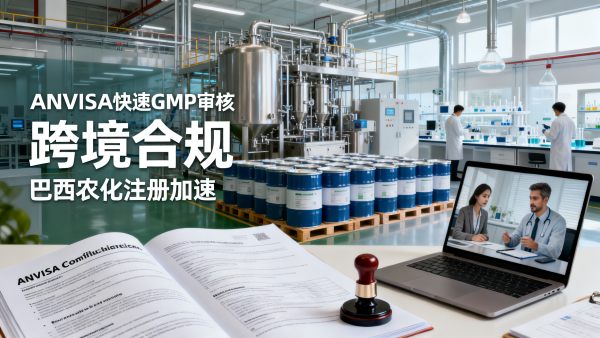
On June 27, 2026, Brazil’s health regulator ANVISA announced a new fast-track GMP pathway for agrochemicals that directly affects China-based original agrochemical companies already certified under WHO-GMP or EU-GMP. The program matters to regulatory teams, registration planners, export operations, and supply chain partners because it introduces a shorter route to a temporary GMP compliance certificate that can be used to accelerate product registration in Brazil, while also setting a clear capacity limit for the first round of applicants.
What ANVISA Announced on June 27
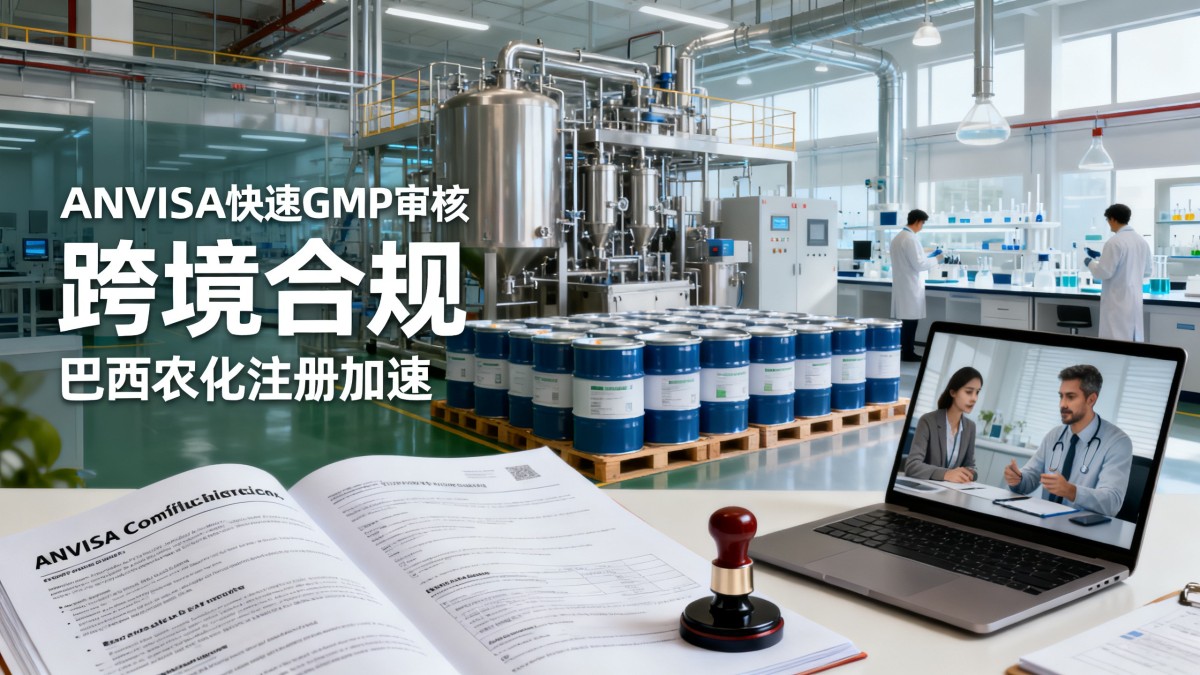
According to the provided event information, ANVISA launched the “Agrochemicals Fast-Track GMP Program” on June 27, 2026. The program is open to Chinese original agrochemical companies that have already completed WHO-GMP or EU-GMP certification.
The announced mechanism allows eligible applicants to seek a simplified remote audit. After passing document pre-review, ANVISA will issue a temporary GMP compliance certificate within eight working days. That temporary certificate will remain valid for 12 months and is intended to support faster product registration.
The first intake is limited to 50 companies, and reservations are already open.
Where the Immediate Business Impact May Appear
For regulatory and registration teams, timing becomes the main variable
From an industry perspective, the most direct impact is on companies managing Brazil registration timelines. A temporary GMP compliance certificate issued within eight working days after document pre-review may change how these teams prioritize dossier readiness, audit coordination, and filing sequences. What deserves closer attention is not only eligibility, but also whether internal documentation is already organized for a fast pre-review process.
For export planning, the program may affect launch sequencing
Companies planning agrochemical entry or expansion in Brazil may need to reassess the order in which products are prepared for registration. Analysis shows that a limited first batch of 50 applicants introduces a practical scheduling issue: firms that qualify may need to decide quickly which product lines or registration projects should be aligned with this temporary certificate window.
For service partners, execution risk may shift to document handling
Supply chain service providers, registration support firms, and cross-border compliance teams may also be affected because the simplified remote audit model places more weight on preparation quality at the document stage. Observably, this does not automatically reduce execution complexity; it may instead move pressure toward document consistency, submission timing, and coordination between manufacturers and local registration processes.
What Companies Should Watch Now
Check whether current certifications match the entry threshold
The announced eligibility is tied to Chinese original agrochemical companies that have already completed WHO-GMP or EU-GMP certification. Companies should first verify whether their current certification status, scope, and supporting materials are sufficient for this fast-track route, rather than assuming that any existing compliance record will be accepted in practice.
Separate the temporary certificate from final business outcomes
What deserves closer attention is the distinction between receiving a 12-month temporary GMP compliance certificate and achieving broader commercial results in Brazil. The confirmed fact is that the certificate is intended to accelerate product registration. Analysis shows that companies should avoid treating this as the same thing as completed market access or completed downstream commercialization.
Prepare for competition within the first intake window
Because the first round is capped at 50 companies and booking is already open, timing may become a practical constraint. Firms that intend to apply should pay attention to submission readiness, internal approval speed, and communication between compliance, registration, and commercial teams. The bottleneck may be less about policy visibility and more about whether application materials can be assembled without delay.
Monitor whether ANVISA refines the operating rules
Observably, the current announcement establishes the program structure, target applicants, certificate timeline, validity period, and first-batch limit. Companies should continue monitoring whether ANVISA later clarifies procedural details, document expectations, or implementation rules, since those points can determine how much of the announced speed translates into actual filing progress.
How This Development Should Be Read
Analysis shows that this announcement is best understood as a targeted regulatory facilitation measure rather than a completed market outcome. It sends a near-term signal that ANVISA is willing to use a simplified remote audit route for a defined group of applicants, but the operational effect will depend on how companies meet the pre-review requirements and how the first batch is executed.
It is more appropriate to understand this as both a short-term procedural opening and a policy signal that still requires observation. The eight-working-day issuance timeline is specific and concrete, yet the program is also limited in scope: it applies to eligible Chinese original agrochemical companies, depends on successful pre-review, and begins with only 50 accepted applicants.
Why the Market Should Keep Following It
In practical terms, the announcement matters because it links compliance status, remote audit simplification, and registration acceleration in one policy move. For affected companies, the immediate issue is execution readiness. For the broader market, the more neutral reading is that this is a relevant operating window, but not yet a basis for broad conclusions about longer-term regulatory treatment beyond the announced program terms.
Source Note and Verification Scope
This article is based on the user-provided news title, event date, and event summary. For developments of this type, source verification would usually involve official regulatory announcements, company disclosures, industry association notices, authoritative media coverage, and relevant standards or compliance documents.
No specific official source link was provided in the input. For that reason, the precise official publication record, any later implementation clarification, and any follow-up procedural updates still require ongoing verification. Continued attention should focus on whether ANVISA releases additional operational details and whether the first-batch application process produces further clarifications.
Related Intelligence
- AgrochemicalsWhat Are the Main Risks of Non-Transparent Agricultural Supply Chains?what are the main risks of non transparent agri supply chains? Explore traceability, compliance, contamination, disruption, and cost risks—plus practical controls.
- AgrochemicalsGrain Production: Key Practices for Improving Yield While Protecting Soil HealthGrain production strategies to improve yield, protect soil health, manage nutrients, reduce compaction, and build resilient fields for lasting results.
- AgrochemicalsHow Do New FDA Rules Affect Agri-Chemical Sourcing Strategies?How do new FDA rules impact agri chemical sourcing strategies? Explore practical supplier screening, traceability, contaminant control, and risk-based compliance steps.
The Morning Broadsheet
Daily chemical briefings, market shifts, and peer-reviewed summaries delivered to your terminal.
