

The Authority in Global Agricultural Chemistry & Bio-Resources
What Is Chemical Manufacturing? Key Processes, Plant Types, and Production Stages
Why Chemical Manufacturing Matters Across Modern Supply Chains
Chemical Manufacturing sits behind products that often look unrelated on the surface.
Crop protection ingredients, pharmaceutical intermediates, feed additives, water treatment agents, and industrial solvents all depend on controlled chemical production.
That matters more now because supply chains are tighter, regulation is stricter, and buyers increasingly need proof of quality, traceability, and process discipline.
In sectors followed closely by AgriChem Chronicle, the question is no longer only what a product does.
A more useful question is how it is manufactured, under which controls, and whether the plant can scale without compromising compliance or consistency.
The image below reflects the link between process design, plant layout, and downstream quality.
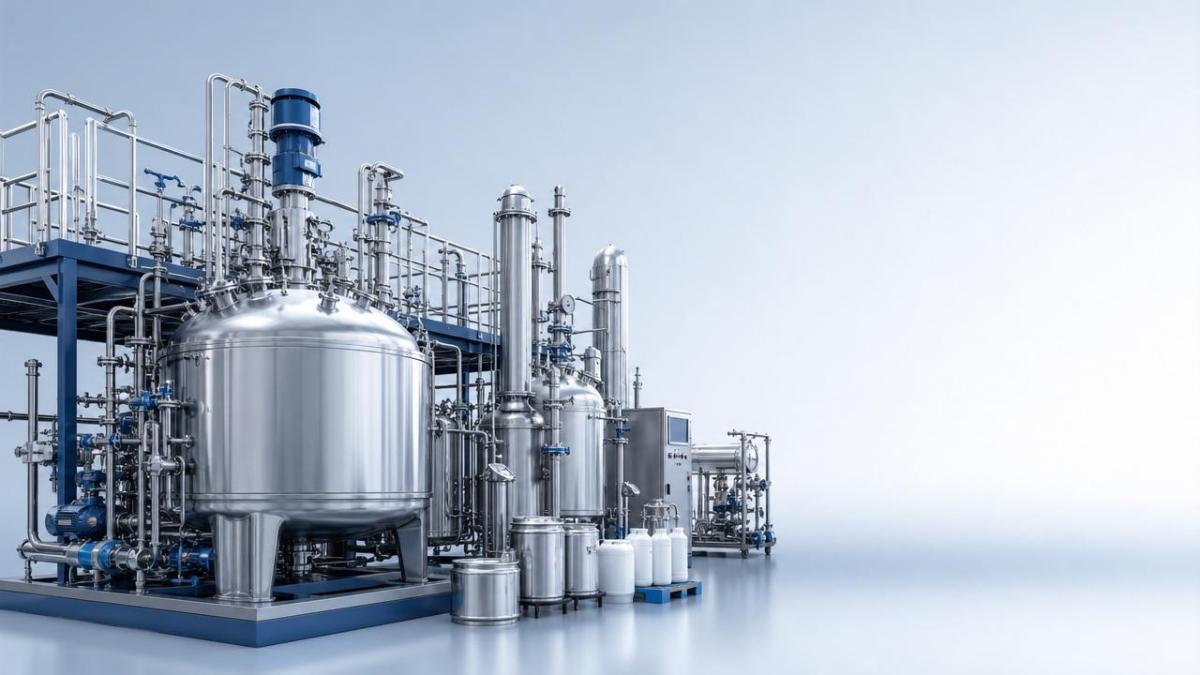
Understanding Chemical Manufacturing therefore helps explain both technical performance and commercial risk.
What Chemical Manufacturing Actually Covers
At its core, Chemical Manufacturing is the industrial conversion of raw materials into chemical products through controlled physical, chemical, or biological operations.
Those raw materials may include minerals, petroleum derivatives, biomass, fermentation inputs, natural extracts, or previously synthesized intermediates.
The finished output may be a bulk commodity, a formulated specialty chemical, or a high-purity active ingredient.
This is why the term covers a wide industrial range.
A fertilizer precursor plant, an API synthesis facility, and a bio-extract processing site are all part of Chemical Manufacturing, even though their economics and controls differ.
In practice, the discipline combines chemistry, process engineering, utilities management, safety systems, environmental controls, and analytical verification.
That combination is what turns laboratory chemistry into repeatable industrial output.
The Processes That Shape Production Performance
The main processes used in Chemical Manufacturing depend on the product profile, required purity, throughput target, and regulatory context.
Reaction and synthesis
Many plants begin with chemical reaction steps.
These may involve synthesis, neutralization, oxidation, hydrogenation, polymerization, or catalytic conversion.
Reaction control affects yield, impurity profile, energy use, and safety margins.
Separation and purification
Once target compounds are formed, they usually need to be separated from solvents, by-products, catalysts, or unreacted feedstocks.
Typical methods include distillation, filtration, crystallization, extraction, centrifugation, and membrane separation.
For fine chemicals and APIs, purification often determines the commercial value of the batch.
Blending and formulation
Not every product is sold as a pure isolated substance.
Agrochemicals, feed inputs, and industrial additives are often blended into stable formulations with carriers, stabilizers, surfactants, or other functional ingredients.
Drying, finishing, and packaging
Final stages may include drying, milling, granulation, coating, or packaging into drums, bags, bulk containers, or sterile systems.
These finishing steps strongly influence shelf life, transport suitability, and end-use handling.
How Plant Types Differ in Chemical Manufacturing
Chemical Manufacturing plants are not built around one universal model.
Plant type usually reflects product volume, complexity, contamination risk, and the level of flexibility required.
This distinction is especially relevant when evaluating suppliers in regulated or technically sensitive categories.
A plant designed for bulk output may be efficient, yet unsuitable for products requiring tight impurity control or documented GMP discipline.
The Main Production Stages From Input to Release
Although product routes differ, Chemical Manufacturing usually follows a recognizable production sequence.
1. Raw material qualification
Production starts before anything enters a reactor.
Incoming materials are checked for identity, purity, moisture, contamination risk, and documentation integrity.
2. Process preparation
Equipment is cleaned, calibrated, and staged.
Recipes, batch records, utilities, and safety interlocks are confirmed before charging begins.
3. Core conversion
The main reaction or transformation takes place under defined temperature, pressure, pH, mixing, and residence time conditions.
This stage often drives yield and risk most strongly.
4. Workup and purification
The crude output is refined into a usable intermediate or final product.
Impurity removal, solvent recovery, and particle control are central here.
5. Final finishing and quality release
The product is dried, packaged, labeled, and tested against specification before release.
Only after analytical confirmation and documentation review can the batch move into distribution.
What the Industry Is Watching More Closely Now
The current discussion around Chemical Manufacturing goes beyond output volume.
Greater attention now falls on process transparency, environmental burden, energy intensity, and regulatory resilience.
In agricultural and biochemical value chains, source verification and contaminant control are becoming decisive.
In pharmaceutical-linked categories, data integrity, validation history, and change control remain essential signals.
This is where editorial analysis from specialist platforms such as ACC becomes useful.
Market claims alone rarely explain whether a production system is robust enough for long-term supply confidence.
A credible view requires technical context, plant capability evidence, and an understanding of the standards shaping market access.
How to Evaluate Chemical Manufacturing in Practical Terms
A useful evaluation starts with matching the product category to the process and plant design behind it.
- Check whether the plant format fits the chemistry, purity target, and production scale.
- Review how raw materials are qualified and whether traceability extends to critical intermediates.
- Look for evidence of in-process monitoring, deviation handling, and documented release procedures.
- Compare compliance frameworks such as GMP, EPA, FDA, or local environmental permits where relevant.
- Assess whether scale-up history shows stable performance rather than only pilot success.
- Consider waste treatment, solvent recovery, and utility reliability, since these often reveal operational maturity.
These points help separate nominal capacity from dependable Chemical Manufacturing capability.
They also support better comparison across fine chemicals, feed processing inputs, bio-extract ingredients, and industrial intermediates.
Where This Understanding Leads Next
Chemical Manufacturing is best understood as a system, not a single factory activity.
Processes, plant type, production stages, compliance controls, and supply chain visibility all shape the final result.
That broader view is increasingly necessary in markets where technical quality and regulatory alignment affect commercial continuity.
For deeper evaluation, the next step is to map a target product against its likely process route, plant requirements, and release standards.
From there, comparisons become more precise, and the signals behind reliable Chemical Manufacturing become much easier to interpret.
Related Intelligence
- APIs & IntermediatesActive Pharmaceutical Ingredients OEM: Key Questions to Ask About GMP, MOQs, and Tech TransferActive pharmaceutical ingredients OEM selection starts with the right questions. Learn how to assess GMP strength, MOQ risks, and tech transfer readiness for safer, smarter API outsourcing.
- APIs & IntermediatesMelamine Powder Wholesale: How to Compare Purity, Packaging, MOQ, and ComplianceMelamine powder wholesale: compare purity, packaging, MOQ, and compliance the smart way. Learn how to spot hidden risks, reduce sourcing costs, and choose reliable suppliers.
- APIs & IntermediatesGMP Compliance Documentation Requirements: What Records Are Required for Audit Readiness?GMP Compliance documentation requirements explained: discover the records auditors expect, common gaps, and practical steps to strengthen audit readiness and compliance confidence.
The Morning Broadsheet
Daily chemical briefings, market shifts, and peer-reviewed summaries delivered to your terminal.
