

The Authority in Global Agricultural Chemistry & Bio-Resources
Stainless Steel Supplier Verification Checklist for Material Grades, Test Reports, and QA Systems
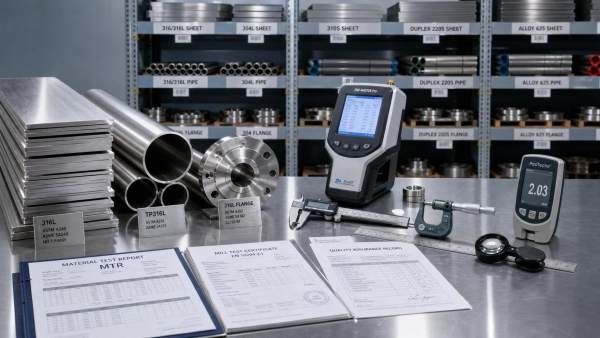
Stainless steel supplier verification sits at the intersection of quality control, safety assurance, and supply chain resilience. In regulated environments, a wrong grade, an incomplete mill test report, or a weak QA system can trigger contamination risks, premature corrosion, audit findings, and expensive rework.
That is why stainless steel supplier verification should be treated as an evidence-based review process rather than a file collection exercise. Across fine chemicals, feed processing, agricultural machinery, aquaculture systems, and primary industries, the same question applies: can the supplier prove that the material delivered matches the specification, traceability requirements, and quality expectations in real operating conditions?
For organizations following the technical and compliance priorities often examined by AgriChem Chronicle, this checklist mindset supports stronger decisions before a purchase order becomes an operational liability.
Why verification matters beyond basic procurement
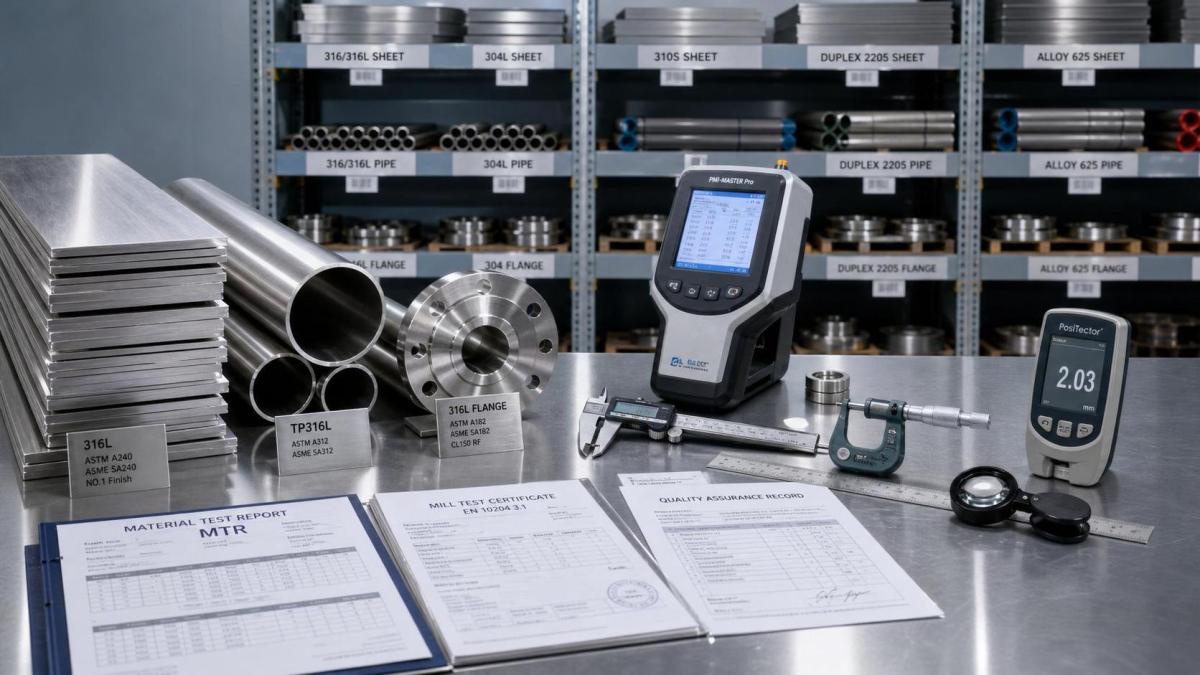
In many facilities, stainless steel is assumed to be inherently safe. That assumption fails quickly when service conditions involve chlorides, aggressive cleaning chemicals, high purity processing, abrasive slurries, or outdoor exposure.
A supplier may offer compliant-looking paperwork while still introducing hidden risk. Mixed heats, downgraded alloys, non-matching certificates, outsourced finishing, and inconsistent weld quality are recurring failure points.
Stainless steel supplier verification helps reduce those failures before material enters fabrication, installation, or production. It also supports stronger CAPA investigations when a deviation appears later.
This is especially relevant in sectors where equipment surfaces contact APIs, food streams, water systems, bio-extracts, feed ingredients, or corrosive process media. Material quality is not only a durability issue. It is also a compliance and product integrity issue.
Start with a precise understanding of material grade
The first checkpoint in stainless steel supplier verification is the grade itself. A certificate that states “stainless steel” is not useful without the exact designation, standard, chemistry limits, and product form.
In practice, verification should confirm the full material identity:
- Grade designation such as 304, 304L, 316, 316L, duplex, or specialty alloy
- Applicable standard, including ASTM, ASME, EN, or JIS references
- Product form, such as plate, pipe, tube, bar, sheet, fitting, or forged part
- Heat treatment condition and surface finish
- Required corrosion, cleanliness, or mechanical performance criteria
Confusion often arises between similar grades. For example, 304 and 316 may appear interchangeable in low-risk applications, yet molybdenum content in 316 can make a decisive difference in chloride-rich environments.
The low-carbon “L” grades matter as well. In welded assemblies, the difference affects sensitization risk and long-term corrosion performance. Stainless steel supplier verification should therefore connect grade selection to the actual process duty, not only to price or lead time.
How to review mill test reports with real rigor
Mill test reports are central to stainless steel supplier verification, but they are frequently reviewed too quickly. A proper check goes beyond confirming that a certificate exists.
The report should align with the purchase specification line by line. Heat number, dimensions, grade, chemistry, and test values should all be traceable to the delivered material and labeling.
Key points to examine on the MTR
- Heat or cast number matches tags, bundles, and receiving records
- Chemical composition falls within the cited standard limits
- Mechanical properties meet specified tensile, yield, and elongation values
- Testing standard and certificate issuer are clearly identified
- Document revision, signatures, and issue date look consistent and authentic
- Country of melt, manufacture, or further processing is disclosed where required
Pay attention to copied formats, inconsistent fonts, or missing lab identifiers. Those signs do not automatically prove fraud, but they justify deeper review.
When risk is high, positive material identification adds another layer. PMI does not replace mill certification, yet it provides fast confirmation that alloy composition is broadly consistent with the declared grade.
QA systems reveal whether quality is repeatable
A single compliant batch does not prove supplier reliability. Stainless steel supplier verification should test whether quality is controlled systematically across sourcing, processing, inspection, storage, and shipment.
The strongest suppliers can explain their QA structure with documents and operating evidence, not general promises.
ISO 9001 certification can be helpful, but it should not end the review. In higher-risk supply chains, a supplier’s response to deviations may say more than a certificate on the wall.
Common risk scenarios across primary industries and fine chemicals
Different sectors experience different failure modes, yet the verification logic remains similar. The most useful checklist is one that reflects actual process exposure and regulatory pressure.
Where problems usually appear
- API and fine chemical systems where surface contamination or corrosion threatens batch purity
- Feed and grain lines where washdown chemicals and abrasion accelerate wear
- Aquaculture hardware exposed to saline water, biofouling, and crevice corrosion
- Agricultural machinery using fabricated stainless parts in outdoor, variable conditions
- Bio-extract and ingredient processing where hygienic design depends on stable material performance
From ACC’s editorial perspective, the broader lesson is clear. Supply chain transparency is now part of technical quality. Buyers increasingly need verified evidence that upstream controls are real, repeatable, and auditable.
A practical stainless steel supplier verification checklist
A useful checklist should support qualification, receiving inspection, and periodic re-evaluation. It should also distinguish between low-risk commodity orders and critical service materials.
- Define the required grade, standard, finish, and service condition before requesting quotations
- Confirm whether the supplier is a mill, stockholder, processor, or trader
- Request sample MTRs and review them against the specification, not in isolation
- Check traceability from certificate to physical marking on each lot
- Assess whether outsourced steps are controlled and disclosed
- Review QA procedures for segregation, rework, passivation, and final release
- Use PMI, third-party testing, or audit visits for critical applications
- Track supplier performance using nonconformance rates, documentation accuracy, and response time
This kind of stainless steel supplier verification process is especially valuable when production downtime, validation burden, or safety consequences are high.
How to move from checklist to decision
Verification becomes more effective when findings are ranked by risk. A missing stamp on a noncritical item is not equal to an unverifiable heat number on product-contact tubing.
Usually, the next step is to classify suppliers into approved, conditionally approved, or not approved status. That decision should reflect material criticality, documentation quality, process capability, and responsiveness to corrective action.
Where requirements are strict, periodic review should be scheduled rather than triggered only by failure. Changes in source mill, subcontractors, alloy availability, or regulatory expectations can all affect the original qualification outcome.
A disciplined stainless steel supplier verification framework does more than screen vendors. It builds a stronger record for audits, supports safer operations, and gives technical teams a clearer basis for material decisions across complex industrial supply chains.
The most practical starting point is to review one critical stainless item now, compare specification against current supplier evidence, and identify where traceability, testing, or QA visibility still falls short.
Related Intelligence
- APIs & IntermediatesHow to Qualify a Purified Bioprocess Materials Supplier for GMP ManufacturingPurified bioprocess materials supplier qualification guide for GMP manufacturing: assess traceability, contamination control, change notification, and supply reliability.
- APIs & IntermediatesEnzyme-Based Process Engineering: Designing Robust Biocatalytic Scale-UpEnzyme based process engineering for robust biocatalytic scale-up: optimize reactor control, transfer limits, recovery, and GMP-aligned manufacturing.
- APIs & IntermediatesWhat Role Does Compliance Play in Pharmaceutical Ingredient Sourcing?What role does compliance play in pharma ingredient sourcing? Discover how GMP, traceability, audits, and quality agreements protect supply, quality, and market access.
The Morning Broadsheet
Daily chemical briefings, market shifts, and peer-reviewed summaries delivered to your terminal.
