

The Authority in Global Agricultural Chemistry & Bio-Resources
B2B Inspection Standards Explained: Key Criteria Buyers and QA Teams Should Review
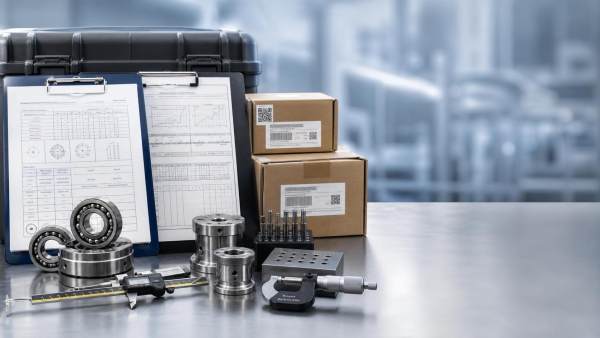
B2B Inspection Standards Explained: Key Criteria Buyers and QA Teams Should Review
In regulated industrial supply chains, B2B inspection standards are more than a checklist; they are a practical method for deciding whether a supplier’s product, process, and records can be trusted under commercial conditions. That distinction matters. Many procurement failures do not begin with obviously defective goods. They begin with small mismatches: a specification interpreted differently by buyer and seller, an incoming lot accepted on appearance but not on traceability, a factory audit focused on housekeeping while critical process controls remain untested. Inspection standards exist to close those gaps before they turn into batch rejection, safety exposure, or a dispute that no one can resolve cleanly.
When people use the term B2B inspection standards, they are usually referring to the criteria and verification methods applied during supplier qualification, pre-shipment inspection, incoming quality control, in-process review, or final acceptance. The exact framework changes by sector. An API buyer will look at GMP alignment, batch documentation, change control, contamination risk, and analytical consistency. A buyer of aquaculture systems or grain-processing equipment will spend more time on material conformity, installation tolerances, electrical safety, performance verification, and environmental compliance. The common thread is not the product itself. It is the need to confirm that what was ordered, what was manufactured, and what was documented are all the same thing.
That is why inspection standards should not be confused with certification alone. A supplier may hold ISO 9001, and that can be useful as a signal that a quality management system exists, but it does not by itself tell a buyer whether a specific shipment meets agreed technical criteria. In regulated product categories, the same caution applies to references to FDA, EPA, or GMP. These frameworks shape expectations around controls, records, labeling, validation, and risk management, yet transaction-level acceptance still depends on the purchase specification, applicable test methods, contractual tolerances, and the evidence package accompanying the goods.
What Teams Are Really Reviewing
A capable inspection program reviews more than physical condition. It examines four layers at once: identity, conformance, consistency, and traceability. Identity asks whether the material or equipment is exactly what the order describes. Conformance asks whether measurable requirements have been met. Consistency looks at whether this lot, batch, or unit behaves like previous accepted deliveries or validated output. Traceability asks whether the supplier can prove where the product came from, what happened during production, and which records support release.
This is where many organizations under-scope inspections. They focus on obvious defects because those are visible and easy to score, but the harder failures are often documentary or process-related. A drum label that does not align with the certificate of analysis, a missing calibration record for a critical test instrument, an unapproved subcontractor used for a coating step, or a revised formulation introduced without formal notification can all create more commercial and regulatory risk than a superficial packaging flaw.
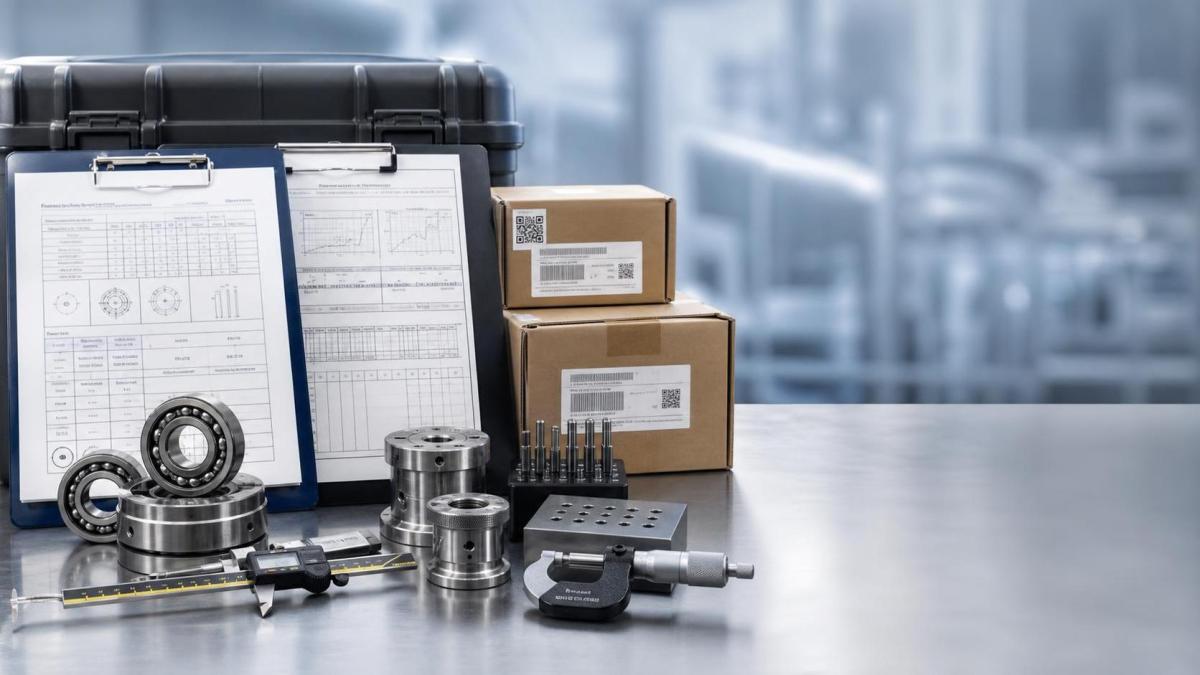
The Standard Is Never Just the Standard
A persistent misunderstanding in supplier quality is the belief that adopting a recognized inspection standard removes the need for product-specific judgment. It does not. General quality frameworks can structure the review, but acceptance criteria still need to reflect the actual risk profile of the item being purchased. For fine chemicals and APIs, impurity profile, storage conditions, retest dating, container integrity, and data integrity practices may be central. For forestry machinery or feed-processing lines, weld quality, coating adhesion, guarding, vibration, documentation for maintenance, and installation validation may carry more weight.
This is also why the same supplier may perform well in one category and poorly in another. A manufacturer can be fully competent at producing to drawing for standard components and still struggle with documentation discipline required for highly regulated chemical inputs. Buyers who apply one flat inspection template across all spend categories usually end up with a false sense of control. Their forms look complete; their risk coverage is not.
For QA teams, the better question is not “Do we have an inspection standard?” but “Does our inspection standard capture the failure modes that matter in this purchase?” That includes contamination, substitution, hidden rework, packaging degradation in transit, unauthorized process changes, shelf-life erosion, and incomplete release documentation. In high-consequence categories, the absence of evidence is itself a finding.
Criteria That Deserve Closer Attention
Several criteria tend to separate a routine receiving check from a genuinely reliable inspection regime.
Specification clarity. If the purchase specification leaves room for interpretation, inspection becomes inconsistent by definition. Accepted test methods, revision levels, units of measure, tolerances, packaging format, labeling rules, and required release documents should all be explicit. Ambiguity at this stage often appears later as a quality dispute, even when neither party acted in bad faith.
Sampling logic. Not every item can be tested exhaustively, which means the sampling plan becomes part of the control strategy. Teams should know whether they are using reduced, normal, or tightened inspection and why. In some regulated or safety-critical purchases, representative sampling may still be insufficient unless paired with supplier validation data or full documentation review. The point is to match the sampling burden to the consequence of a miss, not to treat all lots as statistically equal.
Test method integrity. A result only means something if the method behind it is appropriate and controlled. This sounds obvious, but it is a frequent blind spot when buyers rely on supplier-issued reports without checking whether the method version, instrument calibration status, or acceptance basis aligns with the contractual requirement. A passing value generated from a mismatched method can be operationally useless.
Change control visibility. A shipment can meet nominal specifications and still create downstream risk if something material has changed in source, process, equipment, software, preservative system, or packaging configuration. Strong inspection standards incorporate review of change notifications and do not assume that “same part number” means same manufacturing conditions.
Traceability depth. It is not enough to know the lot number on the outer packaging. Teams should be able to trace that number to production date, raw material inputs where relevant, test records, release authorization, and storage or transport conditions. This becomes especially important when dealing with temperature-sensitive substances, regulated active ingredients, or equipment assemblies sourced from multiple subcontractors.
Where Audits, Inspections, and Certifications Intersect
These terms are often used interchangeably in casual conversation, but they are not the same control. Certification usually indicates that an external body has assessed conformance to a defined management or product standard. An audit evaluates whether a process or system is being followed and maintained. An inspection checks whether a specific item, lot, or shipment meets acceptance requirements. In practice, mature supplier quality programs use all three, but for different reasons.
A certification can reduce initial uncertainty. An audit can reveal whether the supplier’s system is robust enough to keep producing within control. An inspection provides transaction-level confidence. If one of the three is missing, the burden on the others increases. That is why buyers in pharmaceuticals, agrochemicals, food ingredients, and industrial equipment often combine periodic supplier audits with incoming inspection, even when the supplier is already certified and long approved.
Common Errors in Real Procurement Workflows
One error is over-relying on paperwork that is never cross-checked against the product. Another is doing the reverse: inspecting the product physically while ignoring document inconsistencies that would fail an audit or complicate a recall. A third is treating first-article approval as permanent proof of capability. Capability drifts. Personnel change. Sub-suppliers change. Equipment is replaced. Storage conditions deteriorate. Inspection standards need to assume that approved status is conditional, not permanent.
There is also a tendency to think of inspection as a gate at the end of the process. In higher-risk categories, that is too late. Useful inspection criteria should appear upstream in supplier onboarding, technical agreement drafting, packaging specification, test method alignment, and shipping condition control. Once a nonconforming lot has crossed borders, entered inventory, or been partially consumed in production, the operational cost of uncertainty rises quickly.
How to Judge Whether an Inspection Standard Is Fit for Purpose
A workable standard should let two competent reviewers reach roughly the same acceptance decision from the same evidence set. That means the criteria are specific enough to reduce interpretation and broad enough to catch the failure modes that actually matter. It should also define escalation points: what triggers quarantine, retesting, deviation review, supplier notification, or full rejection. If the standard cannot tell a team what to do when a result is borderline, incomplete, or contradictory, it is not operationally finished.
The strongest inspection frameworks are not necessarily the longest. They are the ones that connect the commercial specification, regulatory context, verification method, and release decision in a way that can stand up to procurement pressure and audit scrutiny. For buyers and QA leaders working across chemicals, agricultural inputs, processing systems, or bio-based materials, that is the practical meaning of B2B inspection standards: a disciplined way to turn supplier claims into verifiable confidence.
When reviewing your current approach, start with the points most likely to fail quietly: method alignment, traceability depth, change control, and the difference between a certified supplier and a conforming shipment. Those are the areas where inspection stops being a formality and becomes a control that protects quality, safety, and commercial continuity.
Related Intelligence
- APIs & IntermediatesWhat Should a Procurement Intelligence Library Include for Better Supplier Decisions?Procurement intelligence library essentials: evaluate supplier capability, compliance, performance, and supply-chain risk to make smarter, more resilient buying decisions.
- APIs & IntermediatesSpecification Support in the UAE: Defining, Reviewing, and Verifying RequirementsSpecification support UAE helps teams define, review, and verify technical requirements, reducing procurement risk and improving compliance, quality, and project performance.
- APIs & IntermediatesHow to Verify GMP Certification When Sourcing Quality Chemicals for Pharmaceutical ProductionQuality certified GMP chemicals: learn how to verify certificates, batch traceability, supplier controls, and quality agreements for confident pharmaceutical sourcing.
The Morning Broadsheet
Daily chemical briefings, market shifts, and peer-reviewed summaries delivered to your terminal.
