

The Authority in Global Agricultural Chemistry & Bio-Resources
How to Choose a B2B Sourcing Platform for RFQ Planning Across Multiple Suppliers
Why RFQ Planning Breaks Down When the Platform Is Wrong
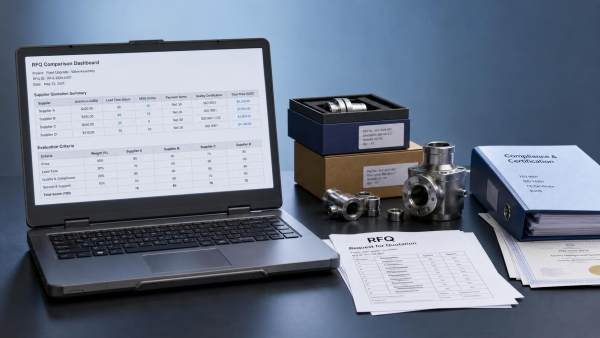
A B2B sourcing platform for RFQ planning is not just a place to collect prices. That is the first point procurement teams tend to underestimate. In multi-supplier buying, the real problem is rarely sending the request for quotation itself. The difficulty is keeping specifications aligned, comparing responses on equal terms, tracking who has complied with technical and regulatory requirements, and knowing when a low quote is actually a high-risk quote.
This matters even more in industries where purchasing decisions sit between commercial pressure and operational exposure. A buyer sourcing intermediates for fine chemicals, feed additives, machinery components, or aquaculture systems is not only balancing unit cost. They may also be checking batch traceability, material compatibility, inspection requirements, Incoterms, lead-time commitments, environmental disclosures, and in some cases GMP-, FDA-, or EPA-related implications depending on what is being procured and where it will be used. A weak platform turns that process into a fragmented email exercise. A good one creates structure around uncertainty.
That distinction is what should drive platform selection. The question is not whether the tool can issue RFQs. Nearly all of them can. The question is whether it can help a procurement team run a disciplined quoting process across several suppliers without losing the context that makes one offer commercially viable and another operationally dangerous.
What the platform is really expected to do
In practice, RFQ planning begins before the RFQ is published. Buyers need to define lots, specifications, approved alternatives, supplier pools, deadlines, document requirements, and the rules for comparison. If the platform only digitizes outbound requests, it leaves the hard part untouched. Procurement still ends up normalizing spreadsheets by hand and chasing suppliers for missing attachments.
The better platforms behave more like a sourcing control layer. They allow procurement to build a quote package with structured fields, version control for technical documents, clear response templates, and workflows for clarifications. That structure becomes valuable when suppliers are quoting products that look similar commercially but differ in packaging, purity, maintenance support, warranty scope, or export readiness. In sectors covered by ACC, those differences are often where purchasing mistakes originate.
A platform worth adopting should help answer four questions quickly:
- Are all suppliers quoting against the same requirement set?
- Can commercial, technical, and compliance inputs be reviewed together?
- Is supplier communication traceable without relying on individual inboxes?
- Can the team explain why one supplier was shortlisted and another was excluded?
If the answer to any of these remains outside the system, the platform may be adding convenience without adding control.
The common mistake: choosing for supplier discovery, not quote governance
Many teams approach sourcing software as if supplier search were the main issue. It often is not. In established categories, buyers usually already know the relevant manufacturers, traders, OEMs, or regional distributors. The problem is governance across the RFQ cycle: collecting comparable information, controlling revisions, and documenting exceptions.
That is why platforms optimized for marketplace activity do not always serve strategic procurement well. A marketplace may be useful when broadening the supplier base or testing price ranges. But for multi-supplier RFQ planning, especially in technically specified categories, procurement often needs capabilities that are less visible in a marketing demo: side-by-side bid normalization, mandatory document gates, approval routing, audit trails, supplier segmentation, and links to ERP or contract systems.
The platform selection process should therefore start with sourcing complexity, not software popularity. Buying corrugated packaging from local vendors is one thing. Running an RFQ across API intermediates, feed processing equipment, or fishery system components from several countries is another. The second case demands stronger data discipline and more defensible supplier comparison.
What to examine before you look at features
Procurement teams tend to save time when they define their operating model before reviewing vendors. Three questions are especially useful.
One is whether the RFQ process is category-led or supplier-led. In category-led sourcing, the buyer defines the structure and invites prequalified suppliers into a controlled format. In supplier-led environments, responses arrive with different assumptions, document styles, and commercial interpretations. A platform that imposes structure is far more valuable in the second case.
Another is whether technical evaluation sits inside procurement or is shared with QA, engineering, regulatory, or operations. If several functions need to review bids, the platform has to support role-based collaboration. Email forwarding and spreadsheet commenting are where traceability usually disappears.
The third is whether the business buys in one geography or several. Multi-country sourcing changes the RFQ burden. Language support, currency handling, tax treatment, document localization, and trade compliance records become part of the workflow. These are not “advanced” features when the supply base is global. They are baseline requirements.
The features that matter in real procurement work
A practical evaluation framework is more useful than a long feature checklist. The table below focuses on what changes decision quality, not what simply looks modern in a demo.
What stands out here is that procurement needs fewer flashy capabilities than software vendors suggest. It needs consistency. A system that reliably enforces quote structure and preserves sourcing logic will usually outperform one with a broad but shallow feature set.
Compliance is not a side module
In regulated or specification-sensitive categories, compliance should be treated as part of quote evaluation, not a later checkpoint. This is especially true where supplier approval depends on manufacturing controls, environmental declarations, traceability records, or quality management documentation. For some procurement teams, that means reviewing GMP-related records for pharmaceutical inputs; for others, it may involve emissions, waste-handling, or equipment safety considerations under local or export-market rules.
The platform does not need to interpret the law. It does need to organize evidence. Buyers should check whether required certificates or declarations can be made mandatory before submission, whether expiring documents are flagged, and whether technical reviewers can reject a bid without breaking the sourcing workflow. If these checks happen in separate folders and side conversations, award decisions become hard to defend later.
That point often separates systems built for transactional buying from those suited to complex industrial sourcing. Transactional tools assume product equivalence. Industrial procurement usually cannot.
How to judge supplier comparison quality
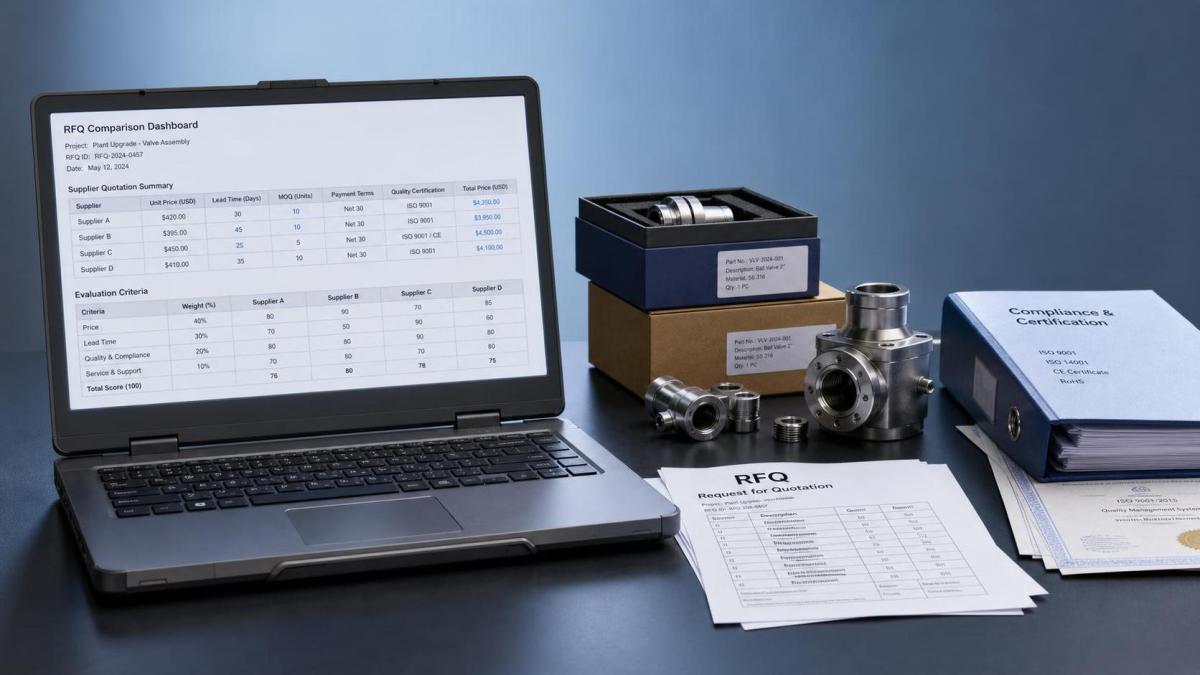
A platform may claim robust quote comparison while still forcing buyers to export everything into spreadsheets. The test is simple: can the system present commercial and non-commercial variables in a way that supports a real award decision?
In many sourcing events, the lowest nominal price is not the best offer once freight assumptions, payment terms, lot size, service coverage, or deviation from specification are surfaced. For machinery and equipment, installation support and spare parts commitments can materially change the economics. For chemical and ingredient categories, packaging format, shelf life, storage conditions, and documentation completeness may matter as much as unit price. A useful platform makes these differences visible without requiring manual reconstruction of each bid.
This is also where weighted scoring can help, but only if the criteria are transparent and relevant. Procurement should be cautious with scoring models that appear objective yet hide weak assumptions. If a category is highly technical, engineering and quality teams need to agree in advance on which deviations are tolerable and which are disqualifying. Software can support that discipline; it cannot substitute for it.
Adoption risk is usually a process problem, not a UI problem
Some sourcing platforms fail not because the interface is poor, but because the organization expects software to repair an undefined RFQ process. If supplier qualification rules are unclear, internal approvers respond inconsistently, or specifications change mid-event without control, the platform will expose those weaknesses rather than solve them.
That is why pilot design matters. A useful pilot is not the easiest category with the friendliest suppliers. It is a category complex enough to test quote normalization, document control, internal collaboration, and post-bid evaluation. Buyers should look closely at how much administrative effort the platform removes after the first event, not just how polished the initial setup looks.
A practical decision standard
When evaluating a B2B sourcing platform for RFQ planning across multiple suppliers, the most useful standard is straightforward: does the system help procurement run a sourcing event that is comparable, traceable, and defensible? Comparable means suppliers respond against the same commercial and technical frame. Traceable means clarifications, revisions, and approvals remain attached to the event. Defensible means the final recommendation can be explained in operational terms, not just price terms.
If a platform does those three things well, it will usually improve speed as a side effect. If it only promises speed, procurement may simply arrive at weak decisions faster. For teams managing fragmented supplier bases, technical categories, or regulated buying environments, that is the distinction worth making before any contract is signed.
Related Intelligence
- APIs & IntermediatesEnzyme-Based Process Engineering: Designing Robust Biocatalytic Scale-UpEnzyme based process engineering for robust biocatalytic scale-up: optimize reactor control, transfer limits, recovery, and GMP-aligned manufacturing.
- APIs & IntermediatesWhat Role Does Compliance Play in Pharmaceutical Ingredient Sourcing?What role does compliance play in pharma ingredient sourcing? Discover how GMP, traceability, audits, and quality agreements protect supply, quality, and market access.
- APIs & IntermediatesWhat Should a Procurement Intelligence Library Include for Better Supplier Decisions?Procurement intelligence library essentials: evaluate supplier capability, compliance, performance, and supply-chain risk to make smarter, more resilient buying decisions.
The Morning Broadsheet
Daily chemical briefings, market shifts, and peer-reviewed summaries delivered to your terminal.
