

The Authority in Global Agricultural Chemistry & Bio-Resources
Procurement-Oriented Technical Guides: What Specs Matter Most Before You Request Quotes

Procurement-Oriented Technical Guides: What Specs Matter Most Before You Request Quotes
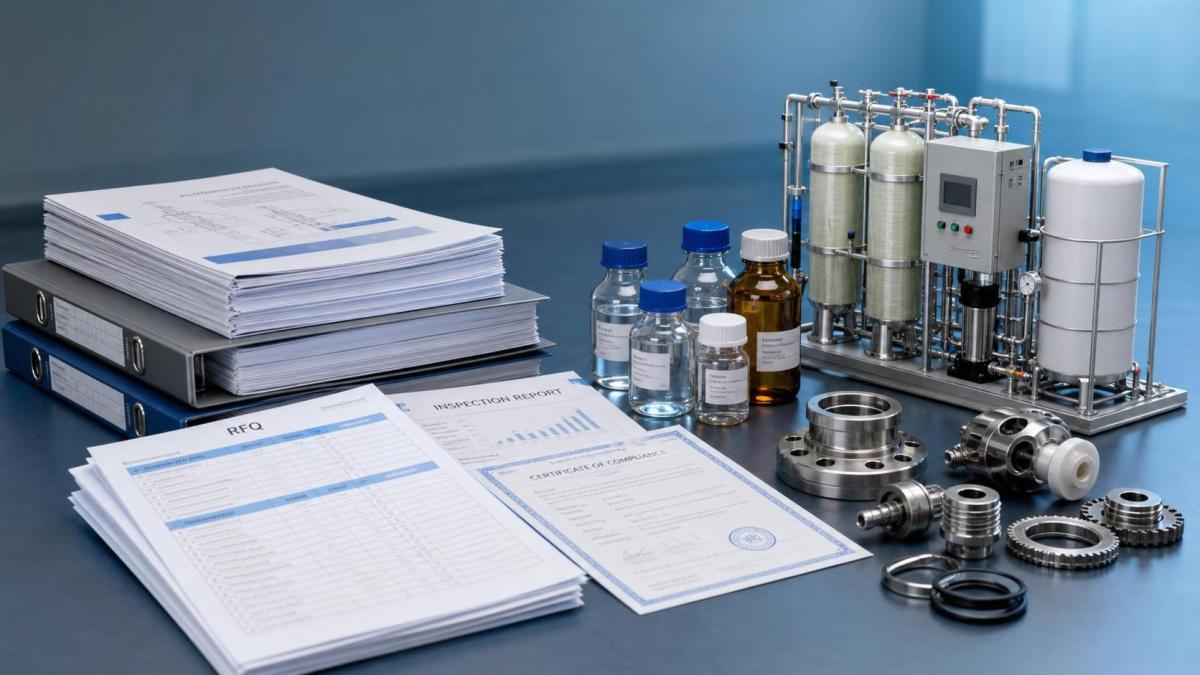
In high-stakes sourcing, weak specifications create expensive confusion.
Buyers receive mismatched offers, suppliers make assumptions, and internal approvals become harder to defend.
That is why procurement oriented technical guides matter before any RFQ is released.
They turn broad demand into measurable requirements.
They also improve supplier comparability across chemicals, machinery, aquaculture systems, and processing assets.
From recent market shifts, the clearest signal is this.
Regulation, traceability, and performance evidence now shape award decisions as much as price does.
In practical terms, a better RFQ starts with better technical framing.
The best procurement oriented technical guides focus on the specifications that reduce ambiguity early.
That means performance thresholds, compliance documents, operating conditions, service expectations, and supply risk triggers.
Start with the Operational Need, Not the Catalog Name
Many sourcing failures begin with a product label instead of a use-case definition.
A catalog term may sound precise, but it rarely captures the operating context.
For APIs, that context includes purity, impurity profile, stability, and downstream formulation compatibility.
For agricultural machinery, it includes throughput, soil conditions, fuel profile, maintenance access, and climate exposure.
For aquaculture systems, water quality tolerance and biosecurity design may matter more than headline capacity.
Good procurement oriented technical guides translate business need into application-specific parameters.
This creates a cleaner basis for supplier response and internal technical review.
- Define the exact production, processing, or treatment objective.
- Specify the operating environment and daily load pattern.
- State acceptable variability and failure tolerance.
- List process interfaces with existing equipment or formulas.
This approach sharpens every later decision.
It also prevents suppliers from quoting based on their own assumptions.
Separate Critical Specs from Nice-to-Have Features
Not every detail deserves equal weight.
One of the most useful procurement oriented technical guides is a weighted specification map.
It separates non-negotiable requirements from preferred features.
That distinction protects sourcing speed and prevents overengineering.
In actual procurement work, teams often overload the RFQ with generic technical language.
The result is lower response quality and slower comparison.
A better method is to classify each spec by decision impact.
This structure makes procurement oriented technical guides much more usable.
It also supports cleaner evaluation notes when management asks why one supplier ranked higher.
Ask for Measurable Performance Data
Performance claims should never remain descriptive.
They should be quantified, testable, and linked to recognized conditions.
This is one of the most practical procurement oriented technical guides for decision quality.
For chemicals, request assay range, moisture, residual solvents, particle size, shelf life, and batch consistency data.
For machinery, request rated capacity, energy use, uptime history, wear-part life, and service interval records.
For aquaculture equipment, ask for oxygen transfer rate, water recirculation efficiency, stocking-density assumptions, and alarm response logic.
Even better, request the test method behind each figure.
Without method clarity, data from different suppliers may look comparable but are not.
- Ask for nominal and minimum guaranteed performance.
- Require test conditions and sample size.
- Request historical variation, not only best-case values.
- Flag any value derived from simulation only.
These procurement oriented technical guides reduce the risk of misleading apples-to-oranges comparisons.
Verify Certification, Regulatory Fit, and Audit Readiness
Compliance should be reviewed before commercial negotiation, not after shortlist selection.
This point is especially important in regulated procurement categories.
For APIs and fine chemicals, GMP alignment, FDA-related documentation, and change-control discipline are central.
For environmental or water-based systems, EPA-related standards and discharge requirements may define project viability.
For machinery, market-entry approvals, operator safety protections, and emissions standards can affect total deployment time.
Strong procurement oriented technical guides ask not only whether a certificate exists.
They ask whether the certificate is current, relevant, and issued for the exact site or product scope.
- Request certificate copies and issue dates.
- Confirm the covered entity and manufacturing location.
- Check whether subcontracting affects compliance responsibility.
- Ask for recent audit outcomes and CAPA summaries.
This also means fewer surprises during quality review or onboarding.
Traceability and Supply Chain Transparency Are Core Specs
Supply continuity is now a technical issue, not only a commercial one.
That is a more visible trend across primary industries and fine chemicals.
Procurement oriented technical guides should define the level of traceability needed before quotations are requested.
For raw materials, ask for origin, lot genealogy, and upstream dependency concentration.
For engineered systems, ask where critical components are sourced and whether alternates are validated.
For buyers facing volatile logistics, lead-time transparency may matter as much as base price.
In real projects, the weakest link often sits beyond the first-tier supplier.
That is why mature procurement oriented technical guides include traceability checkpoints.
Typical questions include source substitution policy, batch recall speed, documentation retention, and visibility over critical sub-suppliers.
Evaluate Scalability, Serviceability, and Change Control
A quote may look attractive at pilot scale and fail at commercial scale.
This is where procurement oriented technical guides protect long-term value.
Scalability should be framed with evidence, not promises.
Ask suppliers to show installed references, validated output ranges, and expansion constraints.
Serviceability is equally important.
Downtime cost can exceed purchase savings very quickly.
For that reason, procurement oriented technical guides should request spare-parts strategy, technician response times, remote diagnostics, and training support.
Change control is another overlooked spec.
If formulation inputs, firmware, materials, or component sources change, buyers need notice and impact assessment.
Without that discipline, approved supply can drift away from originally qualified performance.
Build an RFQ Structure That Produces Usable Quotes
Even excellent specifications can fail if the RFQ format is loose.
The most effective procurement oriented technical guides shape supplier responses into a comparable structure.
That means every bidder answers the same technical fields, assumptions, exclusions, and document requests.
A disciplined RFQ template usually includes the following.
- Application summary and required operating conditions.
- Mandatory specifications and scoring criteria.
- Certification and audit document checklist.
- Lead time, MOQ, warranty, and service terms.
- Deviation form for nonconforming or alternative offers.
This also helps internal stakeholders review fewer emails and fewer side explanations.
More importantly, it makes commercial negotiation stronger because the technical baseline is already documented.
A Simple Decision Lens Before You Request Quotes
Before launching any sourcing round, pressure-test your request with one final filter.
Do your procurement oriented technical guides allow suppliers to answer clearly, and reviewers to compare fairly?
If the answer is uncertain, the RFQ is probably not ready.
The strongest sourcing outcomes rarely begin with more suppliers.
They begin with better-defined specifications.
That is the practical value of procurement oriented technical guides in complex industrial buying.
They improve precision, reduce compliance exposure, and support more defensible decisions.
Before requesting quotes, refine the operational need, rank the specs, verify compliance, map traceability, and define response format.
When those steps are done well, every quote becomes easier to trust, compare, and act on.
Related Intelligence
- APIs & IntermediatesHow to Qualify a Purified Bioprocess Materials Supplier for GMP ManufacturingPurified bioprocess materials supplier qualification guide for GMP manufacturing: assess traceability, contamination control, change notification, and supply reliability.
- APIs & IntermediatesEnzyme-Based Process Engineering: Designing Robust Biocatalytic Scale-UpEnzyme based process engineering for robust biocatalytic scale-up: optimize reactor control, transfer limits, recovery, and GMP-aligned manufacturing.
- APIs & IntermediatesWhat Role Does Compliance Play in Pharmaceutical Ingredient Sourcing?What role does compliance play in pharma ingredient sourcing? Discover how GMP, traceability, audits, and quality agreements protect supply, quality, and market access.
The Morning Broadsheet
Daily chemical briefings, market shifts, and peer-reviewed summaries delivered to your terminal.
