

The Authority in Global Agricultural Chemistry & Bio-Resources
Yiwu Rail Export Route Opens for Grain Silos to Afghanistan
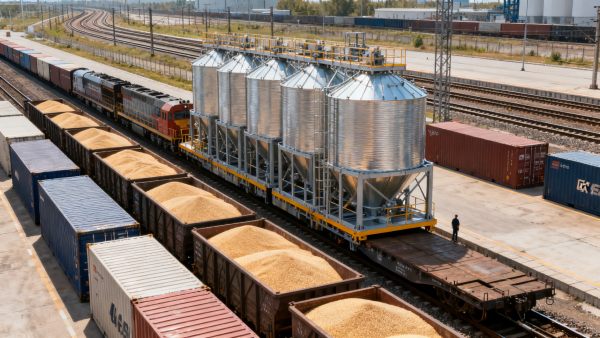
On June 8, 2026, Zhejiang launched its first China-Europe Railway Express customized train under the market procurement trade model for Afghanistan, creating a new compliance-based land delivery option for Grain Silos & Storage exports. From an industry perspective, the significance is not only the opening of a route, but also the practical use of a trade mechanism that supports small-batch, multi-shipment exports and may affect exporters, equipment manufacturers, logistics providers, procurement teams, and customs documentation workflows linked to modular heavy equipment delivery.
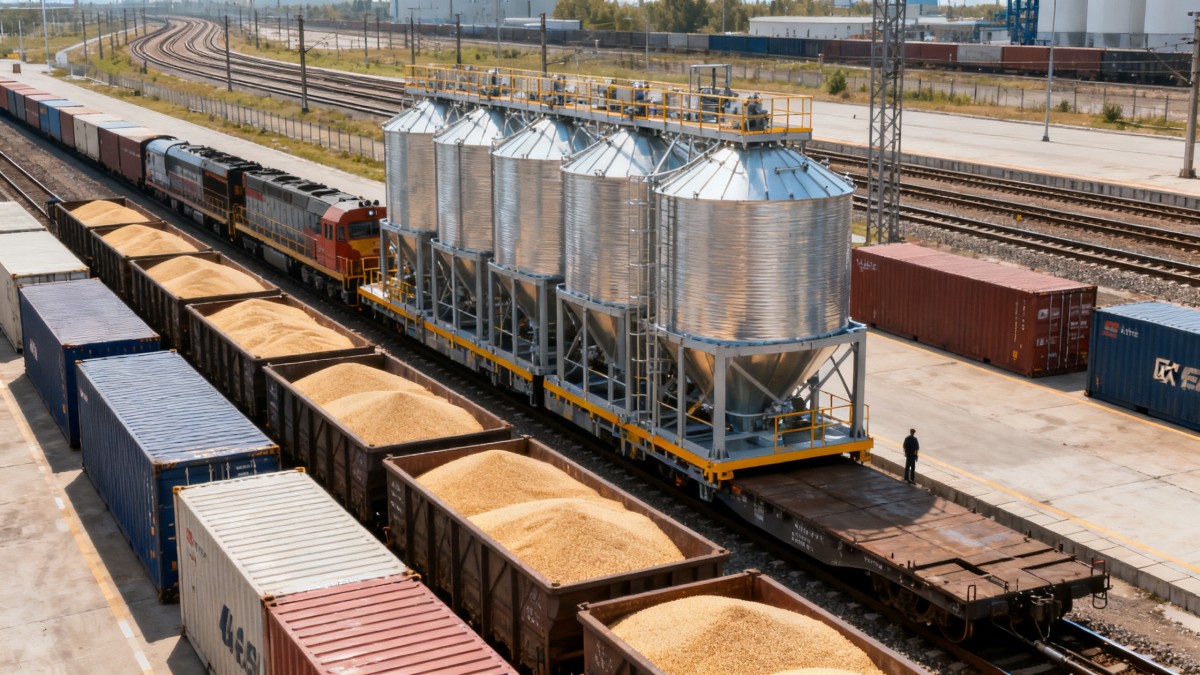
A rail-linked trade mechanism enters practical use
The confirmed facts are limited but clear. On June 8, Zhejiang operated the first customized train of the China-Europe Railway Express under the market procurement trade model, with Afghanistan as the destination. The cargo source relied on the market procurement trade pilot in Yiwu. According to the provided summary, this model supports small-volume, multiple-batch, and compliant export activity. It is described as particularly suitable for the modular disassembly, shipment, and customs clearance needs of large equipment such as Grain Silos & Storage, while also offering a stable and traceable overland delivery path for markets in the Middle East and Central Asia.
Why this matters across the export chain
For equipment exporters, shipment structure may become a compliance issue
Analysis shows that exporters of large, modular equipment may be among the most directly affected parties because the trade model described in the event appears to fit goods that are not always shipped as one complete unit. The main impact is likely to appear in export documentation, batch-based shipment planning, packing logic, and the consistency of technical descriptions used in customs and delivery records. What deserves closer attention is whether internal documents, product lists, and shipment files remain aligned when equipment is split into multiple consignments.
For manufacturers, modular delivery needs closer document control
From an industry perspective, manufacturers of Grain Silos & Storage systems may need to pay more attention to how dismantled modules, supporting components, and related technical files are prepared for export execution. The likely operational effect is less about production volume and more about traceability, matching shipment content to technical specifications, and maintaining document continuity across repeated batches. This is especially relevant where delivery depends on compliant clearance rather than only physical transport capacity.
For supply chain service providers, traceability becomes part of the value proposition
Observably, logistics and export service providers may see stronger demand for route visibility, batch coordination, customs file accuracy, and handoff records. In this context, the event signals that overland delivery is being framed not only as a transport choice, but also as a compliance-supporting channel. Service providers involved in booking, customs handling, cargo consolidation, and delivery tracking should therefore pay attention to how traceable movement and document consistency are presented to clients.
For overseas buyers and procurement teams, delivery planning may shift
Analysis shows that buyers sourcing large storage equipment for projects in the relevant markets may need to reassess procurement schedules, batch acceptance arrangements, and technical file review processes. If equipment is shipped in modules under a compliant, multi-batch export structure, procurement teams may need clearer matching between purchase requirements, packing details, and installation sequencing. The practical issue is not only when goods arrive, but how well the shipment structure supports customs clearance and downstream project execution.
Practical checkpoints for companies now
Review whether product files support batch-based export execution
It is more appropriate to understand this as a prompt for companies to examine whether their invoices, packing details, specifications, and shipment descriptions can support multiple compliant export batches for the same project or equipment set. The provided information does not define a full execution standard, so companies should treat this as a point for review rather than a settled rulebook.
Watch the treatment of modular heavy equipment in customs-related workflows
From an industry perspective, Grain Silos & Storage exporters should pay close attention to how modularized equipment is described and matched with accompanying materials during customs handling and delivery coordination. Because the event highlights suitability for disassembly and clearance, the key issue is whether technical documents and trade documents remain mutually consistent throughout the process.
Track route use as an execution signal, not yet a universal template
Observably, the opening of this train is an execution signal that the market procurement trade approach is being applied to this kind of export route and cargo structure. It should not automatically be read as proof that every exporter, product category, or destination scenario can follow the same path without adjustment. Companies should continue monitoring how this model is described and applied in practice.
Keep after-sales and quality traceability aligned with shipment splits
Analysis shows that where large equipment is exported in multiple consignments, after-sales support and quality traceability may become more document-dependent. Companies may therefore need to ensure that batch numbering, technical manuals, component records, and delivery references can support later installation, service, and issue verification. The event does not provide detailed requirements, but it clearly raises the importance of traceable execution.
How the market should read this signal
Observably, this development is better understood as a practical implementation signal rather than a fully defined new rule framework. The important point is that a market procurement trade mechanism is being used in a way that appears well matched to compliant, modular, multi-batch exports of large equipment. From an industry perspective, continued attention is needed because the long-term significance will depend on how consistently this model is executed, how documentation expectations are interpreted, and how market participants respond in actual transactions.
A measured reading of the route change
At this stage, the event points to a more operational export pathway for Grain Silos & Storage shipments that need modular handling, repeated batches, and visible delivery records. It is more appropriate to understand this as a grounded execution development with compliance and supply chain implications, rather than as a complete reshaping of regional export rules. The near-term value for companies lies in reviewing documents, delivery design, and traceability readiness against this emerging route-and-trade combination.
Basis of this article and what still needs verification
This article is generated solely from the user-provided title, event date, and event summary. For events of this kind, relevant source types usually include official announcements, customs or trade authority information, regulatory releases, industry association notices, standards-related documents, and reporting by authoritative media. No specific official source link was provided in the input, so the exact official reference path still requires follow-up verification. Further observation is also needed on any later execution details, compliance interpretations, bidding or procurement document changes, market feedback, and actual company implementation practices.
Related Intelligence
- Grain Silos & StorageIraqi Trade Minister Reviews Grain Silo Project at Bühler HeadquartersIraq grain silo project: Trade Minister Atheer Daoud reviews progress at Bühler headquarters. Explore how five planned silos could expand grain storage and support food security.
- Grain Silos & StorageGrain Silos vs. Flat Storage: Comparing Usable Capacity and Space NeedsExplore a category comparison by storage capacity for grain silos vs. flat storage. Compare usable tonnes, site space, and operating needs to choose the right system.
- Grain Silos & StorageHow Modular Feed and Grain Systems Support Scalable Storage and Processing ExpansionModular feed and grain systems enable smarter, scalable expansion across storage, conveying, processing, and loadout. Discover how to eliminate bottlenecks, protect future capacity, and keep operations moving.
The Morning Broadsheet
Daily chemical briefings, market shifts, and peer-reviewed summaries delivered to your terminal.
