

The Authority in Global Agricultural Chemistry & Bio-Resources
Global Grain Storage Tenders Rise as Silo Export Quotes Jump 8.2%

The timing of the event is not clearly specified in the provided information, but the latest signal is clear: global tender activity for new and expanded grain storage projects has accelerated, while export quotes for steel grain silos have risen in the same period. For grain storage equipment manufacturers, project bidders, raw material buyers, and logistics providers, this matters because demand-side momentum and supply-side cost pressure are appearing at once, with direct implications for pricing, delivery schedules, and bid planning.
What the current data confirms
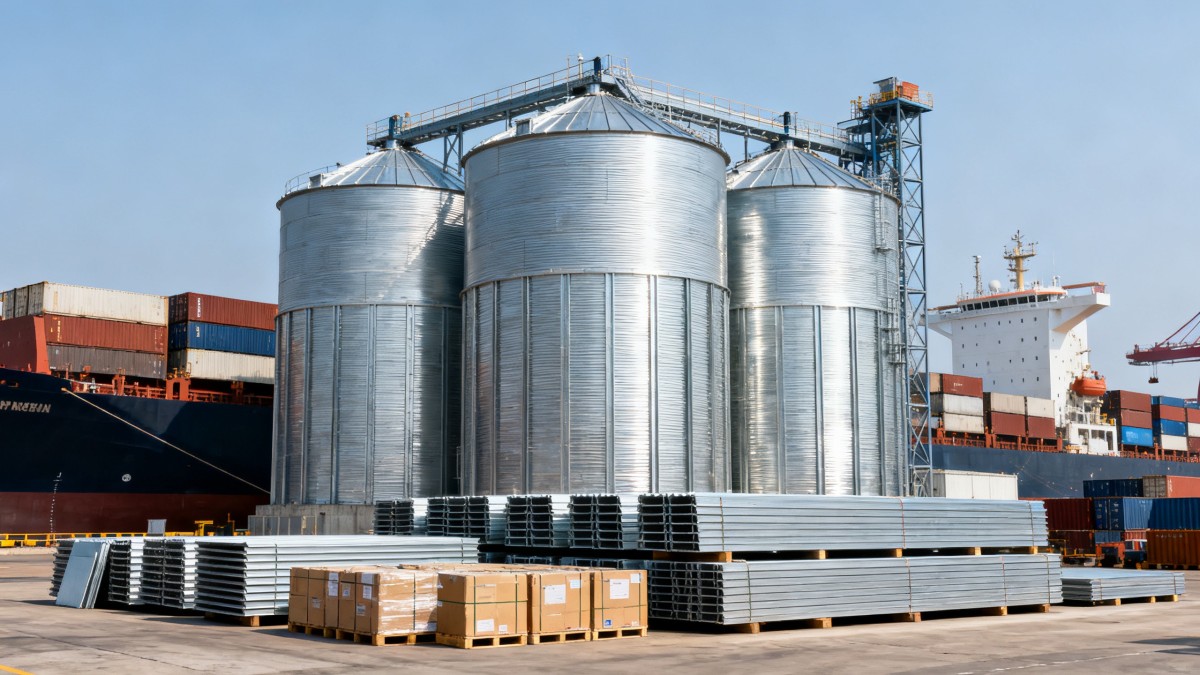
According to FAO monitoring data dated June 22, tender volumes for newly built or expanded grain storage projects have increased by 37% month on month since June 2026. The projects highlighted in the provided information are concentrated in the Middle East, Africa, and Latin America, including Saudi Arabia’s SALIC plan, Nigeria’s NAFDAC food security infrastructure program, and the Buenos Aires Grain Terminal project in Argentina.
The same input also shows that, in the third week of June, leading domestic Grain Silos & Storage suppliers raised average export quotations by 8.2%. Two stated drivers are behind that increase: higher hot-dip galvanized sheet costs and tight ocean freight capacity.
Where pressure may spread across the chain
Bid preparation is becoming more sensitive for project buyers
From an industry perspective, procurement teams involved in grain storage construction may face a narrower window for budget stability. When tender activity rises across several regions at the same time, equipment pricing and delivery assumptions can become harder to lock in. What deserves closer attention is whether current bid terms leave enough room for cost adjustments and lead-time changes.
Manufacturers may feel the squeeze between demand and input costs
Analysis shows that storage equipment manufacturers are positioned between stronger project demand and higher upstream cost pressure. The reported rise in hot-dip galvanized sheet prices affects material-intensive products directly, while shipping tightness can affect export execution. For this group, the main impact is likely to show up in quotation validity, procurement timing, and delivery commitments.
Logistics and trade execution may become a deciding factor
For exporters, trading companies, and supply chain service providers, the issue is not only price. The mention of tight ocean freight capacity indicates that vessel space and shipment scheduling may influence actual contract performance. Observably, firms serving the Middle East, Africa, and Latin America may need to monitor whether transport constraints begin to affect booking certainty or handover timing.
What companies should watch next
Track whether tender growth converts into executable orders
Analysis shows that rising tender volume is an important market signal, but it is not the same as completed procurement or signed delivery contracts. Companies should distinguish between announced bidding activity and projects that move into confirmed execution stages.
Focus on cost pass-through in export quotations
With hot-dip galvanized sheet costs and freight availability both cited as drivers, suppliers and buyers should pay close attention to how quotation terms are structured. In practice, the key issue is whether price changes are temporary adjustments tied to weekly conditions or whether they begin to affect broader contract expectations.
Review delivery schedules and documentation readiness
For firms already discussing projects in the Middle East, Africa, or Latin America, closer coordination on delivery windows, shipping arrangements, and supporting documents may become more important. This is especially relevant where tender activity is rising faster than transport capacity can adjust.
Keep client communication aligned with market changes
What deserves closer attention is the communication gap that can emerge between published quotations and customer expectations. Companies may need clearer explanations on validity periods, material-cost exposure, and possible shipment timing changes to reduce friction during negotiation and award stages.
Why this looks like a signal worth monitoring
Observably, this development should not yet be treated as a complete market conclusion. The confirmed facts point to two simultaneous movements: stronger international tender activity for grain storage infrastructure and a near-term rise in export quotations from leading domestic suppliers. It is more appropriate to understand this as a live industry signal rather than a settled long-term trend, because the available input does not confirm how many tenders will convert into final orders or how long current cost pressure will last.
Analysis shows that the combination is still meaningful. When project opportunities expand in several regions while material and freight conditions tighten, the operational challenge shifts from simply winning orders to pricing and fulfilling them with discipline.
How this news is best understood for now
At this stage, the information points to a market environment in which opportunity and cost pressure are increasing together. For the grain storage equipment sector, that makes this update relevant not only as a demand story, but also as a reminder that procurement, shipping, and quotation management are becoming more interconnected. It is more appropriate to understand the development as a short-term market change with possible broader implications, and one that still requires continued observation.
Basis of this article and follow-up verification
This article is based on the user-provided news title, unspecified event timing, and the supplied event summary. The factual references used here are limited to the provided FAO monitoring point dated June 22, the stated regional project concentration, and the reported 8.2% increase in average export quotations from leading domestic Grain Silos & Storage suppliers in the third week of June.
For this type of industry update, source categories that are usually relevant include official announcements, company disclosures, industry association releases, authoritative media reporting, and standard-setting or institutional documents. A specific official source link was not provided in the input, so further verification is still needed. Follow-up attention should remain on whether tender announcements progress into confirmed project execution and whether material-cost and freight conditions continue to affect export pricing.
Related Intelligence
- Grain Silos & StorageExport-Compliant Grain Storage Systems: Standards, Documentation, and Design ChecksExport compliant storage systems: learn how grain facilities strengthen segregation, condition control, fumigation readiness, traceability, and shipment release.
- Grain Silos & StorageApplication-Based Moisture Specifications for Stored Grain: Limits, Testing, and Risk ControlApplication based moisture specification guide for stored grain: set defensible limits, improve testing, and control spoilage risks across storage applications.
- Grain Silos & StorageHow to Plan Grain Storage Capacity and Flow for a Food Processing PlantGrain storage planning for processing plants: optimize capacity, flow, drying, segregation, and resilience to protect quality and prevent bottlenecks.
The Morning Broadsheet
Daily chemical briefings, market shifts, and peer-reviewed summaries delivered to your terminal.
