

The Authority in Global Agricultural Chemistry & Bio-Resources
RAS Order Surge Extends Aeration Lead Times in Southeast Asia
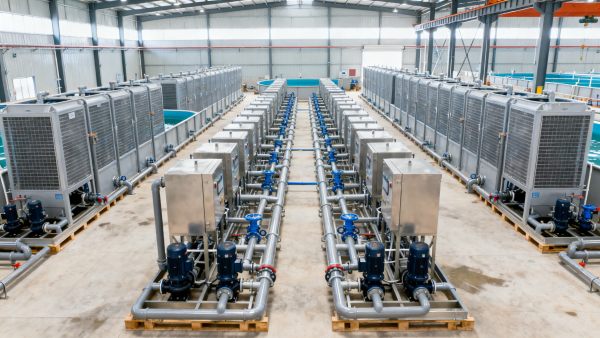
The timing of this development is not specified in the provided information, but the signal is clear: faster RAS deployment in Indonesia, Vietnam, and Thailand is pushing up demand for aeration and water technology equipment across Southeast Asia. For aquaculture operators, equipment buyers, Chinese suppliers, and service providers supporting Commercial Fishing and RAS Systems, the combination of a 210% year-on-year order increase in 2026 Q2 and longer delivery cycles deserves close attention because it directly affects project scheduling, procurement timing, and fulfillment planning.
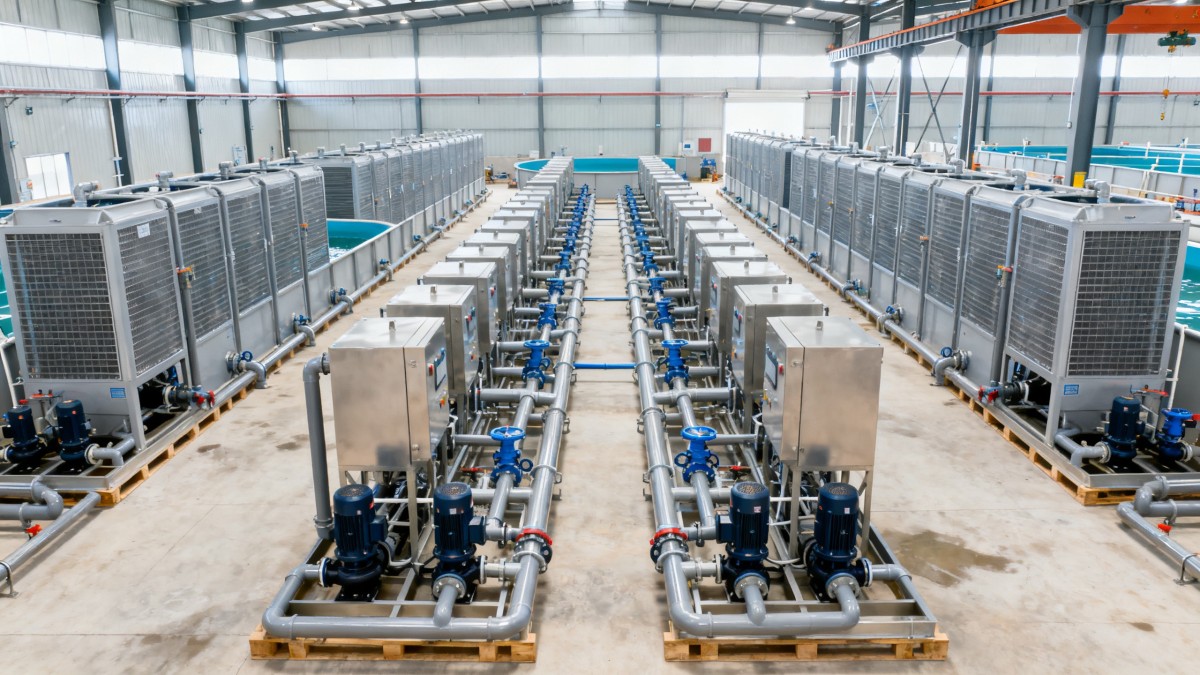
What the market update confirms
Based on the provided information, Southeast Asia recorded a 210% year-on-year increase in Aeration & Water Tech equipment orders in 2026 Q2, driven by faster adoption of recirculating aquaculture systems in Indonesia, Vietnam, and Thailand. Mainstream Chinese suppliers reported that lead times for standard aeration units have extended to 16 to 18 weeks. In response, a leading manufacturer announced the launch of a CKD assembly line in Bac Ninh, Vietnam, with expected delivery cycles reduced to six weeks starting in July for customers in Commercial Fishing and RAS Systems.
Where the pressure is showing across the chain
Project buyers face a tighter equipment window
From an industry perspective, aquaculture operators and project buyers are the first group likely to feel the impact because aeration equipment is tied directly to installation schedules and system commissioning. The most immediate pressure appears in procurement timing, especially where standard units were previously expected on shorter cycles. What deserves closer attention is whether buyers adjust ordering patterns earlier in the project timeline.
Chinese suppliers are balancing demand and delivery credibility
For Chinese equipment suppliers, the main issue is not only higher order intake but also the ability to maintain realistic delivery commitments. The extension of standard lead times to 16 to 18 weeks indicates strain in the supply and fulfillment cycle. Observably, supplier communication, schedule transparency, and delivery planning become more important than headline order growth alone.
Local assembly changes the service response model
The Vietnam CKD assembly move matters for service and distribution partners because it may shorten response times for customers in Southeast Asia. Analysis shows that local assembly can affect how quickly equipment reaches end users, how regional orders are prioritized, and how after-sales coordination is organized. The practical point for market participants is to watch whether shorter quoted cycles translate into stable execution from July onward.
What companies should watch now
Lead time commitments versus actual delivery capability
Companies purchasing aeration systems should focus on the gap between quoted lead times and actual fulfillment capacity. With standard units already reported at 16 to 18 weeks, procurement teams need to confirm whether suppliers can support project deadlines under current order pressure.
The role of the Vietnam assembly line in near-term supply
What deserves closer attention is the announced CKD assembly line in Bac Ninh and its expected impact starting in July. For buyers and channel partners, the key issue is not just the announcement itself, but whether the shorter six-week cycle becomes consistently available for Commercial Fishing and RAS Systems orders.
Priority product categories and customer allocation
Service providers and distributors should monitor which orders receive faster handling as capacity shifts. The provided information specifically mentions standard aeration units, Commercial Fishing, and RAS Systems, so these categories are likely to be central in supplier planning and customer communication.
Client communication and contingency planning
Analysis shows that firms active in procurement, integration, or project delivery should strengthen communication with end customers around schedule expectations. In a market where order growth is accelerating, delays become a commercial issue as much as a logistics issue, particularly when project timelines depend on equipment arrival.
How this signal should be interpreted
Observably, this update points to more than a one-off spike in orders, but it should not yet be treated as a fully settled long-term outcome. The confirmed facts show strong demand growth, extended lead times, and a specific local assembly response in Vietnam. It is more appropriate to understand this as a meaningful industry signal: regional RAS-related equipment demand is rising fast enough to expose delivery constraints, while suppliers are beginning to regionalize part of their response.
A practical reading of the development
At this stage, the industry significance lies in the interaction between demand acceleration and delivery adaptation. The order surge confirms stronger equipment demand tied to RAS deployment in Southeast Asia, while longer lead times show that supply responsiveness is under pressure. A neutral reading is that the Vietnam assembly initiative may ease part of that pressure, but the market still needs to observe how delivery performance develops after the announced July timeline.
Basis of this article and follow-up points
This article is generated from the user-provided news title, unspecified event timing, and event summary. For updates of this type, relevant source categories typically include official statements, company announcements, industry association updates, authoritative media reports, and technical or standards-related documents. No specific official source link was provided in the input, so the details still require ongoing verification. Follow-up attention should focus on whether the announced six-week delivery cycle is achieved in practice and whether lead times for standard aeration units improve after local assembly begins.
Related Intelligence
- Aeration & Water TechWhat RO water treatment systems deliver consistent 98% salt rejection at 25°C with feed TDS over 3,000 ppm?RO water treatment systems that deliver proven 98% salt rejection at 25°C with >3,000 ppm TDS—engineered for API synthesis, aquaculture & grain processing.
- Aeration & Water TechCan pond aeration systems maintain dissolved oxygen above 5 mg/L during summer stratification in catfish ponds?Pond aeration systems can sustain >5 mg/L DO during summer stratification—when engineered for mixing *and* oxygen transfer. See field-proven data & design essentials.
- Aeration & Water TechHow to Choose Alarm Water Monitoring Systems for Critical Water FacilitiesAlarm water monitoring systems: learn how to select reliable sensors, alarms, communications, and workflows to protect critical water facilities and prevent costly failures.
The Morning Broadsheet
Daily chemical briefings, market shifts, and peer-reviewed summaries delivered to your terminal.
