

The Authority in Global Agricultural Chemistry & Bio-Resources
EU CBAM to Cover Grain Silos & Storage Equipment from 2026
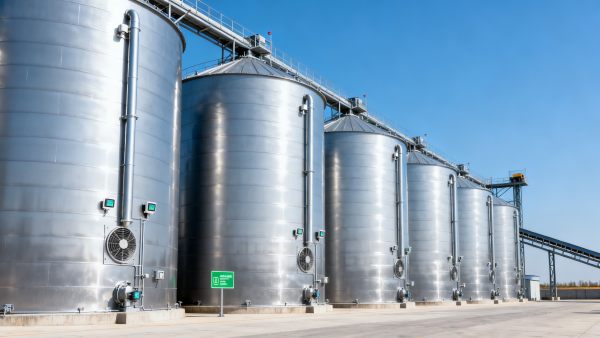
Starting 1 October 2026, the European Union’s Carbon Border Adjustment Mechanism (CBAM) will formally include grain storage and processing equipment — specifically grain silos, storage systems, and milling machinery — requiring exporters to submit verified Life Cycle Assessment (LCA) reports for customs clearance into the EU. This change directly affects manufacturers and exporters in China and other third countries supplying such equipment to the EU market, with potential implicit cost increases of 12–18% for non-compliant entities.
Event Overview
According to the latest official notification from the European Commission, the CBAM regulation will expand its scope effective 1 October 2026 to cover grain silos and storage equipment, as well as milling machinery. Exporters must provide full life cycle carbon footprint (LCA) documentation, subject to third-party verification. The requirement applies at EU import declaration and forms part of the CBAM transitional reporting framework before full financial liability begins.
Industries Affected by This Change
Manufacturers of Grain Silos & Storage Systems
These companies produce the core equipment now explicitly listed under CBAM expansion. They face direct obligations to generate LCA reports aligned with ISO 14040/14044 standards and engage accredited verifiers. Impact includes added time and cost for data collection, supplier engagement, and documentation alignment with EU-specific system boundaries (e.g., cradle-to-gate plus transport).
Export Trading Companies Handling Grain Processing Equipment
Trading firms acting as exporters of record must ensure LCA compliance is embedded in contracts and delivery terms. Non-compliance may delay customs release or trigger penalties under CBAM’s verification protocol. Their role shifts from logistics coordination to compliance gatekeeping — particularly where OEMs lack EU-facing LCA capacity.
Component Suppliers for Milling Machinery
Suppliers providing critical subsystems (e.g., steel structures, drive systems, control units) may be requested to disclose upstream emissions data to support OEM-level LCA reporting. While not directly liable under CBAM, their responsiveness and data transparency affect lead times and certification readiness of end-product exporters.
Third-Party Verification & LCA Service Providers
Accredited verifiers and LCA consultants will see increased demand for EU-compliant assessments. However, only bodies accredited under Regulation (EU) 2023/1115 — and listed on the EU’s official CBAM verifier registry — are authorized to issue valid reports. Demand growth is constrained by current accreditation capacity and geographic availability.
What Enterprises and Practitioners Should Focus On Now
Monitor Official CBAM Transitional Reporting Guidance Updates
The European Commission is expected to publish detailed technical guidelines on LCA methodology, data requirements, and verification criteria for covered equipment categories before mid-2025. Stakeholders should track updates via the official CBAM website and EU Official Journal notices — especially revisions affecting boundary definitions for machinery (e.g., inclusion/exclusion of installation phase).
Identify High-Risk Product Lines and EU Importers Early
Not all grain storage models carry equal exposure. Companies should map current exports by HS code (e.g., 8425.11, 8437.80), EU customer type (industrial end-user vs. distributor), and shipment volume. Prioritizing products with recurring EU deliveries enables phased LCA development and avoids last-minute bottlenecks ahead of October 2026.
Distinguish Between Reporting Obligations and Financial Liability
From October 2026, CBAM requires mandatory LCA submission and verification for customs clearance — but the financial adjustment (i.e., carbon price payment) for these equipment categories remains scheduled to begin later, likely aligned with the full CBAM implementation timeline post-2027. Companies should avoid conflating documentation readiness with immediate carbon cost exposure.
Initiate Internal Data Collection Protocols and Supplier Engagement
LCA reporting requires primary data on energy use, material inputs, transport distances, and manufacturing processes. Firms should begin standardizing internal data capture (e.g., electricity sources per facility, steel procurement origin) and initiate dialogue with Tier-1 suppliers on emission factor disclosure — ideally using the GHG Protocol Product Standard framework as a baseline.
Editorial Perspective / Industry Observation
Observably, this CBAM expansion signals a structural shift: carbon accountability is moving beyond raw materials and bulk commodities into capital goods with complex supply chains. Analysis shows that the inclusion of grain silos and milling machinery reflects the EU’s intent to close regulatory gaps where embodied emissions in food infrastructure have previously remained unpriced. From an industry perspective, this is less a finalized operational mandate and more a strong policy signal — one that precedes formalized implementation rules and verification pathways. Current readiness varies widely across exporting firms, and the pace of official guidance issuance will heavily influence how smoothly the transition proceeds. Continuous monitoring of both EU regulatory outputs and domestic interpretation by national customs authorities remains essential.
This development underscores that CBAM is evolving from a border tax mechanism into a de facto product sustainability standard for industrial exports to the EU. It does not yet require carbon pricing payments for these equipment categories, but it does mandate transparency and verification — making early preparation a matter of operational continuity, not just environmental compliance. For stakeholders, it is more accurate to understand this as the first binding step toward full lifecycle accountability, rather than an isolated tariff event.
Information Sources:
— European Commission CBAM Official Notification (Reference: C(2024) 3210 final, published 2024)
— Regulation (EU) 2023/1115 establishing the CBAM
— Ongoing observation required: Final technical annexes on LCA methodology for machinery categories remain pending publication; stakeholders should verify updates via the EU’s CBAM Helpdesk and delegated acts published in the Official Journal of the European Union.
Related Intelligence
- Grain Silos & StorageHow Modular Feed and Grain Systems Support Scalable Storage and Processing ExpansionModular feed and grain systems enable smarter, scalable expansion across storage, conveying, processing, and loadout. Discover how to eliminate bottlenecks, protect future capacity, and keep operations moving.
- Grain Silos & StorageHow to Size a Grain Pre-Cleaner for Capacity, Crop Type, and Impurity LoadGrain pre cleaner machine sizing guide: match capacity, crop type, moisture, and impurity load to improve flow, separation quality, and downstream performance.
- Grain Silos & StorageHow Can You Verify That a Grain Handling System Meets Export Standards?How do I know if a grain handling system meets export standards? Explore practical checks for traceability, sanitation, quality control, and export-ready compliance.
The Morning Broadsheet
Daily chemical briefings, market shifts, and peer-reviewed summaries delivered to your terminal.
