

The Authority in Global Agricultural Chemistry & Bio-Resources
Fruit Attraction 2026 Booth Bookings Exceed 90%
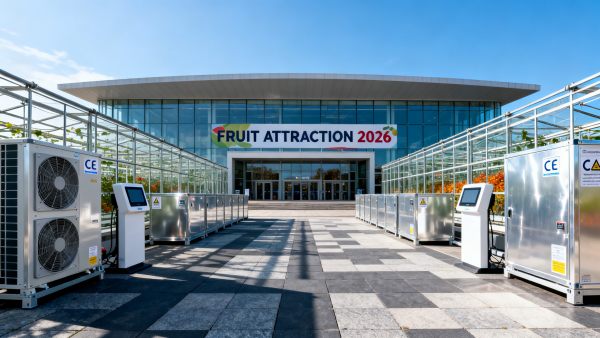
Booth bookings for Fruit Attraction 2026 — the 18th edition of the international fruit and vegetable trade fair — have surpassed 90%, with the event scheduled for October 6–8, 2026 in Madrid. This early uptake signals intensifying global procurement interest in smart greenhouse systems, climate control & ventilation equipment, and post-harvest preservation technologies — particularly among importers and distributors in the EU, Middle East, and Latin America.
Event Overview
The 18th Fruit Attraction international fruit and vegetable exhibition will take place from October 6 to 8, 2026 in Madrid. As of the latest official update, over 90% of exhibition space has been reserved. The organizers have designated Smart Greenhouse, Climate Control & Ventilation, and Aeration & Water Tech as core thematic zones. The event is attracting advance commitments from procurement teams across key overseas markets, including the EU, Middle East, and Latin America.
Industries Affected
Direct Trading Enterprises
These firms act as intermediaries between overseas buyers and manufacturers. With booth reservations exceeding 90%, lead time for supplier engagement is compressing: overseas importers are locking in Chinese suppliers earlier to secure delivery windows. This affects quotation cycles, contract negotiation timelines, and order confirmation windows — especially for customized or integrated solutions.
Manufacturers of Climate Control & Ventilation Equipment
Companies producing HVAC systems, automated ventilation units, CO₂ enrichment modules, or precision irrigation controllers face heightened demand visibility — but also tighter scheduling pressure. The emphasis on Climate Control & Ventilation as a core zone indicates that functional interoperability, energy efficiency certification (e.g., CE, EN standards), and compatibility with existing greenhouse management platforms are becoming baseline expectations — not differentiators.
Post-Harvest Technology Providers
Suppliers of cold chain monitoring devices, ethylene scrubbers, controlled-atmosphere storage components, and food-grade coating systems are seeing increased inquiry volume. However, the focus remains on modular, retrofit-ready solutions rather than turnkey infrastructure — reflecting buyers’ preference for phased upgrades over full facility overhauls.
Supply Chain Service Providers
Firms offering logistics coordination, customs compliance support, or technical documentation translation (e.g., EU Machinery Directive Annexes, Spanish-language operation manuals) are encountering earlier engagement requests. Notably, demand is rising for services tied specifically to greenhouse-related certifications — not general export documentation.
What Relevant Enterprises or Practitioners Should Focus On
Monitor official booth allocation deadlines and buyer registration trends
The 90% booking threshold suggests limited remaining capacity; enterprises targeting first-time participation or new market entry should verify final reservation cutoff dates directly with Fruit Attraction organizers — not rely on secondary channels. Delayed registration may restrict access to high-traffic aisles or co-location with complementary technology vendors.
Prioritize readiness for technical specification alignment
Overseas procurement teams are increasingly requesting pre-submission of product compliance documents (e.g., EN 12101-2 for ventilation, ISO 50001 references for energy reporting). Companies should audit current documentation sets against EU and target-market regulatory frameworks — especially where local language labeling or third-party test reports are mandatory.
Distinguish between procurement signaling and near-term order conversion
Early booth bookings reflect intent, not guaranteed purchase volume. Analysis shows that up to 30% of initial expressions of interest at Fruit Attraction do not convert into firm orders within six months post-event. Firms should treat this as a demand-sensing signal — not a sales forecast — and avoid overextending production capacity or inventory commitments prematurely.
Initiate cross-functional alignment on customization timelines
Given the stated need to “launch customized solutions immediately”, engineering, supply chain, and sales teams must jointly map current lead times for hardware integration, firmware configuration, and bilingual user interface localization. Delays in any single node risk missing the narrowing delivery window — especially for projects requiring CE marking renewal or regional safety certification.
Editorial Perspective / Industry Observation
Observably, the 90% booth booking rate for Fruit Attraction 2026 functions less as an outcome and more as a forward-looking indicator: it reflects consolidating buyer priorities around operational resilience and yield predictability — not just cost-driven sourcing. From an industry perspective, this trend is better understood as validation of ongoing investment in controlled-environment agriculture infrastructure, particularly in regions facing water stress or seasonal supply volatility. It does not yet confirm broad-based price elasticity shifts or subsidy-driven demand surges — those remain subject to national agricultural policy updates expected in late 2025. Continued attention is warranted on how buyer delegation profiles evolve (e.g., increased presence of utility-scale greenhouse operators versus traditional produce importers), as that will clarify whether demand is shifting toward industrial-scale deployment or boutique horticultural applications.
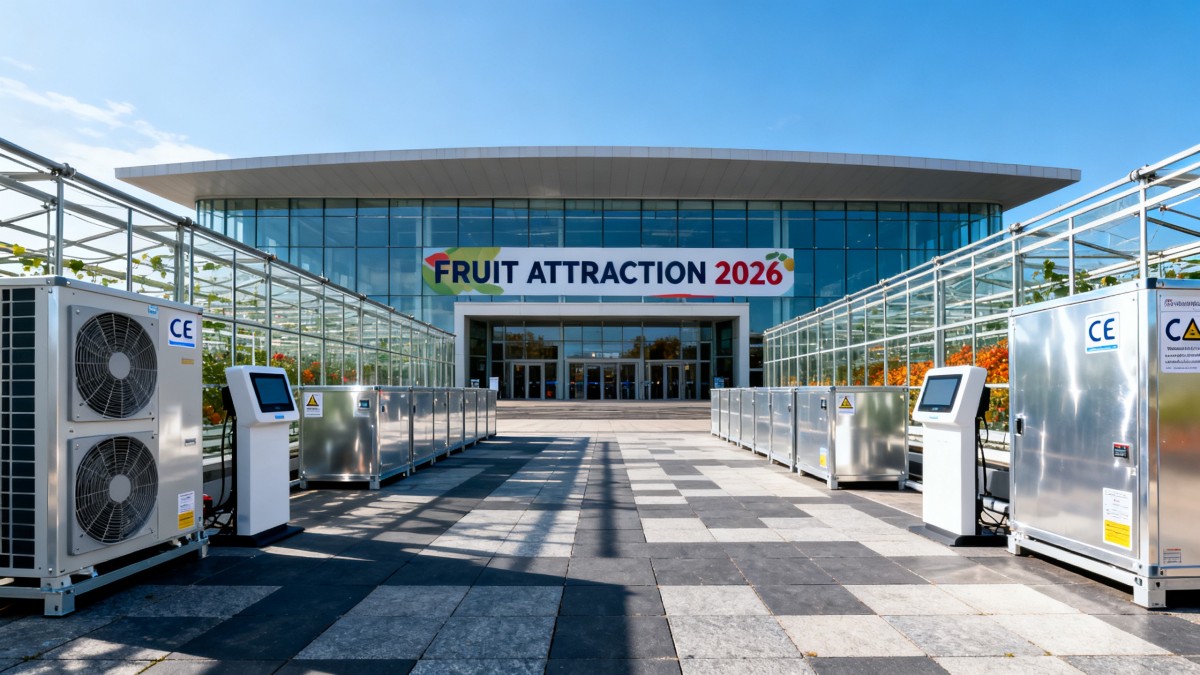
In summary, the high booth occupancy for Fruit Attraction 2026 underscores tightening procurement cycles for climate-smart horticulture technologies — but its primary significance lies in timing and preparation discipline, not volume acceleration. Current conditions favor enterprises that treat the event as a synchronization point for technical readiness, compliance alignment, and cross-market logistical planning — rather than solely as a sales channel. It is more accurately interpreted as a signal of maturing global standards for greenhouse automation than as evidence of immediate, widespread adoption.
Source: Official Fruit Attraction 2026 communications (booth reservation status, thematic zone designations, and regional buyer engagement data). Note: Final exhibitor list, buyer attendance figures, and post-event order conversion metrics remain pending and will require follow-up observation after October 2026.
Related Intelligence
- Smart GreenhouseGreenhouse Equipment for Vertical Farming: Choosing Lighting and VentilationChoose greenhouse equipment for vertical farming with confidence. Compare lighting, airflow, and moisture control to improve crop uniformity and manage costs. Explore the guide.
- Smart GreenhouseSelecting Greenhouse Propagation Equipment for Hot, Humid Southeast Asian NurseriesGreenhouse propagation equipment Southeast Asia: discover how to select resilient irrigation, ventilation, benches, and automation for hot, humid nurseries.
- Smart GreenhouseWhat Are the Biggest Challenges in Agri-Tech Adoption in 2026?What are the biggest challenges in agri tech adoption for 2026? Explore cost, data, connectivity, skills, compliance, and ROI barriers.
The Morning Broadsheet
Daily chemical briefings, market shifts, and peer-reviewed summaries delivered to your terminal.
