

The Authority in Global Agricultural Chemistry & Bio-Resources
Why aquaculture & fishery planning often misses hidden risks
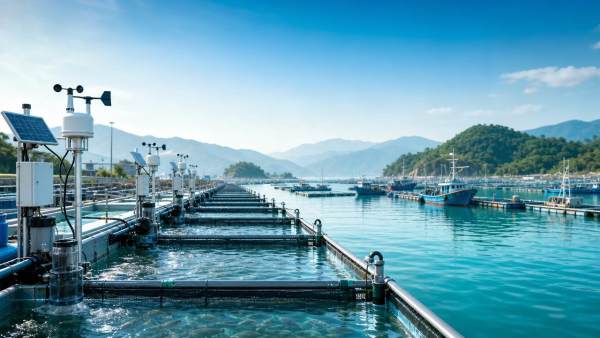
Aquaculture & Fishery planning often looks complete in spreadsheets, permits, and production models. Yet many projects fail because hidden risks sit outside standard feasibility assumptions.
In complex primary industries, the gap between plan and performance usually appears in regulation, disease pressure, logistics, water quality, and market timing. These factors rarely move alone.
For any aquaculture & fishery strategy, the real challenge is not building a bigger model. It is identifying weak links early, then designing resilience before capital, stock, or reputation is exposed.
When aquaculture & fishery planning looks viable but the operating context says otherwise
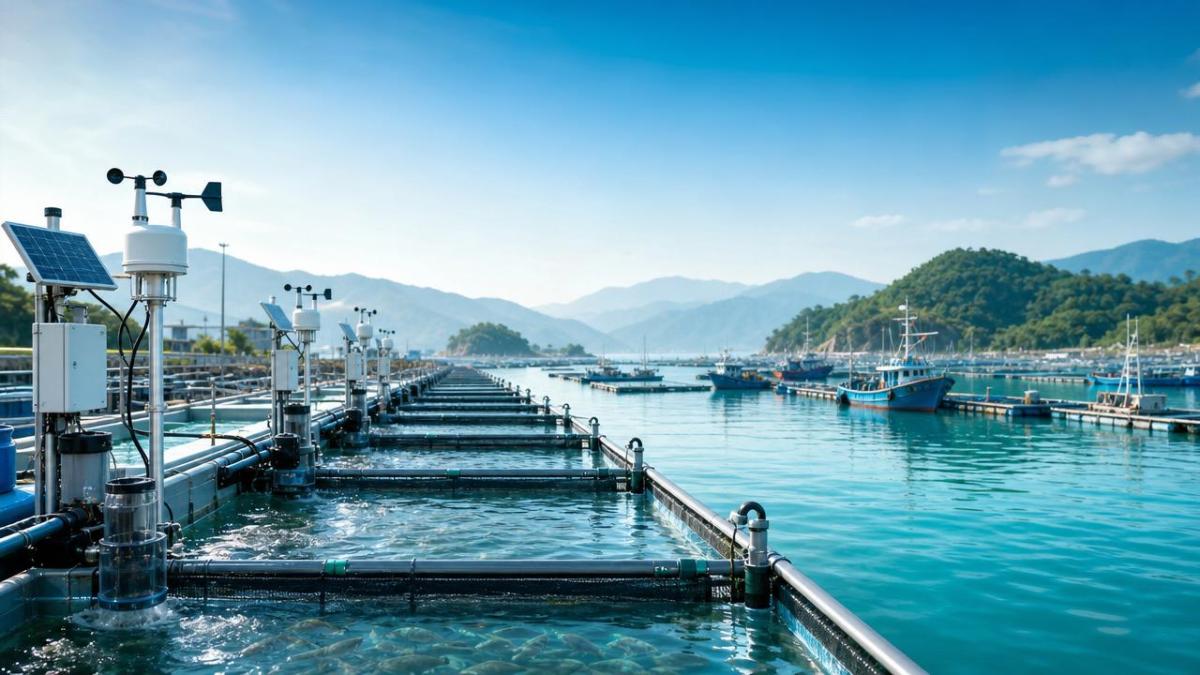
A plan can be financially attractive and still be operationally fragile. Hidden risk usually appears where assumptions are fixed, while real-world variables remain dynamic.
Aquaculture & Fishery systems depend on biological cycles, regulated inputs, infrastructure reliability, and environmental stability. If one layer shifts, every downstream forecast can weaken quickly.
This is why strong planning needs scenario judgment, not only baseline budgeting. Different project settings create different risk profiles, even when production species or technologies look similar.
Why hidden risks stay invisible in early-stage models
Many planning teams rely on average conditions. However, aquaculture & fishery performance is often shaped by peak stress events, not average seasonal behavior.
- Permits are assumed to remain stable after approval.
- Biosecurity is treated as a farm-level issue only.
- Feed, seed, and chemical inputs are expected to arrive on time.
- Water, power, and transport are modeled as uninterrupted utilities.
- Demand is forecast without enough downside price sensitivity.
These assumptions create a false sense of control. In practice, aquaculture & fishery planning succeeds when uncertainty is treated as a design input, not a late-stage exception.
Scenario one: coastal aquaculture & fishery projects face environmental volatility first
Coastal projects often benefit from market access, existing labor pools, and export proximity. But they also face sharp environmental exposure that can overturn stable production assumptions.
Salinity shifts, storm surges, algal blooms, and upstream contamination events can all interrupt stocking cycles. A site may perform well for years, then fail under one seasonal anomaly.
Core judgment points in coastal planning
- How often do temperature and dissolved oxygen exceed biological tolerance?
- Is watershed pollution monitored in real time or only reported later?
- Can drainage and intake systems operate during severe weather?
- Are insurance, evacuation, and emergency harvesting plans financially realistic?
In this aquaculture & fishery scenario, resilience depends on environmental data density, backup water strategies, and contingency harvest logistics more than optimistic annual yield estimates.
Scenario two: inland recirculating systems reduce some risks but introduce technical dependency
Inland systems are often chosen to improve control. Recirculating aquaculture can reduce exposure to coastal variability, but technical dependence becomes the new hidden risk center.
A minor sensor failure, aeration interruption, filtration imbalance, or sanitation lapse can escalate rapidly. Biological loss in controlled systems often happens faster than planning documents suggest.
Core judgment points in inland systems
The strongest plans test not only equipment specifications, but also response time. Technical systems fail in layers, and staff readiness becomes as important as machinery performance.
- Redundancy for pumps, oxygen supply, and power continuity.
- Maintenance intervals aligned with actual operating loads.
- Calibration discipline for monitoring devices.
- Availability of replacement parts and specialist support.
For aquaculture & fishery operators using intensive systems, planning should include failure simulations, not just design capacity and nominal efficiency benchmarks.
Scenario three: capture fishery planning often underestimates policy and stock uncertainty
Capture fishery planning is frequently built around vessel capacity, fuel, gear, and target species economics. Yet access rules and biomass changes may matter more than operational efficiency.
Quota revisions, protected areas, bycatch restrictions, and traceability rules can reshape viability within one regulatory cycle. Biological stock pressure also changes faster than historical averages imply.
Core judgment points in capture fishery scenarios
- Dependence on a narrow species mix.
- Exposure to marine spatial planning changes.
- Documentation readiness for export compliance.
- Sensitivity to fuel shocks and port congestion.
In this aquaculture & fishery context, hidden risk often comes from treating ecological access as permanent. It rarely is.
How different aquaculture & fishery scenarios create different planning needs
Not all risks deserve equal weighting. The right planning structure changes by system type, geography, compliance burden, and market route.
This comparison shows why generic aquaculture & fishery planning frameworks often miss critical scenario differences. A uniform template can hide the most expensive risk driver.
Practical adaptation strategies for stronger aquaculture & fishery planning
Good planning translates uncertainty into scheduled action. The goal is not perfect prediction, but controlled exposure and faster recovery when disruptions occur.
Recommended actions by planning stage
- Validate site conditions with multi-season data, not one-time sampling.
- Map all critical inputs, including feed, seed, chemicals, energy, and transport.
- Stress-test compliance assumptions against likely policy updates.
- Build disease response protocols before first stocking or first voyage.
- Assign trigger points for harvest, shutdown, relocation, or treatment decisions.
- Review insurance exclusions and contractual force majeure language carefully.
For aquaculture & fishery projects, these steps improve resilience because they connect capital planning with biological, legal, and logistical realities.
Common aquaculture & fishery misjudgments that create avoidable losses
Several recurring mistakes appear across primary industry projects. Most are not caused by missing information, but by underweighting inconvenient signals during planning.
- Assuming environmental permits guarantee long-term operational freedom.
- Treating disease risk as isolated, rather than linked to sourcing and movement.
- Ignoring supplier concentration in feed, juvenile stock, or treatment inputs.
- Overlooking export documentation requirements until market entry is delayed.
- Using best-case survival and price assumptions in debt-heavy models.
Each mistake narrows decision flexibility. In aquaculture & fishery operations, flexibility is often the difference between a manageable setback and a structural loss.
The next step: turn aquaculture & fishery risk signals into a working decision framework
A stronger planning process starts with one practical shift. Review every major assumption and ask what happens if it fails during the most sensitive biological or commercial window.
Then rank risks by impact, response speed, and recovery cost. This simple framework often reveals which aquaculture & fishery investments need redesign, backup capacity, or slower scaling.
For organizations following primary industry intelligence, disciplined scenario analysis brings more value than optimistic projection alone. Hidden risks rarely disappear, but they can be made visible early enough to manage.
In that sense, better aquaculture & fishery planning is not just about growth. It is about building systems that remain credible under pressure, regulation, and changing environmental conditions.
Related Intelligence
- RAS SystemsSustainable Aquaculture Practices That Cut Feed Waste and Protect Fish Farm Water QualitySustainable aquaculture for fish farms: reduce feed waste, protect water quality, and build resilient, efficient systems with practical strategies.
- RAS SystemsDrum Filter System Price: How Flow Rate, Micron Rating, and Automation Affect CostDrum filter system price depends on flow rate, micron rating, automation, materials, and lifecycle costs. Compare quotes confidently and choose the right system.
- RAS SystemsHow to Specify Large-Scale Fish Farming Equipment for High-Output RAS ProjectsLarge scale fish farming equipment guide for high-output RAS projects—specify tanks, filtration, oxygen, automation, and redundancy for reliable growth.
The Morning Broadsheet
Daily chemical briefings, market shifts, and peer-reviewed summaries delivered to your terminal.
