

The Authority in Global Agricultural Chemistry & Bio-Resources
GAA RAS 3.0 DO Dynamic Response Test Goes Mandatory in June 2026
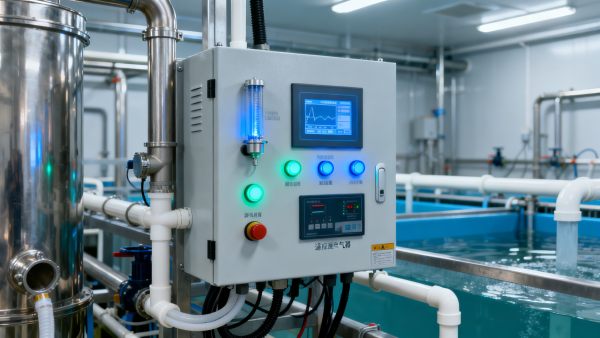
Global aquaculture stakeholders are facing a pivotal regulatory shift: the Global Aquaculture Alliance (GAA) has confirmed that the dissolved oxygen (DO) dynamic response test — the most technically demanding component of its RAS 3.0 certification — will become mandatory for all RAS Systems equipment starting 1 June 2026. This requirement directly impacts manufacturers, exporters, and system integrators supplying to high-compliance markets, particularly in North America and the EU, where adherence to GAA standards increasingly dictates market access.
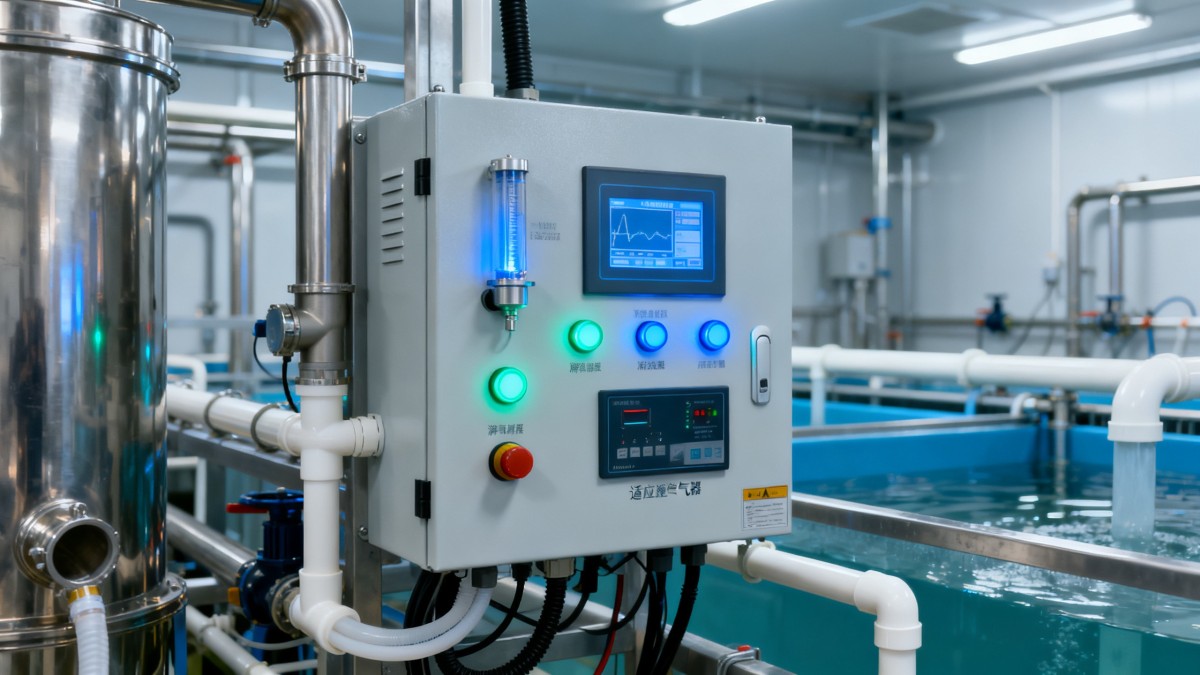
Event Overview
On 22 May, the Global Aquaculture Alliance officially confirmed that the DO dynamic response test under its RAS 3.0 certification framework will enter mandatory enforcement on 1 June 2026. The test requires certified RAS Systems equipment to maintain dissolved oxygen concentration within 6.5 ± 0.3 mg/L for no longer than 15 seconds when subjected to simultaneous stressors: inlet water temperature shifts of ±5°C and load fluctuations of ±30%. As of the announcement, only approximately 17% of Chinese RAS Systems suppliers have passed this test. Non-compliant equipment will be excluded from bidding on major recirculating aquaculture projects in Europe and North America.
Industries Affected
Direct Trading Enterprises
Export-oriented trading firms specializing in RAS equipment face immediate commercial risk. Since GAA RAS 3.0 compliance is now a de facto prerequisite for tender eligibility in key Western markets, non-certified products cannot be listed or promoted for such projects. Impact manifests in lost contract opportunities, extended sales cycles due to requalification efforts, and potential contractual liability if previously supplied systems fail retrospective validation.
Raw Material Procurement Enterprises
Suppliers of critical DO control components — including oxygen injectors, real-time DO sensors, and adaptive aeration controllers — are experiencing shifting demand signals. Buyers are now prioritizing subcomponents with documented dynamic response performance under thermal and hydraulic transients. Procurement teams must verify not only component specifications but also integrated system-level test reports, increasing technical due diligence burden and lead time for sourcing.
Equipment Manufacturing Enterprises
RAS Systems OEMs and system integrators bear the highest technical and financial exposure. Achieving DO stability under combined thermal and load perturbations demands co-optimized hardware-software architecture — particularly in feedback loop latency, actuator responsiveness, and predictive compensation logic. Manufacturers lacking in-house control engineering capacity may need to engage third-party validation labs or redesign core subsystems, extending time-to-certification by 6–12 months.
Supply Chain Service Providers
Logistics, customs brokerage, and certification support providers must update compliance documentation protocols. For example, export declarations and CE/GS technical files now require explicit reference to GAA RAS 3.0 DO test reports — not just general conformity statements. Third-party testing labs report surging inquiry volumes for dynamic DO validation, indicating capacity bottlenecks may emerge ahead of the 2026 deadline.
Key Focus Areas and Recommended Actions
Verify Current Certification Status Against GAA’s Public Registry
Enterprises should cross-check their product models against the official GAA RAS 3.0 certified equipment list (updated weekly), as self-declared compliance carries no weight in procurement evaluations. GAA explicitly states that only test reports issued by its authorized laboratories are accepted.
Prioritize System-Level Re-Testing Over Component-Level Claims
Many vendors cite ‘DO sensor accuracy’ or ‘high-flow oxygenation’ as sufficient — yet the test evaluates full-system behavior. Companies should commission integrated DO dynamic response tests early, using realistic operational profiles (e.g., salmon smolt transfer scenarios) rather than static lab conditions.
Engage with GAA-Authorized Validation Labs Before Q4 2025
Lead times for DO dynamic response testing are currently averaging 14–18 weeks at accredited labs. Given limited global capacity and scheduled lab maintenance windows, booking slots before end-Q3 2025 is advised to avoid delays that could jeopardize 2026 project timelines.
Editorial Perspective / Industry Observation
Observably, the DO dynamic response mandate reflects a broader industry transition from ‘compliance-as-documentation’ to ‘compliance-as-behavior’. Unlike earlier RAS certifications focused on steady-state parameters, RAS 3.0 tests resilience — how systems respond to real-world unpredictability. Analysis shows this shift favors vertically integrated manufacturers with embedded control expertise over modular assemblers. It also accelerates consolidation among mid-tier Chinese suppliers, as certification costs represent 8–12% of average RAS system R&D budgets. From an industry perspective, this is less about technical gatekeeping and more about aligning equipment performance expectations with biological realities of intensive aquaculture.
Conclusion
The enforcement of the GAA RAS 3.0 DO dynamic response test marks a structural inflection point — not merely a new checkbox, but a recalibration of performance benchmarks across the global RAS value chain. Its significance lies not in exclusivity per se, but in establishing a shared, quantifiable definition of operational reliability. A rational interpretation is that the 2026 deadline functions as both a filter and a catalyst: filtering out legacy designs, while catalyzing investment in adaptive control architectures and closed-loop system validation practices.
Source Attribution
Official confirmation issued by the Global Aquaculture Alliance (GAA) on 22 May 2024; RAS 3.0 Technical Specification v3.2 (Section 4.7.2); GAA Public Certification Registry (accessed 24 May 2024). Note: GAA has indicated plans to publish updated test protocol details and lab accreditation criteria by Q3 2024 — these remain under active review and warrant continued monitoring.
Related Intelligence
- RAS SystemsSustainable Aquaculture Practices That Cut Feed Waste and Protect Fish Farm Water QualitySustainable aquaculture for fish farms: reduce feed waste, protect water quality, and build resilient, efficient systems with practical strategies.
- RAS SystemsDrum Filter System Price: How Flow Rate, Micron Rating, and Automation Affect CostDrum filter system price depends on flow rate, micron rating, automation, materials, and lifecycle costs. Compare quotes confidently and choose the right system.
- RAS SystemsHow to Specify Large-Scale Fish Farming Equipment for High-Output RAS ProjectsLarge scale fish farming equipment guide for high-output RAS projects—specify tanks, filtration, oxygen, automation, and redundancy for reliable growth.
The Morning Broadsheet
Daily chemical briefings, market shifts, and peer-reviewed summaries delivered to your terminal.
