

The Authority in Global Agricultural Chemistry & Bio-Resources
RCEP Launches Green Label Mutual Recognition for Heavy Agri Machinery
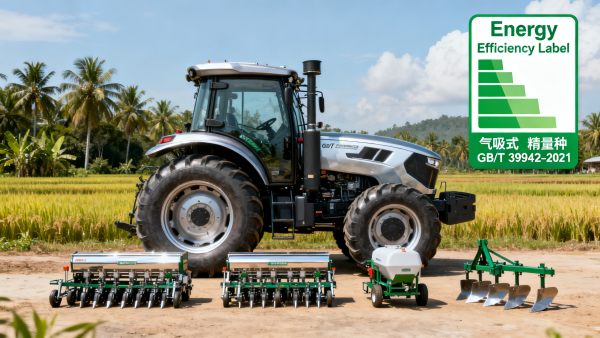
On May 21, 2026, the RCEP Secretariat launched the Framework for Mutual Recognition of Agricultural Machinery Green Performance Labels, enabling certified heavy agricultural machinery from China—including tractors, seeders, and grain dryers—to enter Vietnam, Thailand, Indonesia, and other ASEAN RCEP members without undergoing duplicate energy efficiency testing. This development directly impacts agricultural equipment exporters, cross-border supply chain operators, and regulatory compliance teams—and signals a meaningful shift in regional market access for energy-efficient agri-machinery.
Event Overview
On May 21, 2026, the RCEP Secretariat announced the initiation of the Framework for Mutual Recognition of Agricultural Machinery Green Performance Labels. The framework initially covers heavy agricultural machinery categories: tractors, seeders, and grain dryers. Under the arrangement, Chinese products certified to GB/T 39942–2021 (Energy Efficiency Assessment for Agricultural Machinery) are accepted for customs clearance in Vietnam, Thailand, and Indonesia without local retesting—previously averaging 23 days and costing over USD 4,200 per model.
Industries Affected
Direct Exporters of Heavy Agricultural Machinery
Exporters shipping tractors, seeders, or grain dryers to ASEAN RCEP markets face reduced time-to-market and lower compliance costs. The elimination of mandatory local energy testing shortens certification lead times and lowers third-party verification expenses—particularly relevant for SMEs with limited regulatory bandwidth.
Manufacturers Engaged in Energy Efficiency Certification
Domestic manufacturers relying on GB/T 39942–2021 for domestic compliance now gain automatic eligibility for ASEAN market access under this framework. Their existing test reports become interoperable across participating jurisdictions—reducing redundant lab work and accelerating product registration cycles.
Supply Chain & Customs Compliance Service Providers
Freight forwarders, customs brokers, and technical documentation agencies handling ASEAN-bound agri-machinery shipments must update their compliance checklists. Documentation requirements now pivot from local test certificates to validated GB/T 39942–2021 reports—and associated labeling formats aligned with the mutual recognition framework.
Aftermarket & Spare Parts Distributors
While the framework currently applies only to new heavy machinery, its adoption may inform future alignment of spare parts energy labeling or repair-related efficiency standards. Distributors serving ASEAN markets should monitor whether component-level conformity pathways emerge in subsequent phases.
What Enterprises and Practitioners Should Focus On Now
Track official implementation guidance from national authorities
Although the framework was launched at the RCEP Secretariat level, national customs and standards bodies (e.g., Thailand’s TISI, Indonesia’s BSN) must issue operational notices. Enterprises should subscribe to updates from these agencies—not just RCEP announcements—to confirm document formatting, label placement rules, and verification procedures.
Prioritize models already certified to GB/T 39942–2021 for ASEAN rollout
Products with active, valid GB/T 39942–2021 reports are immediately eligible. Companies should audit their current certification portfolio and identify high-potential export models—especially those previously delayed by local testing bottlenecks in Vietnam or Thailand.
Distinguish between policy adoption and actual enforcement readiness
Analysis shows that mutual recognition frameworks often require 3–6 months for frontline customs staff training and system integration. Early shipments may still encounter ad hoc verification requests. Exporters should retain original test data and lab contact details for rapid response—even when formal exemption applies.
Prepare bilingual labeling and technical documentation
The framework does not waive labeling or documentation requirements—it shifts the evidentiary basis. Firms must ensure their GB/T 39942–2021 reports include clear scope statements matching ASEAN tariff classifications, and that green label visuals comply with local language and layout expectations (e.g., Thai/Indonesian text, metric-only units).
Editorial Perspective / Industry Observation
Observably, this initiative functions primarily as a procedural harmonization measure—not a new standard or subsidy program. It reduces friction, not risk. From an industry perspective, it reflects growing alignment among RCEP members on sustainability-linked trade facilitation, but remains narrowly scoped: limited to three equipment types, three initial ASEAN countries, and one specific Chinese standard. Current implementation appears transitional; sustained impact depends on expansion to additional machinery categories, more member states, and potential linkage to broader carbon labeling initiatives. For now, it is best understood as a targeted efficiency upgrade—not a structural market shift.
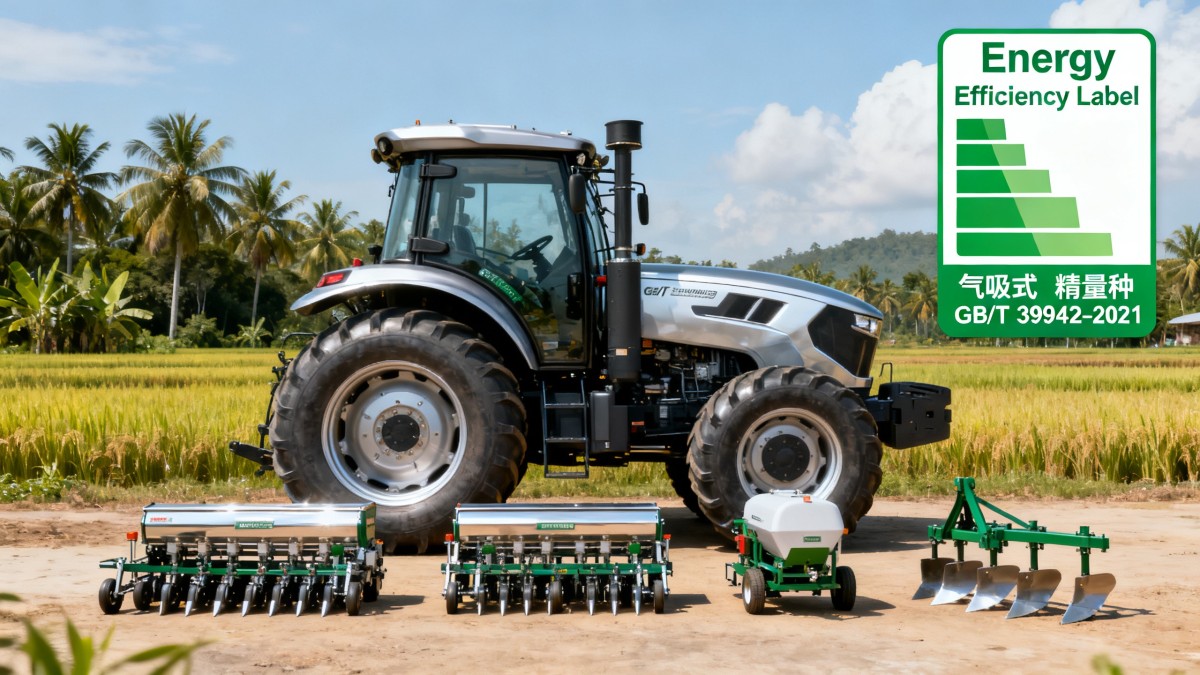
Conclusion: This mutual recognition framework delivers tangible, near-term benefits for exporters of select heavy agricultural machinery entering key ASEAN markets—but its scope is narrow and contingent on national implementation. It is more accurately interpreted as an incremental step in regional regulatory cooperation than a transformative trade liberalization event. Stakeholders should treat it as an operational improvement opportunity requiring precise documentation alignment—not a strategic inflection point.
Source: RCEP Secretariat official announcement, May 21, 2026. Note: Expansion to additional ASEAN members and machinery categories remains under observation and has not been formally confirmed.
Related Intelligence
- Heavy Agri MachineryHow Does Market Forecasting Help Plan Farm Machinery Procurement?How does market forecasting help agri procurement planning? Discover how to time machinery purchases, protect cash flow, and reduce delivery risks before critical farm deadlines.
- Heavy Agri MachineryIs It Safe to Source Farm Machinery from Emerging Markets?Is it safe to source agri machinery from emerging markets? Discover how to verify suppliers, check compliance, and secure parts support to protect your farm and avoid costly buying mistakes.
- Heavy Agri MachineryHow to Size a Combine Harvester for Acreage, Crop Mix, and Harvest WindowsCombine harvesters sized for your acreage, crop mix, and harvest window: calculate real field capacity, match headers, and avoid costly bottlenecks.
The Morning Broadsheet
Daily chemical briefings, market shifts, and peer-reviewed summaries delivered to your terminal.
