

The Authority in Global Agricultural Chemistry & Bio-Resources
China–Laos Railway Freight Up 41%; Grain Storage Delivery to ASEAN Cuts 5–7 Days
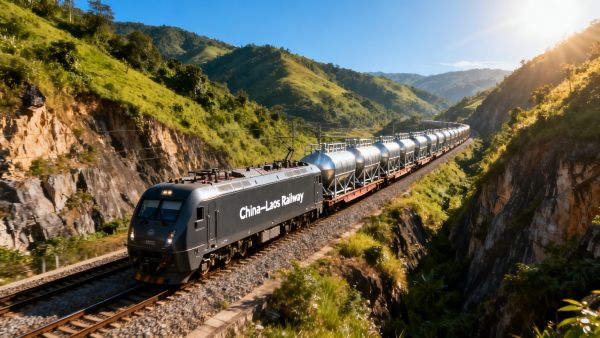
On May 21, 2026, China State Railway Group announced a 41% year-on-year increase in cross-border freight volume on the China–Laos Railway for January–April 2026 — reaching 2.87 million tonnes. This surge is notably accelerating demand for grain storage infrastructure across Southeast Asia, as dedicated logistics capacity for silos and related equipment tightens delivery windows to key markets.
Event Overview
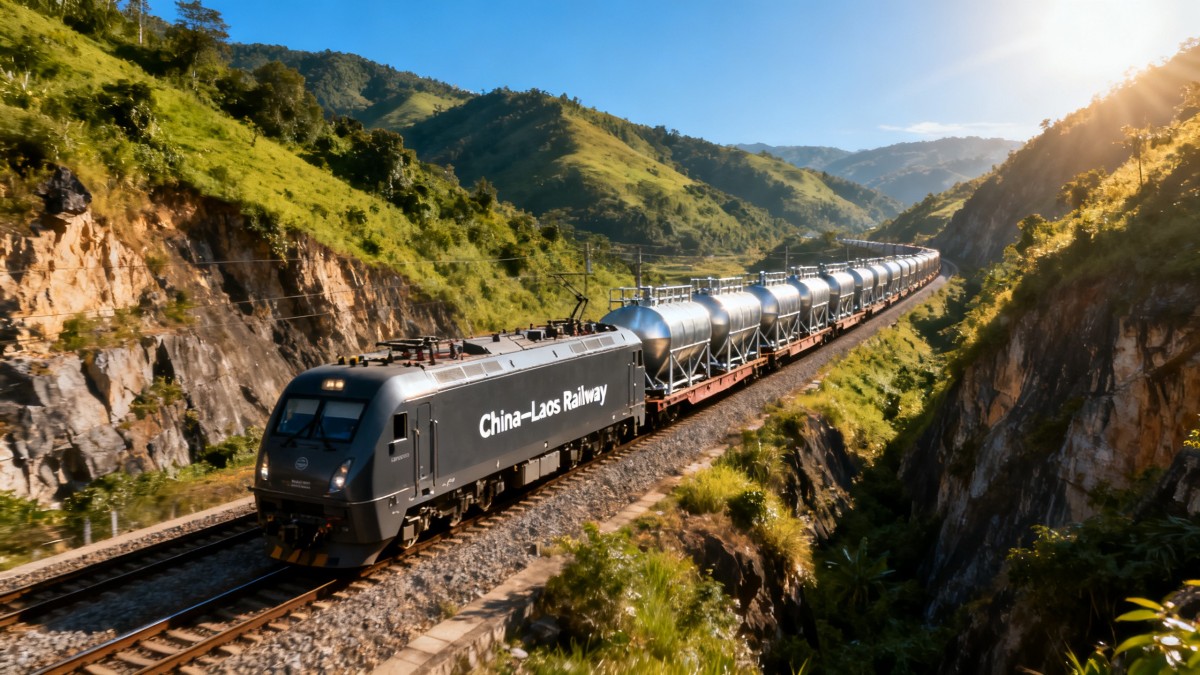
According to China State Railway Group’s official bulletin dated May 21, 2026, total cross-border freight volume on the China–Laos Railway from January to April 2026 amounted to 2.87 million tonnes, up 41% year-on-year. Grain storage equipment — including prefabricated steel silos, intelligent ventilation systems, and recirculating fumigation modules — accounted for 12% of this cargo volume. Such equipment, exported via the Kunming–Vientiane land corridor to Thailand and Vietnam, achieves average overland delivery lead times 5–7 days shorter than conventional maritime routes.
Industries Affected
Direct Trading Enterprises
Export-oriented equipment suppliers and trade intermediaries handling grain silos and storage systems are experiencing accelerated order cycles and tighter shipment scheduling. The shortened transit time reduces working capital lock-up and improves responsiveness to urgent regional procurement requests — especially during peak harvest or post-disaster replenishment periods.
Raw Material Procurement Enterprises
Grain importers and agri-commodity traders in ASEAN countries face revised lead-time expectations for infrastructure deployment. With faster delivery of storage assets, their ability to scale intake capacity ahead of seasonal surges — e.g., rice harvests in Vietnam or maize arrivals in Thailand — improves significantly. However, this also compresses time for site preparation and regulatory compliance checks, increasing coordination pressure.
Processing & Manufacturing Enterprises
Domestic manufacturers of modular silos and integrated grain handling systems (e.g., ventilation, temperature monitoring, pest control modules) are seeing stronger export traction into ASEAN. Yet the shift toward standardized, rail-compatible unitized designs requires adjustments in packaging, load optimization, and documentation — particularly for customs clearance under ASEAN-China FTA rules.
Supply Chain Service Providers
Freight forwarders, multimodal integrators, and cold-chain logistics providers specializing in agricultural infrastructure are adapting service offerings to support end-to-end inland rail-handling — including last-mile drayage, customs brokerage for dual-use equipment, and pre-delivery commissioning support. Demand is rising for bundled solutions that include technical handover and local certification alignment.
Key Considerations and Recommended Actions
Verify Rail-Compliant Packaging Standards Early
Grain storage equipment shipped via the China–Laos Railway must meet dimensional, weight, and securing specifications for standard ISO container loading and railcar stacking. Exporters should engage with railway logistics partners at the quotation stage — not after order confirmation — to avoid rework or delays.
Align Documentation with ASEAN Import Regulations for Dual-Use Equipment
Systems integrating ventilation, sensors, and fumigation modules may trigger additional import controls in certain ASEAN jurisdictions (e.g., Thailand’s Department of Agriculture; Vietnam’s Ministry of Industry and Trade). Pre-submission of technical dossiers and conformity declarations is advised.
Factor in Reduced Transit Time When Planning Site Readiness
A 5–7-day reduction in delivery means construction timelines for foundations, power supply, and civil works must be synchronized more precisely. Project managers should adopt concurrent rather than sequential planning for civil prep and equipment procurement.
Editorial Perspective / Industry Observation
Analysis shows this freight growth reflects more than improved rail utilization — it signals a structural recalibration in how Southeast Asian grain value chains source critical infrastructure. Observably, the China–Laos Railway is evolving from a bulk commodity corridor into a high-priority channel for mission-critical capital goods. From an industry perspective, this trend is less about cost arbitrage and more about resilience-driven procurement: buyers now prioritize speed and predictability over marginal freight savings. Current data further suggests that demand elasticity for rapid-deployment grain storage is higher than previously assumed — especially where climate volatility increases the risk of post-harvest loss.
Conclusion
The 41% freight growth on the China–Laos Railway underscores its growing role as a strategic enabler for agricultural infrastructure modernization in ASEAN. Rather than merely shortening delivery, it reshapes procurement logic — shifting emphasis from lowest landed cost to shortest time-to-capacity. For stakeholders, the implication is clear: agility in logistics integration and regulatory foresight now carry equal weight to product performance.
Source Attribution
Source: China State Railway Group Co., Ltd. — Official Bulletin, May 21, 2026. Data covers January–April 2026 freight statistics and equipment composition breakdown. Note: Rail capacity allocation for oversized cargo, customs clearance efficiency at Mohan–Boten border, and ASEAN national certification pathways for integrated storage systems remain under active observation.
Related Intelligence
- Grain Silos & StorageHow Modular Feed and Grain Systems Support Scalable Storage and Processing ExpansionModular feed and grain systems enable smarter, scalable expansion across storage, conveying, processing, and loadout. Discover how to eliminate bottlenecks, protect future capacity, and keep operations moving.
- Grain Silos & StorageHow to Size a Grain Pre-Cleaner for Capacity, Crop Type, and Impurity LoadGrain pre cleaner machine sizing guide: match capacity, crop type, moisture, and impurity load to improve flow, separation quality, and downstream performance.
- Grain Silos & StorageHow Can You Verify That a Grain Handling System Meets Export Standards?How do I know if a grain handling system meets export standards? Explore practical checks for traceability, sanitation, quality control, and export-ready compliance.
The Morning Broadsheet
Daily chemical briefings, market shifts, and peer-reviewed summaries delivered to your terminal.
