

The Authority in Global Agricultural Chemistry & Bio-Resources
EU Proposes Nano-TiO₂ Ban in Botanical Spray Products
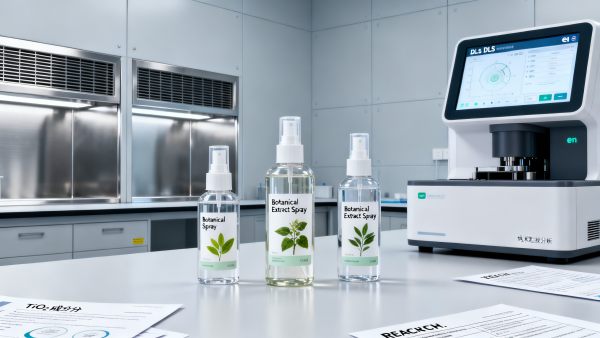
On 21 May 2026, the European Chemicals Agency (ECHA) published a draft amendment to REACH Annex XVII that would restrict nano-sized titanium dioxide (nano-TiO₂) in sprayable botanical extracts—marking a significant regulatory shift for exporters of natural personal care and household products targeting the EU market.
Event Overview
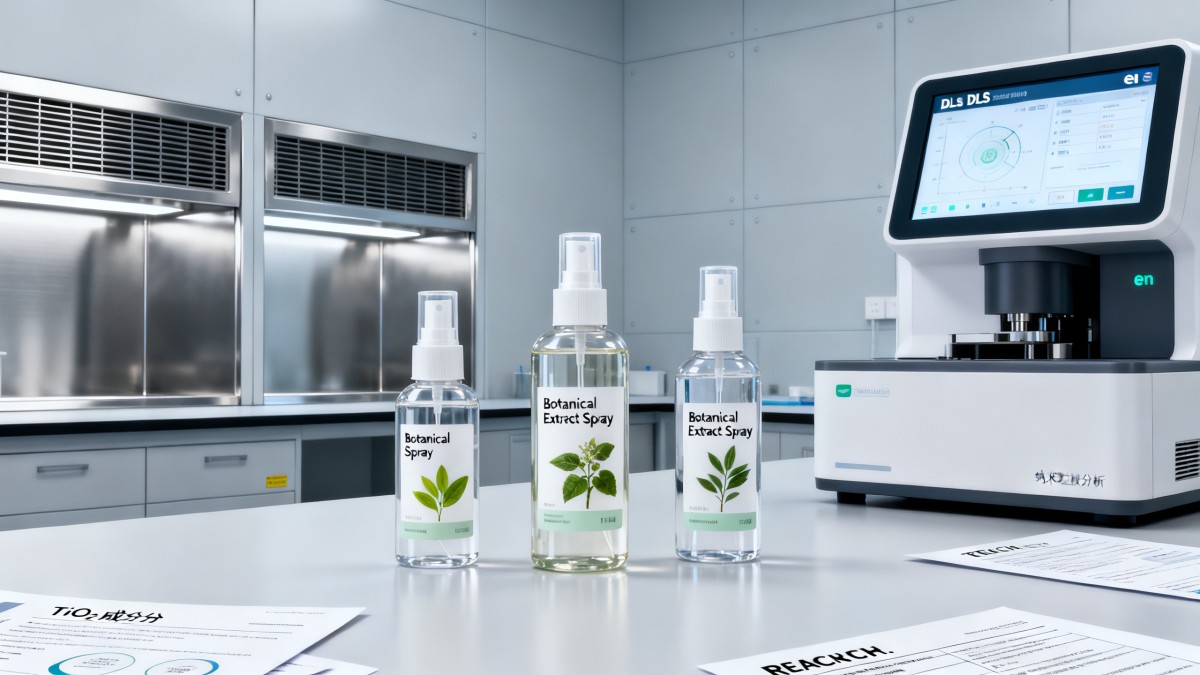
The European Chemicals Agency (ECHA) released a draft revision to REACH Annex XVII on 21 May 2026. The proposal would prohibit the use of nano-TiO₂ in spray formulations of botanical extracts—including insect-repellent sprays and natural fragrance mists—effective from Q3 2027. Exporters of botanical extracts must initiate immediate formulation screening and alternative ingredient validation. EU-authorized distributors are expected to intensify scrutiny of INCI naming conventions and mandatory nano-labeling compliance under CLP and COSMETICS REGULATION (EC) No 1223/2009.
Industries Affected
Direct trading enterprises — Exporters and brand owners placing botanical spray products on the EU market face direct legal exposure. Non-compliance may result in customs rejection, market withdrawal, or penalties under national enforcement authorities. Labeling gaps—especially missing nano-identification or inaccurate INCI declarations—pose immediate operational risk.
Raw material procurement firms — Suppliers sourcing TiO₂ (including pigment-grade or surface-modified variants) must verify particle size distribution data and obtain updated nano-characterisation reports (e.g., via TEM/DLS/SP-ICP-MS). Absence of reliable nano-status documentation increases due diligence burden and contractual liability in supply agreements.
Manufacturing & contract formulators — Facilities producing spray-based botanicals must re-evaluate dispersion stability, UV protection efficacy, and aerosol performance when replacing nano-TiO₂. Reformulation timelines may conflict with existing product registrations, especially where nanomaterials were previously notified under REACH or the Cosmetic Product Notification Portal (CPNP).
Supply chain service providers — Regulatory consultancies, testing labs, and label compliance platforms will see increased demand for nano-characterisation support, CLP classification updates, and EU Responsible Person (RP) verification services—particularly for SMEs lacking in-house regulatory capacity.
Key Focus Areas and Recommended Actions
Conduct immediate nano-TiO₂ presence screening across all spray product lines
Review technical dossiers, supplier SDSs, and particle size test reports—not just declared ingredient names. Nano-status is determined by physical properties (primary particle size
Validate and document alternatives with full regulatory traceability
Preferred substitutes (e.g., non-nano TiO₂, zinc oxide, or plant-derived UV attenuants) must meet both functional performance criteria and EU-specific safety assessments—including potential endocrine disruption concerns flagged in ECHA’s 2025 nano-TiO₂ risk assessment.
Engage EU Authorised Representatives early on labeling and CPNP updates
INCI names must reflect actual nano-status (e.g., ‘Titanium Dioxide’ vs. ‘Titanium Dioxide [nano]’); mislabeling triggers automatic non-compliance under Article 19 of the Cosmetics Regulation—even if the substance itself remains permitted.
Monitor ECHA’s public consultation timeline and dossier submission deadlines
The draft is open for stakeholder comments until 21 November 2026. Submissions must reference dossier ID ‘REACH-ANNEXXVII-2026-004’. Final adoption is expected Q2 2027, with a 12-month transition period before enforcement begins in Q3 2027.
Editorial Perspective / Industry Observation
This proposal signals a broader regulatory pivot toward function-driven nano-material controls—not just hazard-based bans. Observably, ECHA is treating nano-TiO₂ in dispersible spray formats as a distinct exposure scenario, prioritising inhalation risk over dermal or environmental endpoints. Analysis shows this reflects growing alignment between REACH enforcement priorities and the EU’s Chemicals Strategy for Sustainability (CSS), particularly its commitment to ‘safe-by-design’ principles for emerging materials. From an industry perspective, the timing—coinciding with upcoming revisions to the Biocidal Products Regulation (BPR)—suggests coordinated tightening across product categories sharing delivery mechanisms (e.g., sprays, mists, aerosols). Current more critical concern lies not in the ban itself, but in the lack of harmonised nano-testing standards across third-country labs—a gap that could delay compliance verification for non-EU manufacturers.
Conclusion
The proposed nano-TiO₂ restriction is less a standalone measure than a litmus test for how swiftly botanical ingredient supply chains can adapt to increasingly granular, application-specific chemical governance. It underscores that regulatory readiness now hinges less on broad substance inventories and more on precise physicochemical profiling, transparent supply chain mapping, and proactive engagement with EU enforcement frameworks. A measured, evidence-based response—not reactive substitution—is better positioned to sustain market access beyond 2027.
Source Attribution
European Chemicals Agency (ECHA), Draft Annex XVII Amendment Proposal REACH-ANNEXXVII-2026-004, published 21 May 2026. Available at: https://echa.europa.eu/documents/10162/12807232/reach_annexxvii_2026_004_en.pdf.
Note: Final text, effective date, and scope details remain subject to public consultation outcomes and subsequent Commission adoption. Stakeholders should monitor ECHA’s official register for updates through Q2 2027.
Related Intelligence
- Botanical ExtractsChoosing Botanical Extracts for Pharmaceuticals: Potency, Purity, and ComplianceBotanical extracts for pharmaceuticals: learn how to assess potency, purity, traceability, and GMP compliance for confident, regulatory-ready supplier selection.
- Botanical ExtractsBotanical Extracts Market Outlook: Supply, Pricing, and Buyer RisksBotanical extracts market insights on supply, pricing, quality control, and buyer risks—compare suppliers confidently and protect your sourcing strategy.
- Botanical ExtractsEurope Botanical Extracts Market: Key Growth Drivers, Risks, and OpportunitiesEurope botanical extracts market insights: explore growth drivers, regulatory risks, supply-chain challenges, and scalable opportunities for compliant, high-value ingredients.
The Morning Broadsheet
Daily chemical briefings, market shifts, and peer-reviewed summaries delivered to your terminal.
