

The Authority in Global Agricultural Chemistry & Bio-Resources
FDA Updates Aquaculture Drug Residue Testing Guidance
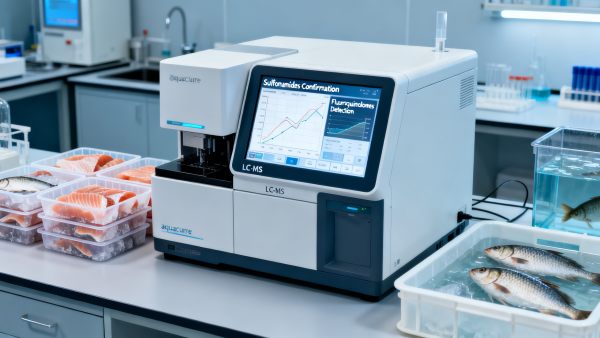
On May 21, 2026, the U.S. Food and Drug Administration (FDA) officially released the revised Aquaculture Drug Residue Testing Guidance, introducing new LC-MS/MS confirmation thresholds for sulfonamides and fluoroquinolones in live fish and frozen fillets—and mandating that importers submit annual audit reports verifying compliance with both GMP and HACCP systems, issued by FDA-recognized third-party certification bodies. The update directly impacts commercial fishing exporters supplying U.S. markets, heightening regulatory scrutiny on residue control and food safety system integrity.
Event Overview
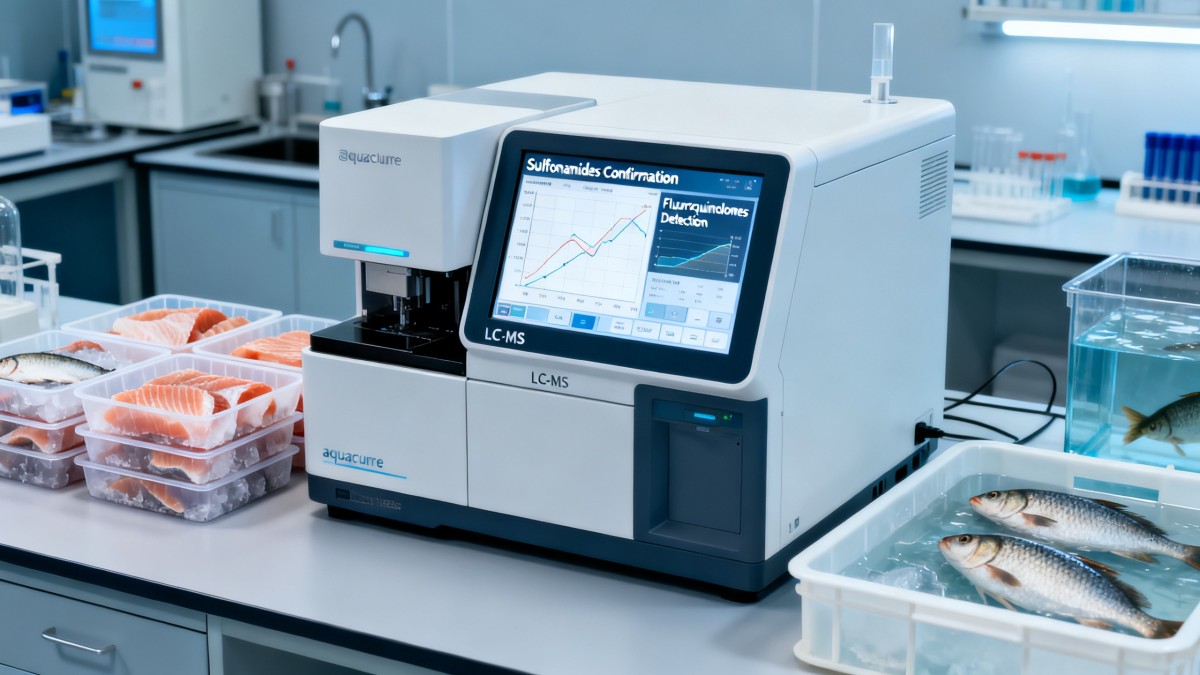
The U.S. FDA published the updated Aquaculture Drug Residue Testing Guidance on May 21, 2026. The revision adds LC-MS/MS-based confirmatory thresholds for sulfonamide and fluoroquinolone residues in live fish and frozen fish fillets. It explicitly requires importers of aquaculture products to provide an annual audit report—conducted by an FDA-recognized third-party body—that verifies concurrent implementation and maintenance of both Good Manufacturing Practice (GMP) and Hazard Analysis and Critical Control Points (HACCP) systems. Commercial Fishing enterprises lacking this dual certification face potential customs delays or full-batch rejections upon U.S. entry.
Industries Affected
Direct Trading Enterprises: Export-oriented commercial fishing companies must now demonstrate dual-system certification to clear U.S. customs. Absence of valid GMP+HACCP audit reports triggers automatic hold or refusal—not just for noncompliant lots, but potentially across consignments linked to the same importer or facility. This increases pre-shipment administrative burden and raises working capital risk due to extended clearance timelines.
Raw Material Procurement Enterprises: Buyers sourcing live or processed aquaculture inputs (e.g., farm-raised tilapia, pangasius, or shrimp) for U.S.-bound export must now vet suppliers’ certification status at the farm and processor levels—not only for residue testing history, but also for documented, audited GMP+HACCP alignment. Reliance on supplier self-declarations is no longer sufficient under the updated guidance.
Processing & Manufacturing Enterprises: Facilities engaged in chilling, freezing, filleting, or value-added processing of aquaculture products must maintain traceable, auditable records linking each batch to upstream GMP+HACCP verification—including environmental monitoring logs, critical control point monitoring sheets, and corrective action documentation. The FDA’s emphasis on ‘system-level’ validation means process audits now extend beyond CCP checks to include sanitation, personnel training, and equipment calibration protocols.
Supply Chain Service Providers: Third-party certification bodies, logistics coordinators, and customs brokers serving U.S.-bound seafood trade must adapt service offerings: certification providers need FDA recognition for dual-system audits; brokers must verify report authenticity and validity windows before filing entry; and cold-chain logistics firms may be asked to retain temperature and handling documentation aligned with HACCP prerequisite programs.
Key Focus Areas and Recommended Actions
Verify FDA Recognition Status of Certification Bodies
Enterprises should cross-check their certifier’s listing in the FDA’s Accredited Third-Party Certification Program database. Not all GMP- or HACCP-only accredited bodies are authorized for combined audits—only those specifically approved for ‘aquaculture food safety systems’ under the revised scope qualify.
Align Residue Testing Protocols with New LC-MS/MS Thresholds
Laboratories conducting pre-shipment testing must validate methods against the newly specified limits for sulfonamides and fluoroquinolones in both live and frozen matrices. Internal QC procedures should reflect the guidance’s requirement for confirmatory analysis—not just screening—and include matrix-matched calibration standards for fillet tissue.
Integrate GMP and HACCP Documentation into a Unified Audit Trail
Rather than maintaining parallel GMP and HACCP files, processors should map GMP elements (e.g., hygiene, sanitation, pest control) as prerequisites supporting HACCP plan execution. Audit readiness now hinges on demonstrable linkage—not just coexistence—between the two systems.
Editorial Perspective / Industry Observation
Analysis shows this update marks a structural shift—not merely a technical refinement—from compound-specific enforcement toward systemic accountability. Observably, the FDA is treating GMP not as a baseline hygiene standard, but as an integral, auditable layer of hazard prevention. From an industry perspective, this signals growing convergence between pharmaceutical residue control and foundational food safety infrastructure. Current data does not indicate immediate expansion to other drug classes—but the inclusion of fluoroquinolones (a class subject to global antimicrobial resistance concerns) suggests future revisions may prioritize public health drivers over trade facilitation logic. It is more accurate to interpret this as a calibrated escalation in regulatory expectations, rather than a sudden barrier.
Conclusion
This guidance reinforces that U.S. market access for aquaculture exports increasingly depends on verifiable, integrated food safety management—not isolated compliance points. For the global seafood supply chain, the implication is clear: dual-system maturity is no longer optional differentiation—it is the operational floor for sustained U.S. trade. Rational observation suggests phased adoption will occur, but early adopters gain measurable advantage in customs predictability and buyer trust.
Source Attribution
U.S. FDA, Guidance for Industry: Aquaculture Drug Residue Testing (Revised Edition), issued May 21, 2026. Available at: https://www.fda.gov/food/guidance-regulation-fda-guidance-documents-industry/aquaculture-drug-residue-testing-guidance.
Additional reference: FDA Third-Party Certification Program Directory (updated quarterly; pending June 2026 refresh).
Note: Implementation timeline, transition allowances, and enforcement discretion remain subject to ongoing FDA field directives—these aspects require continued monitoring.
Related Intelligence
- Commercial FishingWhat Should You Check in a Fishery Equipment Maintenance Contract?What should I look for in a fishery equipment maintenance contract? Explore coverage, response times, costs, records, safety, and biosecurity essentials.
- Commercial FishingDo commercial fishing vessels with hybrid diesel-electric propulsion reduce fuel cost per kg landed by more than 12%?Commercial fishing vessels with hybrid diesel-electric propulsion *can* cut fuel cost per kg landed by >12%—but only under precise operational and infrastructure conditions. Discover the real ROI.
- Commercial FishingHow to Choose Oyster Processing Equipment for Capacity, Hygiene, and Labor EfficiencyOyster processing equipment guide: compare capacity, hygienic design, and labor efficiency to build a reliable, scalable line and make smarter buying decisions.
The Morning Broadsheet
Daily chemical briefings, market shifts, and peer-reviewed summaries delivered to your terminal.
