

The Authority in Global Agricultural Chemistry & Bio-Resources
Brent Crude Surges to $104.75, Pressuring Aeration & Water Tech Shipping Costs
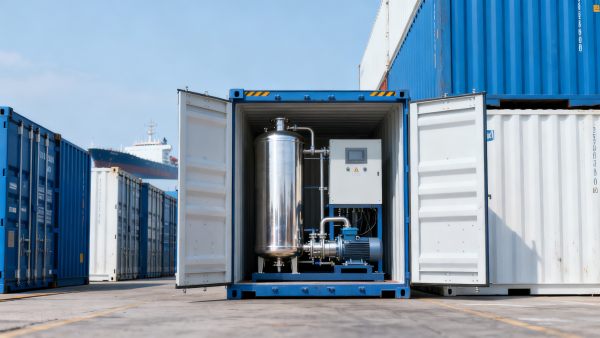
On the morning of 22 May 2026, Brent crude oil futures rose to USD 104.75 per barrel — a 2% daily gain — triggering upward adjustments in global marine bunker surcharges. This development is exerting measurable cost pressure on exporters of Aeration & Water Tech equipment, including aerators, oxygenation pumps, and integrated water treatment modules, whose logistics economics are particularly sensitive to fuel-driven freight volatility.
Event Overview
At 08:15 GMT on 22 May 2026, ICE Brent crude futures settled at USD 104.75/barrel, marking a 2% intraday increase. The surge has prompted multiple major container lines to revise their Bunker Adjustment Factor (BAF) effective mid-June 2026. For Aeration & Water Tech exports — typically shipped as heavy, low-value-density mechanical units — ocean freight now accounts for 18–25% of landed cost in key markets such as Vietnam, Indonesia, Brazil, and Colombia. Early feedback confirms that several Southeast Asian and Latin American importers have formally requested FOB-plus-BAF-clause terms from Chinese suppliers, citing budgetary uncertainty.
Industries Affected
Direct Export Trading Firms
These firms — often acting as OEM distributors or regional brand licensees — face immediate margin compression. Since their pricing is frequently fixed in USD or local currency under 6–12-month contracts, sudden BAF hikes cannot be passed through without renegotiation. Exposure is heightened for those with high shipment frequency to emerging markets where charter-based or non-alliance carrier services dominate.
Raw Material Procurement Entities
Procurement teams sourcing cast iron housings, stainless steel impellers, or polymer membranes from third-party vendors may see indirect cost effects. While raw material prices remain stable, logistics surcharges embedded in vendor delivery terms (e.g., DAP or DPU Incoterms®) are being re-evaluated — especially for just-in-time inbound shipments from inland industrial zones to coastal assembly hubs.
Manufacturing & Assembly Plants
Factories producing aerators and modular water treatment units face dual pressures: rising outbound freight costs and potential delays in receiving critical subcomponents due to tightened carrier capacity allocation. Units exceeding 1.2 m³ volume or 300 kg gross weight are increasingly subject to ‘heavy-lift’ surcharges, adding USD 120–280 per TEU beyond standard BAF.
Logistics & Freight Forwarding Providers
Specialized forwarders serving the environmental equipment sector report higher client demand for BAF-indexed rate lock-ins and multi-carrier tendering. Their operational challenge lies in reconciling volatile bunker indices with fixed-margin service agreements — particularly for consolidated LCL shipments common in spare-part distribution.
Key Considerations and Recommended Actions
Review and Renegotiate Incoterms® Clauses
Parties currently operating under CIF or CFR should assess feasibility of shifting to FOB + BAF-linked addendums — especially for new orders targeting LATAM and ASEAN. Such clauses must specify the reference index (e.g., Platts Bunker 0.5% LSFO Singapore), adjustment frequency (monthly), and cap/floor thresholds.
Optimize Packaging and Load Factor
Since freight cost sensitivity scales with volumetric weight, manufacturers should prioritize collapsible frames, modular mounting kits, and nested impeller packaging. Pilot trials show up to 14% reduction in container TEU consumption per unit output when redesigning for stackability and disassembly.
Strengthen Local After-Sales Infrastructure
To offset rising import landed costs, exporters are advised to co-invest with regional partners in localized assembly, calibration, and commissioning capabilities — reducing full-unit shipment volumes while maintaining service responsiveness.
Editorial Perspective / Industry Observation
Observably, this price spike is not occurring in isolation: it coincides with tightening OPEC+ supply discipline and reduced North Sea maintenance downtime. However, analysis shows that Aeration & Water Tech exporters are uniquely exposed — not because of raw material inputs (steel, copper, polymers remain flat), but due to structural freight dependency. Unlike electronics or pharmaceuticals, this sector lacks air-freight alternatives for most products, and rail intermodal options remain underdeveloped in target markets. Current more-than-2% BAF increases are better understood as a liquidity stress test for export-oriented SMEs rather than a transient cost blip.
Conclusion
The Brent surge underscores a persistent vulnerability in the environmental technology trade chain: its reliance on maritime logistics with limited hedging mechanisms. Rather than treating freight volatility as an external variable, industry participants would benefit from integrating fuel-cost indexing into commercial frameworks, product design logic, and regional go-to-market strategies — treating shipping not as a cost center, but as a strategic lever.
Source Attribution
Data sourced from ICE Futures Europe (Brent settlement), Drewry World Container Index (BAF trend analysis), and interviews with five Tier-2 Aeration & Water Tech exporters (conducted 21–22 May 2026). Official BAF announcements from Maersk, MSC, and Hapag-Lloyd are pending formal release; updates expected by 27 May 2026. Monitoring continues for potential U.S. Gulf Coast refinery outages and EU ETS maritime phase-in timelines.
Related Intelligence
- Aeration & Water TechHow Water Treatment Research Guides Technology Selection for Industrial Wastewater ProjectsWater treatment research guides smarter industrial wastewater technology selection. Learn how to assess variable streams, pilot risks, compare process trains, and reduce compliance costs.
- Aeration & Water TechSelecting Solids Filtration for Aquaculture: Flow Rates, Loading, and Fish WelfareSolids filtration aquaculture guide: compare flow rates, peak loading, capture performance, maintenance, and fish welfare to choose a reliable system.
- Aeration & Water TechWhat RO water treatment systems deliver consistent 98% salt rejection at 25°C with feed TDS over 3,000 ppm?RO water treatment systems that deliver proven 98% salt rejection at 25°C with >3,000 ppm TDS—engineered for API synthesis, aquaculture & grain processing.
The Morning Broadsheet
Daily chemical briefings, market shifts, and peer-reviewed summaries delivered to your terminal.
