

The Authority in Global Agricultural Chemistry & Bio-Resources
GAA Launches RAS 3.0 Certification Framework
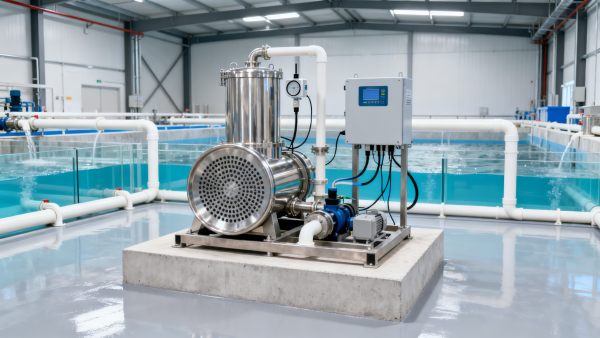
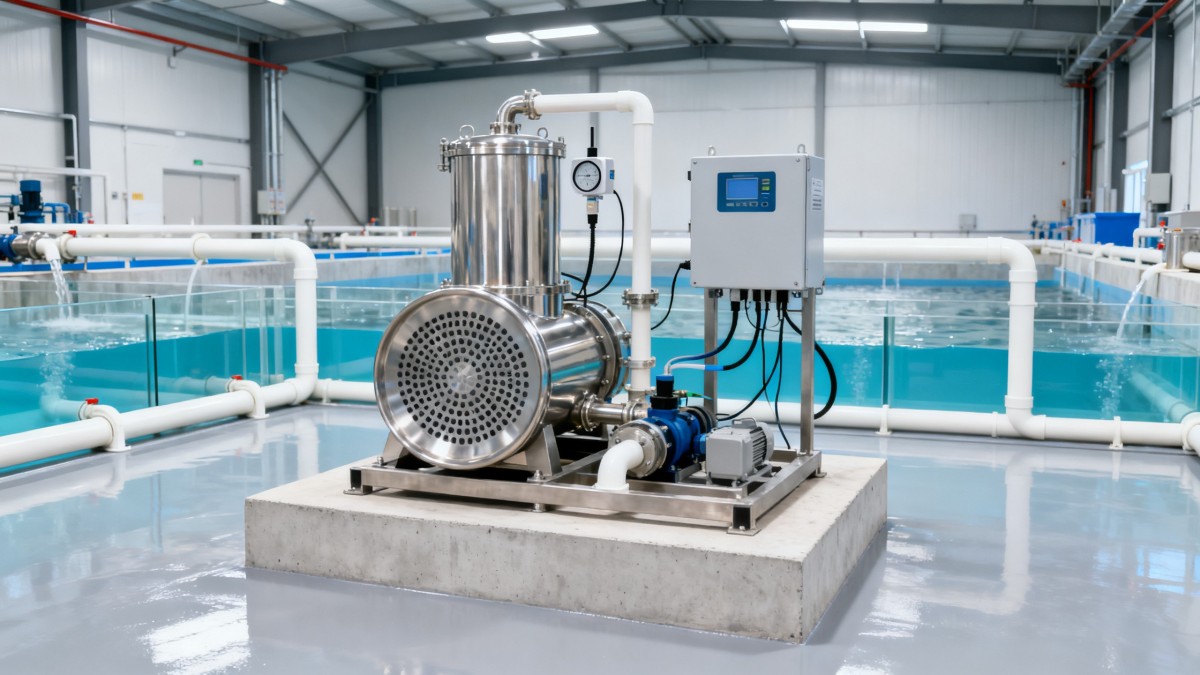
The Global Aquaculture Alliance (GAA) officially launched the RAS 3.0 Certification Framework on May 20, 2026 — a pivotal regulatory development for the recirculating aquaculture systems (RAS) equipment sector. The framework introduces new, enforceable technical benchmarks for aeration and water treatment devices used in commercial RAS facilities, signaling a shift toward performance-based verification over legacy design or compliance-by-declaration approaches. Its implications extend across global supply chains serving land-based fish farming, particularly in North America, Northern Europe, and emerging RAS hubs in Southeast Asia and the Middle East.
Event Overview
GAA released the RAS 3.0 Certification Framework on May 20, 2026. It mandates that all Aeration & Water Tech equipment — including micro-pore diffusers, jet aerators, and ozone generation modules — deployed in commercial RAS operations must pass two core performance tests: (1) dissolved oxygen (DO) dynamic response — achieving ≥95% compliance rate when adjusting DO levels within the 0.5–2.0 mg/L range within 15 seconds; and (2) biofilm inhibition — limiting biofilm surface coverage to ≤3% after 72 hours of continuous operation. The framework will be integrated into the GAA’s ASC (Aquaculture Stewardship Council) certification program as a mandatory module effective October 1, 2026.
Industries Affected
Direct trading enterprises: Exporters and distributors of RAS equipment face immediate recalibration of product portfolios and technical documentation. Pre-2026 stock may require retesting or declassification for ASC-aligned projects; contracts referencing ‘RAS-compliant’ without specifying version risk ambiguity or non-acceptance by certifying bodies post-October 2026.
Raw material procurement enterprises: Suppliers of silicone elastomers, stainless-steel alloys, and ozone-resistant ceramics — critical for diffuser membranes and reactor housings — may see revised material specifications. For example, biofilm resistance testing now directly ties to surface energy and hydrophobicity metrics, prompting tighter QA protocols and traceability requirements for incoming substrates.
Manufacturing enterprises: OEMs and Tier-1 equipment makers must redesign control logic (e.g., real-time DO feedback loops), upgrade sensor integration (e.g., fast-response optical DO probes), and validate long-duration anti-biofilm performance under standardized hydraulic conditions. Notably, the 15-second DO response threshold exceeds current IEC 61800-3 tolerances for many variable-frequency drives used in aerator motors — implying firmware or hardware revisions.
Supply chain service enterprises: Third-party testing labs, certification consultants, and RAS system integrators will experience demand shifts. Labs accredited for ISO/IEC 17025 must expand scope to include dynamic DO response validation protocols; integrators will need updated commissioning checklists and vendor pre-qualification criteria aligned with RAS 3.0’s dual-test structure.
Key Focus Areas and Response Measures
Validate existing device models against both test criteria — not just one
Many manufacturers have historically optimized for either DO efficiency or biofilm resistance. RAS 3.0 requires simultaneous compliance. Firms should prioritize third-party verification of legacy products before Q3 2026 to avoid classification gaps during ASC audits.
Update technical documentation to reflect dynamic performance parameters
Product datasheets must now specify response time, hysteresis, and biofilm growth rate under defined flow/temperature/pH conditions — moving beyond static ‘max DO output’ claims. This affects CE marking dossiers, FDA 510(k)-like submissions for U.S. aquaculture devices, and EU Machinery Directive declarations.
Engage early with ASC-accredited certification bodies on transition pathways
GAA has confirmed transitional allowances for equipment certified under RAS 2.0 prior to October 1, 2026 — but only if revalidation occurs within 12 months of RAS 3.0 enforcement. Companies should secure letters of intent from auditors before August 2026 to lock in phased timelines.
Editorial Perspective / Industry Observation
Observably, RAS 3.0 does not raise absolute performance ceilings — rather, it codifies real-world operational reliability as a baseline requirement. Analysis shows this reflects growing investor and retailer scrutiny of RAS facility uptime and feed-conversion consistency; poor DO dynamics or unchecked biofilm directly correlate with pathogen resurgence and yield volatility. From an industry perspective, the dual-test structure better isolates component-level failure modes than previous whole-system certifications — a step toward modular, interoperable RAS infrastructure. Current more noteworthy is how quickly downstream buyers (e.g., salmon RAS farms in Norway or barramundi operators in Australia) begin citing RAS 3.0 compliance in RFQs — suggesting market pull may accelerate adoption ahead of the formal ASC mandate.
Conclusion
RAS 3.0 marks less a technical revolution than a necessary maturation of standards — aligning equipment certification with the functional demands of industrial-scale, climate-resilient aquaculture. Its emphasis on responsiveness and durability signals that the industry is transitioning from ‘can it run?’ to ‘how predictably and consistently can it sustain optimal conditions?’. Rational observation suggests early adopters gain competitive differentiation not just in certification readiness, but in data-rich performance benchmarking that supports predictive maintenance and life-cycle cost modeling.
Source Attribution
Primary source: Global Aquaculture Alliance (GAA), ‘RAS 3.0 Certification Framework Technical Specification v1.0’, published May 20, 2026 (available at www.aquaculturealliance.org/ras3-0). Additional context drawn from ASC Program Update Briefing, May 2026. Note: Implementation guidance documents, test protocol details, and lab accreditation criteria remain pending — these are under active development and warrant continued monitoring through GAA’s quarterly RAS Standards Working Group updates.
Related Intelligence
- Aeration & Water TechHow Water Treatment Research Guides Technology Selection for Industrial Wastewater ProjectsWater treatment research guides smarter industrial wastewater technology selection. Learn how to assess variable streams, pilot risks, compare process trains, and reduce compliance costs.
- Aeration & Water TechSelecting Solids Filtration for Aquaculture: Flow Rates, Loading, and Fish WelfareSolids filtration aquaculture guide: compare flow rates, peak loading, capture performance, maintenance, and fish welfare to choose a reliable system.
- Aeration & Water TechWhat RO water treatment systems deliver consistent 98% salt rejection at 25°C with feed TDS over 3,000 ppm?RO water treatment systems that deliver proven 98% salt rejection at 25°C with >3,000 ppm TDS—engineered for API synthesis, aquaculture & grain processing.
The Morning Broadsheet
Daily chemical briefings, market shifts, and peer-reviewed summaries delivered to your terminal.
