

The Authority in Global Agricultural Chemistry & Bio-Resources
China Logistics Rebounds as ZTO Buys Back Shares
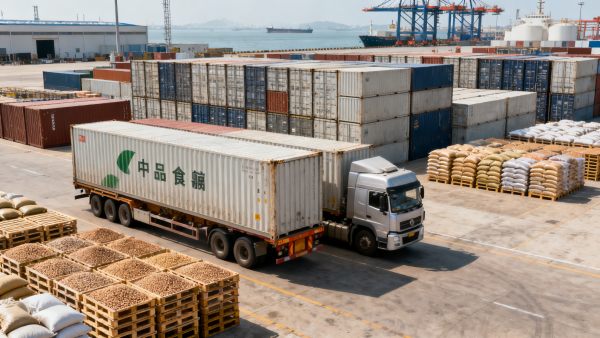
On June 1, 2026, two closely watched logistics signals emerged at the same time: China’s logistics prosperity index returned to expansion territory in May at 50.3%, while ZTO Express spent nearly US$5 million on share repurchases. For exporters and overseas buyers in agricultural and food products, bio-extracts, and commercial feed pellets, this matters because it points to improving stability across key China logistics channels, better sea-and-land coordination, and stronger delivery visibility ahead of Q3 replenishment decisions.
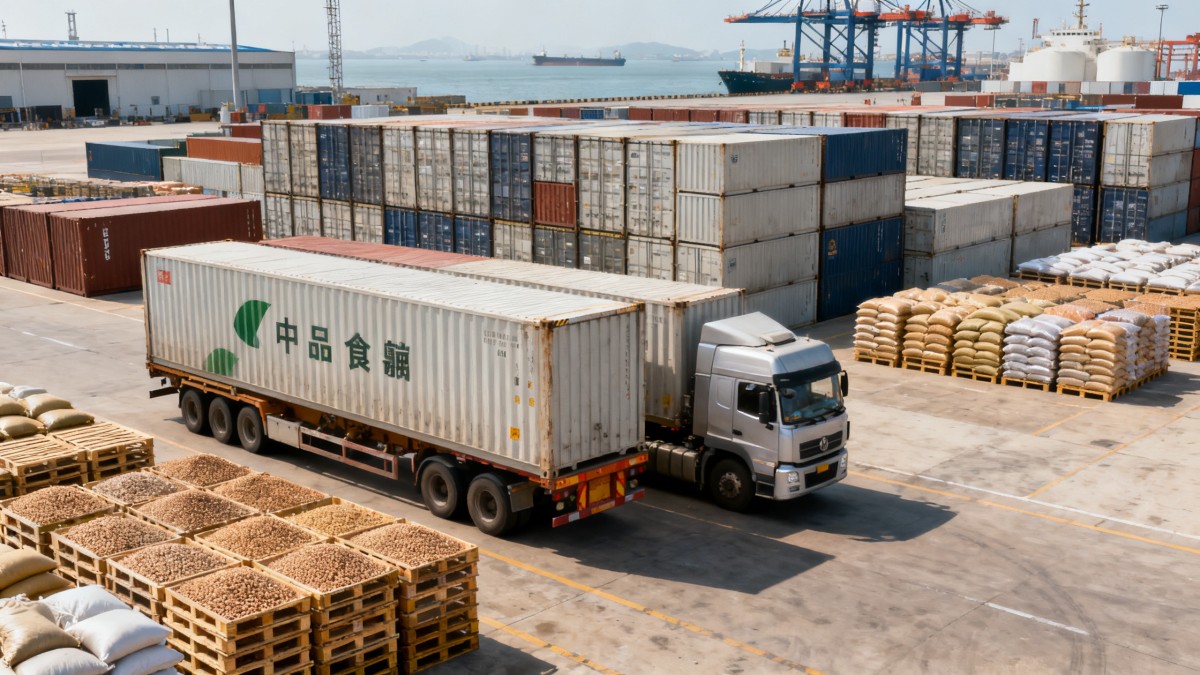
Event Overview
According to the information released for May, China’s logistics industry prosperity index rose to 50.3%, returning to expansion territory. At the same time, the new orders index increased for a third consecutive month. On June 1, 2026, ZTO Express also carried out a share repurchase worth nearly US$5 million.
From the confirmed information currently available, these two developments were highlighted together as signals related to supply chain stability. The market relevance is centered on the recovery of key logistics channels for exports of agricultural and food products, bio-extracts, and commercial feed pellets, as well as on improving connection efficiency between maritime and inland transportation.
Which Industry Segments Are Affected
Direct trading exporters
Direct exporters are affected first because shipment timing, booking coordination, and cargo handover efficiency directly influence their ability to quote and fulfill export orders. Analysis shows that a return of the logistics prosperity index to expansion territory, together with a continued rise in new orders, is more suitable to understand as a sign of improving transport confidence rather than as a guarantee of uniformly smooth operations.
The main impact for this group is on delivery predictability, customer communication, and Q3 replenishment planning. For exporters serving overseas buyers of agricultural and food products, bio-extracts, and commercial feed pellets, stronger logistics visibility can help reduce uncertainty in lead-time discussions.
Raw material procurement companies
Procurement-side companies are affected because any improvement in domestic logistics activity can influence inbound movement of materials, warehouse scheduling, and production preparation. From an industry perspective, when logistics indicators improve and new orders keep rising, procurement teams may face changes in supplier response times and dispatch rhythm.
The impact is mainly reflected in purchase timing, inventory positioning, and coordination with suppliers on dispatch windows. This is especially relevant for businesses that need stable turnover between sourcing, processing, and export shipment preparation.
Processing and manufacturing enterprises
Processors and manufacturers linked to export-oriented agricultural and food products, bio-extracts, and commercial feed pellets are affected because production planning often depends on how reliably finished goods can move from factories to ports or inland transfer nodes. Observably, better sea-and-land connection efficiency can support tighter alignment between production completion dates and outbound logistics arrangements.
The main impact here is on production scheduling, finished-goods storage pressure, and contract fulfillment confidence. Current developments are more suitable to understand as an operational planning signal, especially for companies preparing Q3 shipments.
Channel distribution and overseas buyers
Distributors and overseas procurement teams are affected because restocking decisions depend heavily on transit certainty and the risk of delay. Current developments are more worth watching because they may improve confidence in shipment timing from China, particularly for categories that depend on coordinated inland transport and export loading.
The main impact is on replenishment rhythm, buffer-stock decisions, and purchasing cadence for Q3. Analysis shows that buyers may use this information to reassess whether to place orders in stages or maintain higher safety stock, but the news itself does not confirm that all delivery risks have been removed.
Supply chain service providers
Freight forwarders, logistics coordinators, and integrated supply chain service providers are also directly affected. They sit between cargo owners and transport capacity, so changes in logistics sentiment and order momentum often show up quickly in booking requests, route coordination, and customer expectations.
The impact is mainly reflected in customer communication, multimodal coordination, and service-level commitments. From an industry perspective, ZTO Express’s share repurchase is more suitable to understand as a market-facing confidence signal related to supply chain stability, which service providers may need to address in client planning conversations.
What Companies and Practitioners Should Watch and How to Respond
Track follow-up official logistics signals rather than relying on a single month
Companies should continue monitoring subsequent official logistics readings and order-related indicators instead of treating one month’s return to expansion as a fully established trend. Observably, the May reading and the three-month rise in new orders provide a directional signal, but practical decisions should still be tied to ongoing data and actual shipment performance.
Reassess Q3 restocking and shipment windows by product category
Exporters and overseas buyers should review replenishment timing for agricultural and food products, bio-extracts, and commercial feed pellets separately. Analysis shows that these categories may not move with identical rhythm even when broad logistics conditions improve, so shipment plans should be updated by product line, lead time sensitivity, and customer delivery windows.
Separate sentiment signals from operational execution
Current developments include both an industry indicator and a corporate capital action. From an industry perspective, these should not be treated as the same type of evidence. The logistics prosperity index and new orders trend relate more directly to activity conditions, while the ZTO Express buyback is better understood as a confidence-related signal. Businesses should therefore verify actual handover efficiency, route coordination, and dispatch consistency in daily operations.
Prepare procurement, inventory, and customer communication plans in advance
Companies with Q3 exposure should use this period to refine order confirmation timelines, safety-stock assumptions, and buyer communication templates. Current developments are more worth watching because improving delivery certainty can change how much inventory companies need to hold and how early they need to lock in shipments. Practical preparation now can help firms respond faster if logistics recovery continues.
Editor’s View / Industry Observation
Observably, this news matters less as an isolated headline and more as a combined signal for logistics-linked trade activity. The return of China’s logistics prosperity index to expansion territory and the continued rise in new orders suggest that transport demand and operating confidence may be improving. At the same time, ZTO Express’s share repurchase adds a market-facing signal tied to stability expectations.
Analysis shows that this should not yet be treated as a completed outcome across the full supply chain. It is more suitable to understand as an early-stage positive signal for export logistics tied to agricultural and food products, bio-extracts, and commercial feed pellets. That is exactly why the industry needs continued attention: businesses must determine whether sentiment improvement will translate into sustained delivery performance, smoother sea-and-land coordination, and more reliable Q3 shipment execution.
In practical terms, the most important takeaway is not that all constraints have disappeared, but that exporters, buyers, manufacturers, and supply chain service providers may now have a stronger basis for reviewing restocking pace and inventory strategy with more confidence than in earlier periods.
Conclusion
The combination of a rebound in China’s logistics prosperity index and ZTO Express’s June 1 share repurchase carries clear relevance for trade and supply-chain-linked sectors. For exporters of agricultural and food products, bio-extracts, and commercial feed pellets, the key industry meaning lies in improving logistics visibility and stronger expectations for transport coordination.
From an industry perspective, the current development is better understood as a constructive signal rather than definitive proof of a fully normalized logistics environment. A rational reading is that market participants should stay alert to follow-up data, align Q3 procurement and shipment plans carefully, and use the improving signal to refine inventory and delivery strategies rather than assume risk has fully disappeared.
Source Information
Main sources: the provided event information on China’s May logistics prosperity index returning to 50.3%, the reported three-month rise in the new orders index, and the June 1, 2026 information that ZTO Express repurchased shares worth nearly US$5 million.
Items requiring continued observation: whether the logistics rebound remains sustained in subsequent official readings, and whether the reported improvement in sea-and-land coordination translates into consistent on-the-ground delivery performance for export-oriented supply chains.
Related Intelligence
- Grain Silos & StorageHow Modular Feed and Grain Systems Support Scalable Storage and Processing ExpansionModular feed and grain systems enable smarter, scalable expansion across storage, conveying, processing, and loadout. Discover how to eliminate bottlenecks, protect future capacity, and keep operations moving.
- Grain Silos & StorageHow to Size a Grain Pre-Cleaner for Capacity, Crop Type, and Impurity LoadGrain pre cleaner machine sizing guide: match capacity, crop type, moisture, and impurity load to improve flow, separation quality, and downstream performance.
- Grain Silos & StorageHow Can You Verify That a Grain Handling System Meets Export Standards?How do I know if a grain handling system meets export standards? Explore practical checks for traceability, sanitation, quality control, and export-ready compliance.
The Morning Broadsheet
Daily chemical briefings, market shifts, and peer-reviewed summaries delivered to your terminal.
