

The Authority in Global Agricultural Chemistry & Bio-Resources
Why feed & grain processing technology affects output
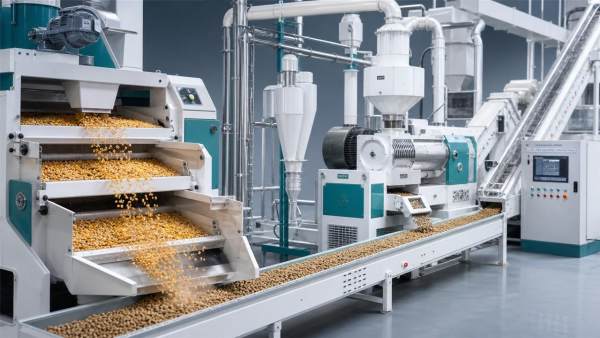
Why does Feed & Grain processing technology have such a decisive impact on output? For business decision-makers, the answer goes far beyond machinery selection. It shapes throughput, raw material efficiency, product consistency, energy use, and regulatory compliance across the entire production chain. In a market defined by cost pressure and quality demands, understanding this technology is essential for improving operational performance and securing long-term competitive advantage.
For executives in feed mills, grain handling businesses, integrated farming groups, and ingredient processing operations, output is no longer measured only by tonnage per hour. It is increasingly judged by yield loss below 1%–2%, stable moisture control, predictable downtime, traceability readiness, and the ability to shift product formats without major reconfiguration.
That is why Feed & Grain processing technology has become a board-level topic. Decisions around cleaning, grinding, batching, pelleting, drying, cooling, storage, and automation directly influence cost per ton, customer acceptance, and compliance exposure. In practical terms, the right process design can improve usable output, while the wrong one can lock a plant into chronic waste, rework, and margin erosion.
How Feed & Grain Processing Technology Directly Shapes Output
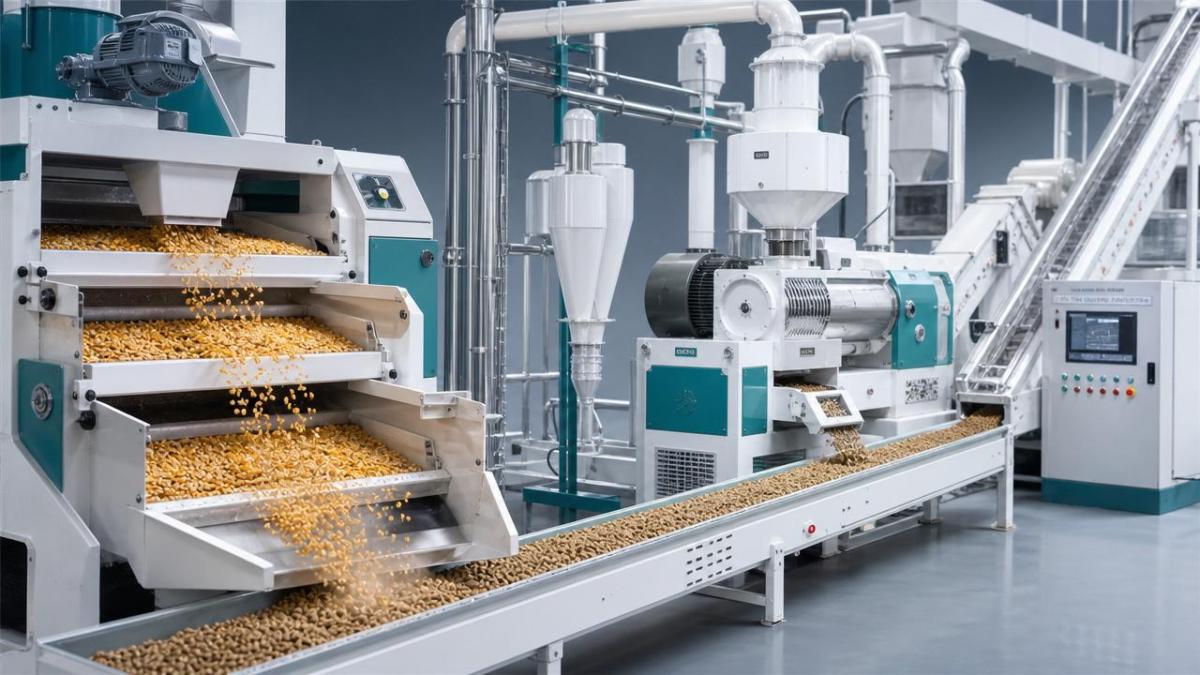
Output in feed and grain operations is the result of an interconnected system, not a single machine. A line rated at 20 tons per hour on paper may deliver only 15–17 tons per hour in real conditions if screening is poor, grind size is inconsistent, or material flow bottlenecks create stop-start production.
For this reason, business buyers should assess technology as a process chain with at least 6 linked stages: intake, cleaning, size reduction, dosing and mixing, thermal treatment or pelleting, and final storage or packing. Weakness in any one stage can reduce total line efficiency by 5%–15%.
Throughput Depends on Flow Stability, Not Only Installed Capacity
Many capital projects overestimate output because they focus on nameplate capacity. In practice, throughput is determined by the slowest stage in the line. If conveyors are undersized, hammer mill screens clog, or pellet cooling cannot match upstream speed, the entire system loses pace.
A well-engineered Feed & Grain processing technology setup typically targets 80%–90% sustained utilization rather than 100% peak rating. This allows room for maintenance, formulation changes, and raw material variability. Plants that chase peak numbers often face frequent interruptions, higher wear, and unstable product quality.
Raw Material Efficiency Is a Major Profit Lever
In grain and feed processing, even a small yield difference has meaningful financial impact. A 0.5% increase in fines, breakage, dust loss, or moisture deviation can materially affect annual profitability when plants handle 50,000 to 200,000 tons per year.
Processing technology determines how much of the incoming raw material becomes saleable output. Better aspiration, calibrated grinding, precise dosing, and controlled conditioning all help reduce waste. Decision-makers should therefore evaluate output in terms of net recoverable product, not just gross throughput.
Typical Areas Where Output Is Lost
- Impurity removal that is either too weak or too aggressive
- Particle size variation above the formulation tolerance range
- Uneven moisture distribution during conditioning or drying
- Pellet breakage during cooling, handling, or transfer
- Manual batching errors in micro-ingredient addition
- Unplanned downtime from poor preventive maintenance cycles
The table below shows how different processing stages influence output, cost, and quality in a typical commercial operation.
The key takeaway is that output is a compound result. When decision-makers invest only in front-end capacity, they often miss downstream constraints that dilute returns. A balanced process line usually outperforms an oversized but poorly integrated system.
Consistency Matters as Much as Volume
In B2B supply chains, inconsistent output can be more damaging than lower output. Buyers of feed, grain ingredients, or processed inputs expect repeatable specifications across batch after batch. Variability in particle size, density, moisture, or contamination levels can trigger claims, delays, and contract risk.
Modern Feed & Grain processing technology supports consistency through sensors, automated controls, recipe management, and in-line monitoring. For a plant serving multiple formulations, the ability to maintain repeatability within narrow bands can be a stronger commercial advantage than simply adding extra hourly capacity.
The Operational Levers That Decision-Makers Should Evaluate
When assessing a new line, retrofit, or supplier proposal, leaders should examine more than capital expenditure. The most important factors usually appear in four areas: process fit, automation depth, maintenance burden, and compliance readiness. These factors determine whether output gains are sustainable over 3–7 years.
1. Process Fit for the Actual Product Mix
A line designed for uniform cereal grains may struggle with oilseed meals, fibrous ingredients, aquatic feed inputs, or variable by-products. Each raw material behaves differently in grinding, mixing, conveying, and thermal treatment. Technology selection should therefore start with a matrix of at least 5 variables: moisture, oil content, fiber level, bulk density, and contamination risk.
For example, plants producing poultry feed, aqua feed, and grain-based ingredients on the same site often need more flexible control logic and more frequent cleaning cycles. Without this, changeover time can exceed 30–60 minutes per formulation, cutting daily output significantly.
2. Automation and Data Visibility
Automation does more than reduce labor. It improves dosing accuracy, traceability, alarm response, and production scheduling. In many medium-to-large facilities, automated batching can narrow ingredient variance to a much tighter band than manual operations, which supports quality compliance and reduces rework.
From a management perspective, the best Feed & Grain processing technology platforms provide real-time visibility into throughput, energy draw, downtime events, and batch histories. That data allows plant managers to identify whether output loss comes from equipment wear, operator behavior, or inconsistent incoming raw materials.
Practical Evaluation Checklist
- Can the system maintain stable output across 2–3 major product categories?
- Is recipe control integrated with dosing, mixing, and packaging records?
- How many manual intervention points remain in the line?
- What is the average cleaning and changeover time per batch family?
- Does the supplier define spare parts and service intervals clearly?
3. Maintenance Cycles and Reliability Economics
A technology package that appears efficient at commissioning can become expensive if wear components need frequent replacement or service access is poor. In feed and grain plants, screens, dies, rollers, bearings, seals, and conveying elements can drive hidden lifecycle cost if maintenance planning is weak.
Decision-makers should request maintenance intervals in operating hours, not vague service claims. For example, asking whether a component typically requires inspection every 250 hours, lubrication every 500 hours, or replacement after a defined wear threshold gives a more realistic picture of uptime risk.
The comparison below helps procurement teams evaluate which technical factors influence total output performance after installation.
Procurement teams often focus heavily on purchase price, yet post-installation factors usually determine whether expected output is actually realized. Reliable service access and predictable maintenance can be as important as the initial equipment specification.
4. Compliance, Safety, and Traceability Readiness
In regulated agricultural and ingredient supply chains, output cannot be separated from compliance. If a system lacks hygienic design, dust control, lot traceability, or documented process records, production gains may be offset by audit issues, rejected shipments, or internal quality holds.
Business leaders should verify whether the process design supports standard operating procedures, cleaning validation logic, and batch documentation. Even when exact regulatory obligations vary by market, plants that build traceability into the line from day one are better positioned for customer audits and cross-border trade requirements.
Implementation Priorities for Higher Output and Lower Risk
The commercial value of Feed & Grain processing technology is realized only when implementation matches operational reality. Many projects underperform not because the machinery is inadequate, but because commissioning, training, raw material mapping, and performance verification were handled too narrowly.
Build Around a Measured Baseline
Before approving upgrades or a new process line, decision-makers should define a baseline across at least 6 indicators: tons per hour, energy per ton, moisture variance, fines rate, downtime hours per month, and labor input per shift. Without a baseline, return on investment becomes difficult to verify after commissioning.
This step is especially important for multi-site groups and integrated operators. A plant may believe its main constraint is pelleting capacity, while actual data shows the larger loss comes from intake delays or inconsistent pre-cleaning. Technology decisions should solve the biggest bottleneck first.
Plan Commissioning in Stages
A practical rollout often works best in 3 stages. Stage one validates mechanical function and safety. Stage two stabilizes process parameters such as screen size, steam input, residence time, and cooling profile. Stage three confirms commercial output under actual product mix conditions over 2–4 weeks.
This staged method helps management distinguish between temporary startup issues and structural design problems. It also reduces the risk of judging the investment too early based on a short commissioning window.
Common Implementation Mistakes
- Using supplier demo material rather than actual plant raw materials during trials
- Skipping operator training beyond basic start-stop procedures
- Ignoring dust, airflow, or aspiration balance in retrofit projects
- Failing to define acceptance criteria for output, quality, and downtime
- Underestimating spare parts demand for the first 6–12 months
Align Technology Decisions With Commercial Strategy
The right answer is not always the largest or most automated system. A business focused on premium specialty feed may benefit more from formulation accuracy, traceability, and quick changeovers than from maximum throughput. By contrast, a bulk grain processor may prioritize flow stability, drying control, and low operating cost per ton.
That is why executives should match Feed & Grain processing technology choices to customer mix, margin profile, export requirements, and expansion plans over the next 24–60 months. Technology creates advantage only when it supports the plant’s actual revenue model.
What Institutional Buyers and Partners Look For
Industrial buyers, procurement teams, and strategic partners increasingly assess whether a supplier can deliver consistent output at scale with documented controls. They want to see operational discipline, not just installed machinery. In this context, processing technology becomes a signal of reliability, not merely a production tool.
For companies seeking stronger market credibility, technical publishing and transparent process communication also matter. A well-documented manufacturing capability, supported by engineering detail and operational logic, helps buyers understand how output quality is achieved and maintained over time.
Why This Topic Matters for Strategic Industry Positioning
For organizations operating across agriculture, biochemicals, primary processing, and industrial supply chains, Feed & Grain processing technology sits at the intersection of productivity, compliance, and commercial trust. It affects how efficiently raw materials are converted, how consistently buyers are served, and how credibly a producer can present its operational standards to the market.
In sectors where procurement decisions are increasingly technical and risk-sensitive, leaders need more than supplier brochures. They need clear process intelligence, realistic performance benchmarks, and disciplined evaluation criteria. That is where specialist industry analysis becomes useful for turning operational data into better investment decisions.
AgriChem Chronicle provides that decision support environment by connecting process knowledge with industrial buying priorities. For manufacturers, equipment providers, and processing enterprises seeking stronger visibility among institutional buyers, informed content and technical positioning can reinforce commercial credibility as effectively as capacity expansion.
If your organization is reviewing new Feed & Grain processing technology, planning a plant upgrade, or looking to communicate validated capabilities to a global B2B audience, now is the time to move from general claims to evidence-based strategy. Contact AgriChem Chronicle to explore tailored editorial collaboration, request deeper sector insight, or learn more solutions that support higher-output, lower-risk industrial growth.
Related Intelligence
- Milling MachineryCan Agricultural Scientists Validate Grain Processing Machinery?Can agricultural scientists validate process machinery performance? Discover how grain equipment testing verifies throughput, quality, and efficiency before you invest.
- Milling MachineryGrain Processing Explained: From Cleaning and Milling to Finished Product QualityGrain Processing explained: discover how cleaning, conditioning, milling, and quality control turn raw grain into safe, consistent flour, feed, and food ingredients.
- Milling MachineryGerman Grain Processing Plants: Evaluating Automation and Energy-Efficiency UpgradesGrain processing Germany: evaluate automation and energy-efficiency upgrades to improve throughput, quality, safety, and lifecycle value.
The Morning Broadsheet
Daily chemical briefings, market shifts, and peer-reviewed summaries delivered to your terminal.
