

The Authority in Global Agricultural Chemistry & Bio-Resources
What really matters when choosing surimi processing equipment

Choosing surimi processing equipment is not just about capacity or price—it directly affects product consistency, food safety compliance, operating efficiency, and long-term return on investment. For procurement professionals evaluating suppliers, the right decision depends on understanding technical specifications, hygiene standards, automation levels, and after-sales support. This article outlines the key factors that truly matter when selecting surimi processing equipment for reliable industrial performance.
In industrial fish processing, a line that performs well on paper can still underdeliver once raw material variability, sanitation pressure, labor constraints, and export compliance enter the equation. Procurement teams therefore need a more disciplined framework that goes beyond quotation comparisons.
For buyers serving frozen surimi blocks, seafood ingredients, or value-added fish paste applications, the most reliable procurement decisions usually balance 4 priorities: throughput stability, hygiene design, process control, and supplier support across the equipment life cycle.
Why equipment selection has a direct impact on surimi quality and plant economics
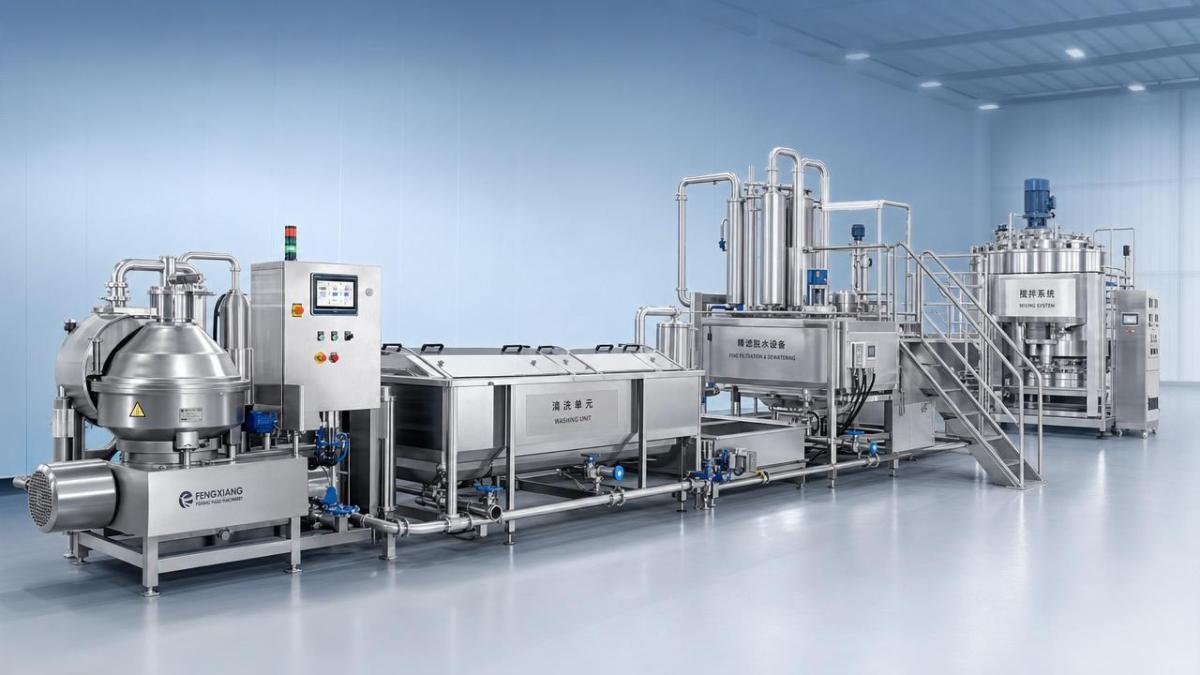
Surimi processing equipment is a system decision, not a single-machine purchase. The performance of meat separators, washing units, refiners, dewatering equipment, mixers, and forming or freezing sections determines whether the final product meets expected gel strength, whiteness, moisture control, and batch consistency.
A line designed for 1 ton per hour but fed with inconsistent raw fish size, variable temperature, or poor wash-water control may create yield losses of 3%–8%. In large-volume operations, that gap can quickly outweigh an apparently attractive purchase price.
The hidden cost of buying only on price
Low upfront cost often means compromise in contact material quality, weld finishing, CIP compatibility, drive components, or spare parts availability. These issues tend to appear within the first 6–18 months through higher downtime, difficult cleaning, or unstable product texture.
For procurement personnel, the real benchmark is total cost of ownership over a 5–10 year operating period. That includes energy consumption, labor intensity, preventive maintenance intervals, reject rate, sanitation time, and service response speed.
What quality-sensitive buyers should monitor
- Raw material temperature management, commonly maintained near 0°C–10°C during critical stages
- Mesh, screen, and refining accuracy for bone, skin, and connective tissue removal
- Water usage and washing-stage control, often configured in 2–4 cycles depending on species
- Dewatering consistency to avoid excessive moisture variation in downstream mixing
- Automation logic for speed synchronization between upstream and downstream equipment
The table below shows how common procurement priorities connect to measurable operating outcomes in a surimi plant.
For most procurement teams, this comparison makes one point clear: the best surimi processing equipment is rarely the cheapest option at purchase. It is the option that protects output quality, simplifies compliance, and keeps operating losses within a predictable range.
Technical specifications that matter more than headline capacity
Suppliers often lead with nominal throughput such as 500 kg/h, 1 t/h, or 3 t/h. Capacity matters, but procurement professionals should treat it as only one parameter among several. In surimi processing equipment, stable performance under real factory conditions is more important than peak output under ideal conditions.
Key machine-stage parameters to review
1. Raw fish handling and meat recovery
Ask for recovery performance by fish type, not generic numbers alone. Lean species, fatty species, freshwater fish, and marine fish can behave differently in separation and washing stages. A supplier should explain the acceptable input size range, trimming requirements, and bone or skin handling limitations.
2. Washing and refining design
Washing stages typically determine odor reduction, pigment removal, and protein concentration. Buyers should confirm wash-water ratio, agitation method, cycle duration, and discharge control. In many plants, 2–3 washing stages are standard, while premium-grade output may require tighter process adjustment.
3. Dewatering and moisture control
If dewatering is too aggressive, protein functionality may suffer. If it is too weak, downstream mixing and freezing become less stable. Procurement teams should ask what moisture variation range the equipment can realistically maintain across continuous operation, especially during long production runs of 8–12 hours.
4. Mixing, additives incorporation, and temperature rise
The mixing stage affects cryoprotectant distribution, texture, and product uniformity. Review batch time, torque handling, and temperature increase during mixing. Even a rise of a few degrees can influence protein behavior, especially in high-throughput seafood ingredient plants.
The specification checklist below can help procurement teams compare suppliers on practical technical terms instead of marketing language.
A technically strong quote should make these points visible before ordering. If the supplier cannot explain real operating limits, cleaning demands, or material compatibility, the risk to procurement is higher than the quoted savings suggest.
Hygiene design, compliance, and plant-level risk reduction
In seafood processing, hygiene is not a secondary feature. It shapes audit readiness, labor requirements, product safety, and export viability. For this reason, surimi processing equipment should be evaluated as part of a sanitation system, not just a production asset.
Construction details buyers should inspect
- Food-contact stainless steel surfaces with smooth, cleanable finishing
- Minimal dead zones where slurry, proteins, or wash residue can accumulate
- Accessible covers and removable parts for cleaning within routine shift changeovers
- Drainage geometry that avoids standing water after sanitation
- Seal, gasket, and bearing arrangements suitable for wet, washdown-heavy environments
A buyer should also check whether the equipment design supports plant sanitation targets such as 30–90 minute cleaning windows between product runs. Complex dismantling or poor access can increase labor use and raise contamination exposure.
Documentation and compliance readiness
Procurement teams serving regulated food markets should request material lists, wiring documentation, utility requirements, recommended cleaning procedures, and commissioning protocols. Even when local rules differ, clear documentation reduces validation time and simplifies internal approval workflows.
This is particularly relevant for multinational seafood processors that align purchasing decisions with customer audits, HACCP plans, plant engineering reviews, and import-market expectations. Missing technical files can delay startup by 2–4 weeks or more.
Automation, maintenance, and supplier support after installation
Even robust surimi processing equipment can become a weak investment if operator dependency is high or maintenance support is slow. For procurement personnel, the post-installation phase is where supplier quality becomes visible.
How automation changes procurement value
Basic controls may be acceptable for small facilities, but medium and large industrial plants usually benefit from PLC-based systems with alarm history, parameter locking, and recipe management. These features reduce variation between shifts and help new operators reach acceptable performance more quickly.
In practical terms, better automation can reduce manual interventions by several steps per batch, improve synchronization across 3–5 linked machines, and support more stable operation during long production cycles.
Maintenance questions that belong in every RFQ
- What are the recommended preventive maintenance intervals for key wear parts?
- Which components typically require replacement within the first 12 months?
- What spare parts should be stocked locally for 30, 60, and 90 days of operation?
- Is remote diagnostics available, and what is the normal response time?
- How long does on-site commissioning usually take—3 days, 7 days, or longer?
A supplier that answers these points clearly is easier to work with over the full life of the asset. For many seafood plants, a 24–72 hour response window for urgent support and defined spare parts planning is more valuable than a small discount at order stage.
Common procurement mistakes
One common mistake is specifying only target capacity without defining fish species, desired product grade, available utilities, sanitation routines, and staffing level. Another is accepting a generic line layout that has not been adapted to floor space, cold-chain flow, or wastewater handling.
Procurement teams can reduce these risks by running a 5-point evaluation: process fit, hygiene design, control architecture, service support, and lifecycle cost. This structure makes supplier comparison more objective and easier to defend internally.
A practical sourcing framework for procurement teams
When multiple suppliers appear similar, a structured sourcing model helps separate credible options from incomplete offers. The best approach is to score each quotation against technical, operational, and commercial criteria before final negotiation.
Suggested 6-step evaluation process
- Define raw material profile, target output grade, and expected hourly throughput.
- Confirm line scope, from separation to washing, refining, dewatering, mixing, and freezing interface.
- Review hygiene design, cleaning access, and material-contact details.
- Check automation functions, utility load, and integration with plant operations.
- Evaluate spare parts policy, training, commissioning, and support commitments.
- Compare total cost of ownership over a multi-year operating period.
This framework is especially useful for institutional buyers, seafood processors expanding export capacity, and OEM procurement teams looking to standardize line performance across more than one plant.
The right surimi processing equipment should match product specification, factory discipline, and service expectations at the same time. Buyers who evaluate only price and nominal output often inherit avoidable downtime, sanitation inefficiency, or unstable product quality later.
For procurement professionals, the strongest purchasing decision is usually the one built on measurable process fit, cleanability, maintainability, and supplier responsiveness. If you are reviewing suppliers or planning a new seafood processing line, now is the right time to request a tailored equipment assessment, compare technical options in detail, and get a customized solution for reliable industrial performance.
Related Intelligence
- Milling MachineryCan Agricultural Scientists Validate Grain Processing Machinery?Can agricultural scientists validate process machinery performance? Discover how grain equipment testing verifies throughput, quality, and efficiency before you invest.
- Milling MachineryGrain Processing Explained: From Cleaning and Milling to Finished Product QualityGrain Processing explained: discover how cleaning, conditioning, milling, and quality control turn raw grain into safe, consistent flour, feed, and food ingredients.
- Milling MachineryGerman Grain Processing Plants: Evaluating Automation and Energy-Efficiency UpgradesGrain processing Germany: evaluate automation and energy-efficiency upgrades to improve throughput, quality, safety, and lifecycle value.
The Morning Broadsheet
Daily chemical briefings, market shifts, and peer-reviewed summaries delivered to your terminal.
