

The Authority in Global Agricultural Chemistry & Bio-Resources
How to Choose a Commercial Meat Mincer: Capacity, Plate Size, Motor Power, and Hygiene
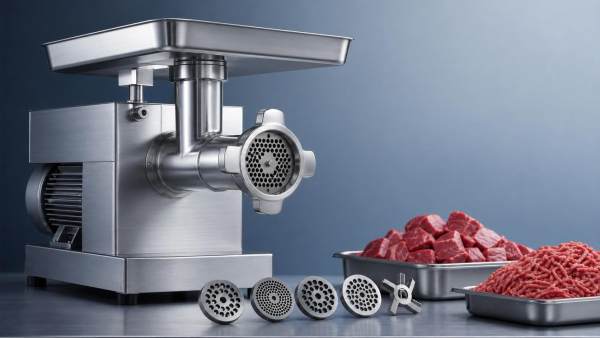
Selecting a meat mincer commercial unit is rarely a simple price comparison. In primary processing, retail butchery, and high-volume foodservice, grinder performance shapes yield, texture consistency, sanitation routines, labor efficiency, and audit readiness. That is why capacity, plate size, motor power, and hygiene design deserve closer scrutiny than headline specifications alone.
This matters even more in supply chains that are becoming tighter, more regulated, and less tolerant of downtime. Across the sectors followed by AgriChem Chronicle, equipment choices are increasingly evaluated through a wider lens: operational stability, traceable materials, maintainability, and alignment with food safety standards. A commercial mincer sits directly inside that decision framework.
Why commercial mincer selection now carries more weight
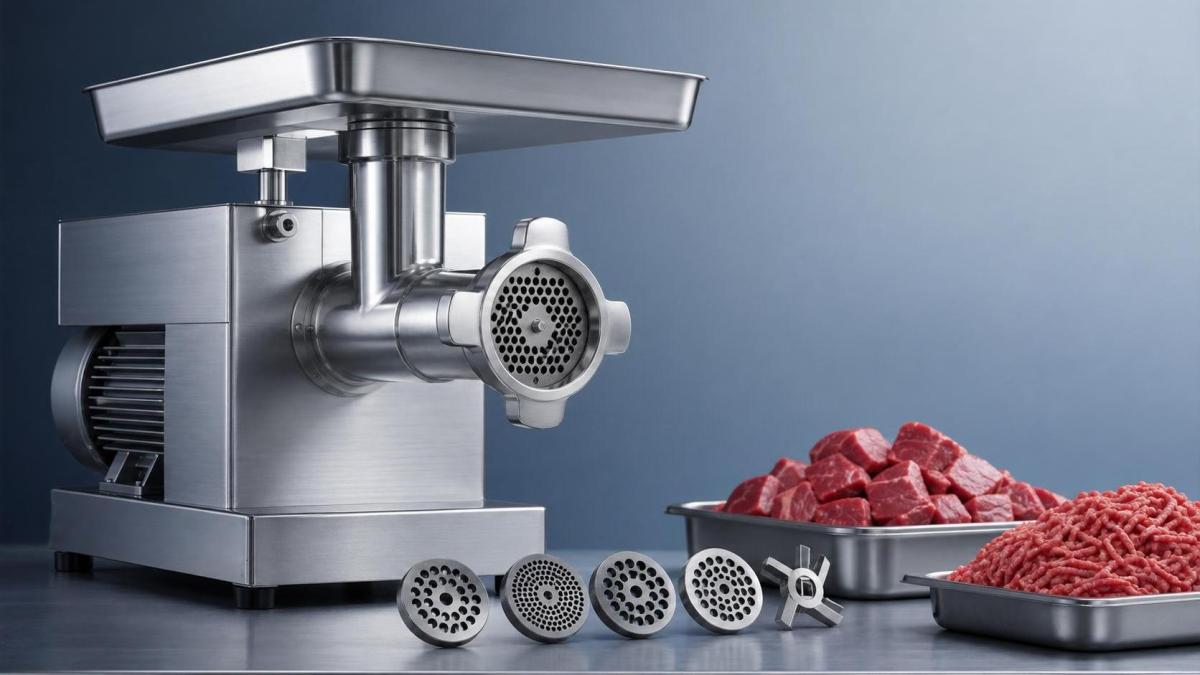
The market no longer rewards equipment that merely runs. It rewards systems that support predictable throughput, stable product quality, fast washdown, and lower contamination risk.
For fresh meat processors, central kitchens, and mixed-protein facilities, the wrong meat mincer commercial configuration can create bottlenecks upstream and waste downstream. Slow grinding affects batching. Poor cutting geometry affects texture. Difficult cleaning increases labor time and exposure during inspections.
A well-matched machine, by contrast, supports repeatable production planning. It also reduces the hidden costs that often exceed the initial purchase price within the first years of operation.
What a commercial meat mincer must do in practice
A meat mincer commercial machine is built to process larger volumes, tougher duty cycles, and stricter hygiene requirements than domestic grinders. That difference is not just about size.
In real operating conditions, the unit must feed product evenly, maintain torque under load, protect the cut structure of the meat, and tolerate repeated cleaning without surface degradation.
It must also work within a wider line. Some units feed sausage production. Others support burger forming, ready-meal preparation, or pre-mix processing for value-added proteins. The intended use changes what “best” actually means.
Not every workload is the same
Grinding chilled beef trim is different from handling soft poultry, frozen blocks, or pre-cut fish protein. Fat content, connective tissue, feed temperature, and batch size all influence machine selection.
This is where many buying errors begin. A machine that performs well in a showroom test may struggle when raw material variability increases across daily production.
Capacity should be matched to real throughput, not catalog claims
Capacity is usually the first comparison point, but nameplate output can be misleading. Suppliers may state maximum kilograms per hour under ideal conditions, not actual working throughput during a full shift.
The more useful question is how much saleable product the machine can process consistently, at target temperature, with the expected grind profile and sanitation interruptions included.
What to verify behind the capacity figure
- Hourly throughput under the actual raw material condition, not a generic benchmark.
- Continuous duty rating across a full production window.
- Feed tray volume and auger design, which affect loading rhythm.
- Performance drop when finer plates are installed.
- Changeover time between products, allergens, or species.
In many facilities, a slightly lower nominal capacity with steadier output is a better investment than a larger unit that slows during heavy loads or overheats during peak runs.
Plate size affects more than particle size
Plate size is often treated as a simple texture setting, yet it has direct implications for productivity, motor load, cut definition, and final product performance.
Smaller holes produce finer output, but they also increase resistance. That can reduce throughput and place greater demand on the drive system. Larger plates allow faster flow, but may not deliver the structure required for patties, fillings, or emulsified lines.
How plate decisions connect to product goals
A strong meat mincer commercial setup usually offers compatible plate and knife options, with easy replacement and clear availability of wear parts. That matters for uptime as much as for product flexibility.
Motor power must be judged with torque and duty cycle
Motor power is one of the most visible specifications, but power alone does not tell the full story. Two machines with similar kilowatt ratings may behave very differently under real production load.
What matters is the combination of power, torque delivery, gearbox quality, cooling design, and continuous-duty reliability. A motor that looks strong on paper can still struggle with dense chilled meat or mixed cuts containing sinew.
Questions that reveal the real drive performance
- Does the machine maintain stable speed as feed pressure increases?
- Is it rated for intermittent or continuous commercial use?
- How does it handle partially frozen or high-connective-tissue inputs?
- Are overload protection and thermal safeguards built in?
- Can service teams access the motor and drive components easily?
Energy use also deserves attention. In facilities running long shifts, an efficient motor and well-matched drive train can make a measurable difference in operating cost over time.
Hygiene design is a procurement issue, not only a sanitation issue
In a regulated environment, hygiene design should be treated as a core purchasing criterion. It affects cleaning time, microbial control, inspection outcomes, and the practical pace of daily operations.
A meat mincer commercial machine with poor hygienic construction may still grind well. Yet hidden seams, rough welds, dead zones, and difficult disassembly can quickly turn into compliance and labor problems.
Features that deserve close inspection
- Food-contact surfaces made from appropriate stainless steel grades.
- Smooth welds and rounded internal corners.
- Tool-free or simplified disassembly for daily washdown.
- Minimal crevices around feed areas, guards, and fasteners.
- Seal integrity that prevents product ingress into mechanical zones.
- Compatibility with site cleaning chemicals and wash procedures.
For sites audited against HACCP-aligned programs or retailer standards, these design details often matter as much as throughput. They also influence whether sanitation staff can complete cleaning without excessive downtime.
Looking beyond the machine itself
A commercial grinder should be evaluated as part of a system. Installation space, electrical compatibility, operator safety, spare part supply, and documentation quality all affect the investment outcome.
This is especially relevant in cross-border sourcing. As ACC regularly observes across primary industries, procurement decisions are stronger when technical documents, material traceability, and after-sales responsiveness are reviewed before purchase, not after commissioning.
Useful comparison points during supplier review
A practical way to narrow the shortlist
Start with the product profile, not the machine catalog. Define the daily volume, protein type, feed temperature, desired grind texture, cleaning frequency, and available utilities.
Then compare each meat mincer commercial option against those operating realities. A smaller unit with better hygiene access may outperform a higher-capacity alternative in total line efficiency. A stronger motor may be unnecessary if the feed is consistently trimmed and pre-sized.
Shortlisting becomes clearer when the decision matrix includes throughput under load, plate flexibility, duty rating, sanitation time, service access, and spare part continuity. That approach leads to fewer surprises after installation.
The best next step is to turn technical requirements into a side-by-side evaluation sheet, then validate claims with sample processing data and cleaning review. That is usually where the most suitable meat mincer commercial model reveals itself.
Related Intelligence
- Milling MachineryWhat Documentation Is Required to Import Grain Milling Equipment?What documentation do I need for importing grain milling equipment? Explore essential customs, technical, compliance, and shipping records for smooth clearance.
- Milling MachineryDo Agricultural Processing Operations Require Specific Environmental Permits?Does agricultural processing require specific environmental permits? Discover key air, wastewater, stormwater, waste, and chemical compliance requirements before expanding operations.
- Milling MachineryPellet Mill Vendor Comparison: Evaluate Capacity, Energy Use, and SupportPellet mill vendor comparison: evaluate sustainable capacity, energy use, pellet quality, controls, and lifecycle support to select a reliable, cost-effective solution.
The Morning Broadsheet
Daily chemical briefings, market shifts, and peer-reviewed summaries delivered to your terminal.
