

The Authority in Global Agricultural Chemistry & Bio-Resources
Smart Buoys for Aquaculture: Which Sensors Matter Most for Water Quality Monitoring?
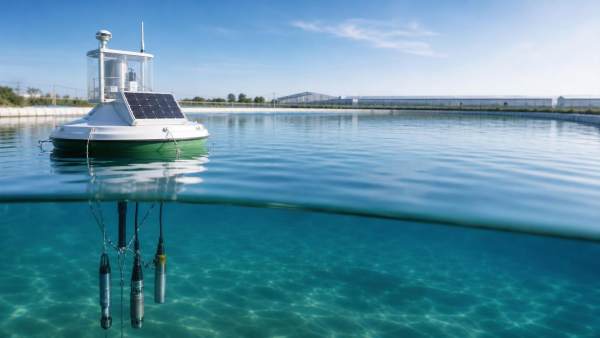
Water quality decisions in aquaculture no longer depend on occasional handheld readings alone. In intensive ponds, cages, and nearshore systems, conditions can shift within hours, making smart buoys for aquaculture a practical control point rather than a convenience.
For operations facing tighter environmental reporting, higher stocking densities, and more variable weather, continuous surface and sub-surface monitoring supports faster intervention. The main question is not whether to deploy sensing, but which parameters deserve priority when budgets, maintenance time, and data quality all matter.
Viewed through the broader lens of primary industries, this is also a systems issue. Reliable sensing influences feed conversion, animal welfare, effluent management, and audit readiness, which is why technical coverage from sources such as AgriChem Chronicle increasingly connects aquaculture instrumentation with compliance, process control, and supply chain discipline.
Why sensor selection matters more than buoy hardware alone
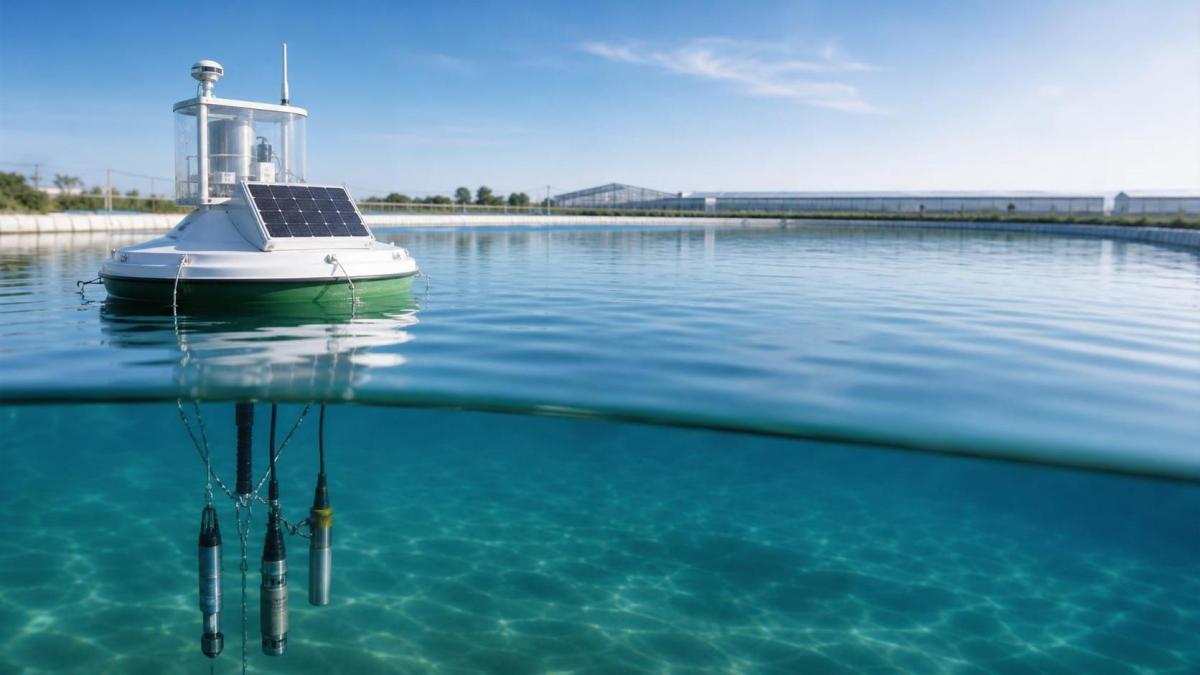
A buoy is only the platform. The real value comes from sensor stability, calibration burden, data transmission reliability, and how well the measurements explain biological stress before losses become visible.
In practice, smart buoys for aquaculture sit at the intersection of mechanical exposure and chemical sensitivity. Biofouling, sediment, wave motion, and power constraints can all distort readings if the sensor package is chosen without regard to site conditions.
That is why the strongest configurations are rarely the most crowded ones. A compact array of dependable sensors often outperforms a broad package that generates noisy or poorly maintained data.
The core parameters that deserve first priority
Most smart buoys for aquaculture should start with five water quality signals: dissolved oxygen, temperature, pH, salinity or conductivity, and ammonia risk tracking. These parameters directly affect physiology, feeding response, and survival margins.
Dissolved oxygen is usually the first sensor to justify itself
If only one sensor can be funded initially, dissolved oxygen often delivers the clearest operational return. Oxygen drops can happen at night, after algal collapse, during overfeeding, or when thermal stratification limits mixing.
Continuous oxygen data supports aeration timing, biomass planning, and incident investigation. It also reveals whether low oxygen is chronic, seasonal, or linked to management events.
Temperature changes every other reading
Temperature is not just a comfort metric. It affects oxygen solubility, metabolic demand, feed conversion, pathogen pressure, and the toxicity profile of other compounds.
For that reason, smart buoys for aquaculture should capture temperature continuously and, where possible, at more than one depth. Surface readings alone may hide stratification in deeper ponds or cages.
pH explains chemistry stress and treatment performance
pH fluctuations often track photosynthesis, respiration, alkalinity imbalance, and chemical dosing outcomes. Wide daily swings can signal unstable biological activity long before stock behavior changes dramatically.
It also matters because ammonia toxicity becomes more severe at higher pH. Without pH context, ammonia numbers can be misunderstood.
Salinity and conductivity provide environmental context
In marine, brackish, and estuarine systems, salinity affects osmoregulation, species suitability, and treatment response. In freshwater systems, conductivity can still serve as a useful indicator of runoff, contamination, or changing mineral balance.
These readings become particularly valuable after rainfall, water exchange, or seasonal shifts in inlet quality.
Ammonia deserves attention even when direct sensing is harder
Ammonia is one of the most operationally significant risks, but continuous in situ measurement can be more complex than oxygen or temperature. Some systems use ion-selective approaches, while others combine periodic validation with predictive interpretation.
Even when direct ammonia sensors are not the first purchase, smart buoys for aquaculture should support the chemistry needed to estimate toxicity risk through temperature and pH trends.
Which sensors move from useful to essential by farming scenario
Sensor priority changes by culture method, water source, and production intensity. A recirculating support pond does not face the same risk profile as an offshore cage or shrimp pond.
This is where procurement discipline becomes important. Technical evaluation should start from the biological and hydraulic risks of the site, then map those risks to the minimum sensor set that can guide action.
Secondary sensors that add value when the basics are covered
Once the primary package is reliable, several secondary measurements can sharpen interpretation. They are not always essential at launch, but they can be decisive in specific environments.
- Turbidity helps detect runoff, suspended solids, and disturbance from dredging or storms.
- Chlorophyll or algae proxies can provide early warning of bloom buildup or collapse.
- Oxidation-reduction potential may support interpretation in systems with heavy organic load.
- Nitrate and nitrite become more relevant where nutrient transformation is tightly managed.
- Weather-linked inputs such as wind and solar radiation improve event analysis and forecasting.
These additions make sense when they answer a specific management question. If they do not change aeration, feeding, flushing, or compliance decisions, they may add cost without enough operational value.
What separates actionable data from attractive specifications
Many smart buoys for aquaculture look comparable on paper. The harder comparison is performance over time, especially in fouling-prone waters.
A technically strong evaluation usually focuses on these points:
- Calibration interval and whether field recalibration is practical.
- Sensor drift under biofouling pressure and cleaning frequency required.
- Depth flexibility for multi-layer monitoring.
- Power autonomy during cloudy periods or rough weather.
- Communication resilience across LoRa, cellular, or satellite links.
- Data export quality for audit trails, modeling, and third-party review.
In regulated and quality-driven sectors, data integrity matters as much as sensor count. That broader industrial mindset, common across chemicals, feed processing, and mechanized agriculture, is increasingly shaping aquaculture technology decisions as well.
How to build a practical evaluation framework
A useful way to assess smart buoys for aquaculture is to link each sensor to an operational decision. If a parameter cannot trigger a response, its value should be questioned.
Start with failure modes, not feature lists
List the events that cause the greatest biological or compliance risk. Nighttime oxygen crashes, salinity shock, nutrient spikes, and exchange water deterioration usually belong near the top.
Match sensors to intervention windows
Some conditions need minute-level alerts. Others support trend analysis across days or weeks. That difference affects sampling frequency, telemetry choice, and alarm design.
Verify serviceability early
Maintenance access, spare parts, membrane availability, and calibration consumables should be reviewed before deployment. A highly capable sensor that cannot be supported locally may underperform a simpler alternative.
Review outputs in relation to reporting needs
Where environmental oversight is tightening, historical datasets, timestamp integrity, and export compatibility can influence vendor selection just as much as biological metrics.
Where the next decision should focus
For most deployments, the best first configuration of smart buoys for aquaculture is not the widest one. It is the one that captures oxygen, temperature, pH, and site-relevant salinity or conductivity with dependable uptime and manageable maintenance.
From there, ammonia strategy, turbidity, algae indicators, and weather-linked sensing can be added where production intensity or environmental exposure justifies the extra layer.
A sensible next step is to map each farming zone, rank the highest water quality risks, and compare buoy options against calibration demand, data integrity, and intervention value. That approach turns sensor selection from a catalog exercise into a measurable operating decision.
Related Intelligence
- Aeration & Water TechWhat RO water treatment systems deliver consistent 98% salt rejection at 25°C with feed TDS over 3,000 ppm?RO water treatment systems that deliver proven 98% salt rejection at 25°C with >3,000 ppm TDS—engineered for API synthesis, aquaculture & grain processing.
- Aeration & Water TechCan pond aeration systems maintain dissolved oxygen above 5 mg/L during summer stratification in catfish ponds?Pond aeration systems can sustain >5 mg/L DO during summer stratification—when engineered for mixing *and* oxygen transfer. See field-proven data & design essentials.
- Aeration & Water TechHow to Choose Alarm Water Monitoring Systems for Critical Water FacilitiesAlarm water monitoring systems: learn how to select reliable sensors, alarms, communications, and workflows to protect critical water facilities and prevent costly failures.
The Morning Broadsheet
Daily chemical briefings, market shifts, and peer-reviewed summaries delivered to your terminal.
