

The Authority in Global Agricultural Chemistry & Bio-Resources
How Bio-Extracts Clinical Research Supports Ingredient Claims and Product Development
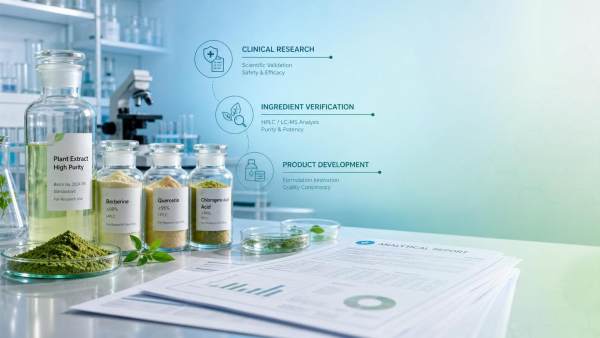
How Bio-Extracts Clinical Research Supports Ingredient Claims and Product Development

In regulated ingredient markets, proof matters more than promise. That is why Bio-Extracts clinical research now sits at the center of claim validation and product planning.
A strong extract may show exciting lab potential. Still, market value rises only when research connects composition, mechanism, safety, and measurable human outcomes.
This shift is changing supplier evaluation. It is also shaping how brands choose ingredients, build formulations, and defend product claims across stricter channels.
From a business perspective, Bio-Extracts clinical research is not just a scientific asset. It is a practical tool for reducing uncertainty in commercialization.
When research quality is high, teams can compare suppliers more accurately, estimate launch risk, and judge whether an ingredient can hold value beyond early marketing interest.
Why Bio-Extracts Clinical Research Has Become a Commercial Requirement
Recent market changes make the pattern clear. Buyers no longer accept broad efficacy language without evidence tied to a specific extract and defined use conditions.
That matters because bio-extracts vary widely. Plant origin, harvesting season, extraction solvent, and standardization level can all change biological performance.
So, one published benefit does not automatically transfer to every similar ingredient. Bio-Extracts clinical research helps confirm whether a supplier’s material truly matches the claimed effect.
This also affects brand credibility. Unsupported claims can trigger label issues, channel rejection, or reputational damage, especially in premium wellness and functional nutrition categories.
By contrast, clinically supported ingredients create a cleaner path for regulatory review, product positioning, and conversations with technical buyers or distribution partners.
What research really proves
Good Bio-Extracts clinical research does more than show a positive result. It explains who benefits, at what dose, for how long, and under which formulation conditions.
In actual business decisions, those details matter more than headlines. They determine whether an ingredient can be scaled into a repeatable and compliant product line.
- Confirms efficacy with defined endpoints, not vague consumer language.
- Links benefits to a standardized extract, not just a plant species.
- Clarifies dosage windows for formulation and cost modeling.
- Supports safety review for intended user groups and duration.
- Improves claim substantiation for regulated commercial channels.
How Clinical Evidence Strengthens Ingredient Claims
Ingredient claims fail when evidence is borrowed, overstated, or disconnected from the final product format. Bio-Extracts clinical research helps close those gaps.
The strongest claim strategies start with a clear evidence chain. That chain runs from raw material identity to clinical endpoints and then to final product communication.
For example, a cognition extract may have promising in vitro data. Yet product claims remain weak unless human studies support attention, memory, or stress-related outcomes.
The same applies to gut health, metabolic support, sleep, skin wellness, and sports recovery. Commercial language must stay anchored to tested endpoints.
Claim areas where evidence matters most
How Bio-Extracts Clinical Research Improves Product Development
Clinical evidence does not only support claims after development. It should shape product design much earlier, starting with ingredient selection and formulation targets.
A well-documented extract gives teams more than confidence. It provides usable boundaries for dose, delivery format, stability expectations, and expected user response.
That shortens trial-and-error work. It also helps avoid a common problem: building a product that sounds attractive but cannot deliver a defendable effect.
In practical terms, Bio-Extracts clinical research can influence capsule size, serving count, combination strategy, sensory profile, and even packaging claims.
Development advantages tied to strong evidence
- Faster screening of extracts with credible dose ranges.
- Better fit between active level and final delivery format.
- Lower reformulation risk when scaling production.
- More realistic pricing based on evidence-backed inclusion levels.
- Stronger product storytelling without overreaching claims.
More importantly, evidence can reveal where an extract should not be used. That kind of negative clarity often saves more money than optimistic early assumptions.
What to Check When Evaluating Research Quality
Not all studies carry equal decision value. Some are useful for early context, while others directly support commercial evaluation and supplier qualification.
The first question is simple. Does the study test the same extract, in the same standardized form, that the supplier is offering today?
If not, the relevance drops quickly. Bio-Extracts clinical research must connect to traceable sourcing, process control, and batch consistency to support real procurement decisions.
The next issue is study design. Sample size, placebo control, endpoint relevance, and statistical handling all influence whether a result is commercially meaningful.
A practical review checklist
- Identity match between researched extract and commercial ingredient.
- Clear standardization markers and active compound ranges.
- Human study design aligned with intended application.
- Endpoints relevant to permitted market claims.
- Safety observations suitable for target users.
- Documentation that supports GMP, FDA, or other channel expectations.
- A believable path from research dose to label dose.
In real projects, this checklist helps separate marketing-friendly papers from evidence that can withstand regulatory review and informed commercial scrutiny.
Risk Reduction Across Supply, Compliance, and Market Entry
The biggest value of Bio-Extracts clinical research may be risk control. It reduces guesswork across sourcing, formulation, claims, and launch timing.
For supply teams, clinically supported ingredients are easier to compare because evidence adds another layer beyond price, specification sheets, and audit language.
For compliance teams, defined research lowers the chance of unsupported marketing statements. That can matter even more in export markets with tighter review standards.
For brand strategy, the advantage is durability. Evidence-backed ingredients usually keep value longer because they can adapt to stricter claim environments.
This also improves negotiation posture. Suppliers with strong Bio-Extracts clinical research often justify premium pricing through lower development friction and better market defensibility.
Common warning signs
- Claims rely on generic botanical literature, not the actual extract.
- Clinical data uses unrealistic doses for commercial products.
- Safety data is thin for intended usage length.
- Standardization language is unclear or inconsistent across documents.
- Research looks positive, but supply transparency is weak.
Turning Research Into a Better Development Decision
The most useful approach is to treat Bio-Extracts clinical research as a decision framework, not a marketing attachment added near launch.
Start by asking whether the evidence matches the ingredient, the intended claim, the target format, and the commercial dose. Then check whether the supply chain can reproduce that value consistently.
If those elements align, the ingredient becomes easier to model, safer to position, and more likely to support long-term portfolio growth.
That is the real commercial role of Bio-Extracts clinical research. It turns scientific promise into a structured case for claims, compliance, and product development.
In a market where evidence quality increasingly shapes market access, choosing research-backed extracts is no longer a cautious extra. It is a smarter route to resilient product value.
Related Intelligence
- Natural IngredientsIndustrial-Scale Agricultural Sourcing: Key Criteria for Reliable SupplyIndustrial scale agri sourcing made reliable: assess supplier capacity, traceability, landed cost, logistics, and resilience to protect production continuity.
- Natural IngredientsHow Microencapsulated Botanical Ingredients Improve Stability and Controlled ReleaseMicroencapsulated botanical ingredients enhance stability, protect sensitive actives, and enable controlled release for reliable performance across demanding applications.
- Natural IngredientsHow to Evaluate Bioactive Compounds for Nutraceuticals by Stability, Efficacy, and FormatBioactive compounds for nutraceuticals should be evaluated by stability, efficacy, and format. Learn how to compare ingredients, reduce formulation risk, and choose options that perform in real products.
The Morning Broadsheet
Daily chemical briefings, market shifts, and peer-reviewed summaries delivered to your terminal.
